Day one of your period is not the beginning of the end. It is the beginning of everything. The moment your cycle resets, a whole cascade of hormonal events is set in motion, and how you treat your body in these first few days shapes the entire month ahead. Yet for most of us, the menstrual phase is the one we power through, ignore, or apologise for, rather than actually work with.
This guide covers everything that is happening hormonally during your period, why you feel the way you do, what your body genuinely needs during this phase, and how small adjustments to food, movement, and recovery can make a remarkable difference to how you experience menstruation every single cycle.
What Is the Menstrual Phase?
The menstrual phase is the first phase of your cycle, lasting from day one of bleeding (the first day of a proper bleed, not just spotting) through to the last day of your period. For most people this spans four to seven days, though anywhere from two to eight days is considered within normal range.
Menstruation occurs because the egg released in the previous cycle was not fertilised. Without a developing embryo, progesterone and oestrogen levels drop sharply, signalling the uterus to shed its lining. This shedding is your period. Simultaneously, the brain's pituitary gland begins releasing follicle-stimulating hormone (FSH), which will start the process of maturing new follicles in preparation for ovulation later in the cycle.
So while it may feel like a pause, the menstrual phase is biochemically one of the most active transitions in your entire cycle.
The Hormonal Picture During Your Period
At the start of your period, all four main reproductive hormones, oestrogen, progesterone, luteinising hormone (LH), and FSH, are at their lowest absolute values. This hormonal floor is what triggers menstruation in the first place.
Within the first two to three days of bleeding, FSH begins to rise. This is the hormone responsible for recruiting a cohort of follicles in the ovaries, each containing a potential egg. Over the coming days, one of these follicles will become dominant, and as it grows it will begin producing oestrogen. By the end of your period, you will already notice the early signs of rising oestrogen: a subtle shift in energy, mood lifting slightly, brain fog clearing.
"The menstrual phase is often mischaracterised as purely a time of hormonal depletion. In reality, it is a dynamic hormonal transition. FSH is rising, follicles are being recruited, and the foundations for a healthy ovulatory cycle are being laid in real time."
- Dr. Jerilynn Prior, MD, Endocrinologist and Professor of Medicine, University of British Columbia
Prostaglandins also play a central role during menstruation. These hormone-like compounds are released by the uterine lining as it sheds, causing the uterus to contract and expel the tissue. Higher levels of prostaglandins are associated with more intense cramping and systemic symptoms like nausea, loose stools, and lower back pain. Research from the National Institutes of Health confirms that prostaglandin activity is the primary driver of primary dysmenorrhoea (painful periods).
Why You Feel the Way You Do
Low oestrogen and progesterone together create a particular state in the brain and body. Serotonin, your main mood-stabilising neurotransmitter, is partly regulated by oestrogen. When oestrogen drops, serotonin can dip with it, which contributes to feelings of low mood, emotional sensitivity, or the desire to withdraw from social activity.
Similarly, progesterone's calming, GABA-enhancing effect disappears as progesterone falls. Some people experience this as a brief period of agitation or poor sleep in the days just before or at the very start of their period.
Physical symptoms are equally varied. Beyond cramping, it is common to experience:
- Fatigue and a genuine need for more sleep
- Increased sensitivity to cold
- Digestive changes, including looser stools or bloating
- Breast tenderness that lingers from the late luteal phase
- Headaches, particularly in the first one to two days
- A heightened desire for solitude, stillness, or introspection
None of these are signs that something is wrong. They are the body's intelligent response to a significant hormonal shift, and they carry useful information about what your system needs right now.
What Your Body Needs During the Menstrual Phase
Nutrition: Replenish What You Are Losing
Blood loss during menstruation results in the loss of iron, which is essential for red blood cell production, energy metabolism, and cognitive function. Studies published via the National Institutes of Health indicate that iron deficiency is disproportionately common in people with heavier periods, and even moderate blood loss can gradually deplete stores over time.
Prioritise iron-rich foods during and immediately after your period:
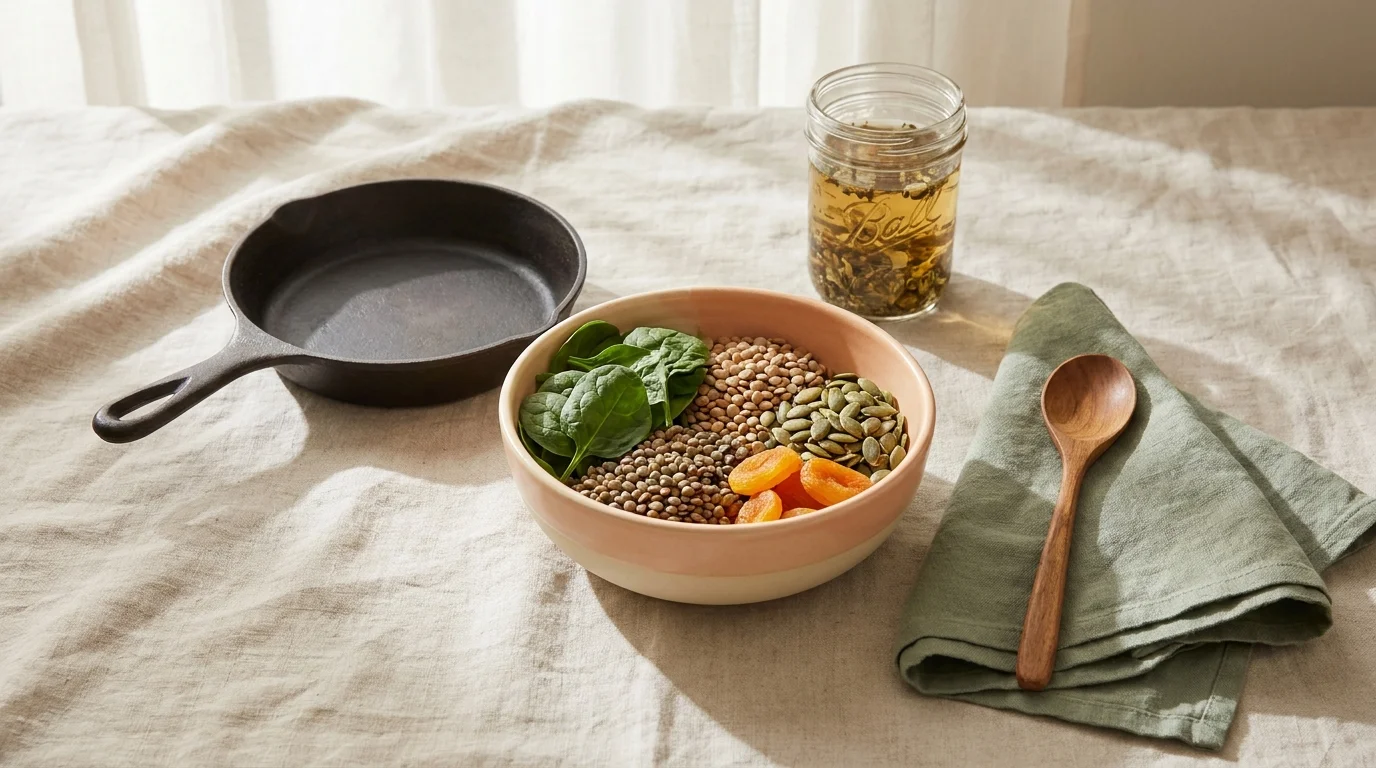
- Red meat (particularly beef and lamb), liver, and dark poultry meat for haem iron
- Lentils, chickpeas, tofu, pumpkin seeds, and dark leafy greens for non-haem iron
- Pair plant-based iron with vitamin C (bell peppers, citrus, kiwi) to significantly improve absorption
- Avoid tea and coffee with iron-rich meals, as tannins inhibit absorption
Beyond iron, your body benefits from warming, easy-to-digest foods during this phase. Think hearty soups, slow-cooked stews, root vegetables, and well-cooked grains rather than raw salads or cold smoothies. Many women report feeling better on cooked, warming foods during their period, and there is physiological reasoning behind this: digestion requires energy, and lighter digestive demand frees up resources for recovery.
Omega-3 fatty acids deserve special attention during menstruation. They directly compete with the inflammatory arachidonic acid that fuels prostaglandin production, meaning higher omega-3 intake is associated with reduced cramp severity. According to the National Institutes of Health Office of Dietary Supplements, omega-3s exert genuine anti-inflammatory effects at a cellular level. Oily fish, flaxseed, walnuts, and chia seeds are all excellent sources.
Movement: Less Is More (And That Is a Feature, Not a Bug)
The conventional message is to push through. The evidence-based message is more nuanced. During the first two to three days of your period, your body's core temperature is lower, your energy availability is reduced (particularly if bleeding is heavy), and your nervous system is in a recovery-oriented state. This is not the time to chase personal bests.
"There is a cultural pressure for women to perform consistently across the entire month as if their physiology were constant. The menstrual phase actually calls for a reduction in training intensity, and honouring that is not weakness: it is periodisation science applied to female biology."
- Dr. Stacy Sims, PhD, Exercise Physiologist and Researcher, Author of "Roar"
Appropriate movement during menstruation includes:
- Gentle walking, particularly in nature
- Yin yoga or restorative yoga, which actively supports the parasympathetic nervous system
- Light stretching and hip-opening poses, which many people find genuinely relieving for cramping
- Swimming on lighter flow days, if comfortable
If you feel good on day three or four and want to do something more vigorous, listen to that. The key is releasing the expectation that you should train hard during your period, rather than the idea that you cannot. Flexibility, not rules, is the goal.
Rest and Sleep: Your Nervous System Is Asking
The drop in progesterone at the start of your period removes a hormone that actively promotes sleep quality by increasing GABA activity in the brain. Combined with physical discomfort from cramping and any associated anxiety or low mood, it is entirely normal to sleep less well during the first days of your period.
Supporting sleep during this phase looks like:
- Keeping your bedroom cool and dark
- Avoiding alcohol, which fragments sleep and worsens hormonal disruption
- Using a heat pack on the abdomen or lower back, which can reduce cramp intensity and promote relaxation
- Allowing yourself to nap without guilt if you need to
The Emotional Landscape of Menstruation
There is something worth naming about the quality of inner experience that often accompanies the menstrual phase. Many people report a heightened sense of clarity during their period, a kind of unfiltered perception about relationships, situations, or decisions they have been avoiding. This is sometimes described in cycle awareness frameworks as the "inner winter," a time when the inner world becomes louder and the social mask becomes harder to maintain.
While this is not strictly endocrinology, it maps onto real neuroscience. When oestrogen is low, the brain's reward circuitry is less activated, making it harder to sustain effortful social performance or enthusiastic engagement. This is not depression (though in people with PMDD, it can tip into something more serious). For most people, it is simply a window of honest self-perception that is worth paying attention to rather than suppressing.
Journalling, quiet time, reduced social commitments, and creative or reflective activities tend to feel most aligned with what this phase offers.
When to Pay Attention to Your Menstrual Phase
Your period is a vital sign. Tracking it carefully gives you meaningful data about your hormonal health. The following patterns are worth discussing with a healthcare provider:
- Periods lasting longer than eight days consistently
- Soaking through a pad or tampon in an hour or less for several consecutive hours (a sign of heavy menstrual bleeding that warrants evaluation)
- Severe cramping that does not respond to over-the-counter pain relief
- Passing large clots regularly (larger than a 50p coin or a quarter)
- Periods that have stopped for three or more months without pregnancy (amenorrhoea)
- Periods that have become significantly heavier, longer, or more painful than previously
Endometriosis, fibroids, adenomyosis, thyroid dysfunction, and nutritional deficiencies can all manifest through changes in your period. Your bleed is not just an inconvenience: it is one of the most informative health signals your body produces.
Practical Phase Checklist
Use the following as a gentle framework, not a rigid prescription:
- Track day one carefully, it anchors your entire cycle
- Increase iron and omega-3 rich foods
- Swap cold or raw foods for warm, cooked meals where possible
- Reduce training intensity, especially in days one to three
- Prioritise seven to nine hours of sleep and allow for rest
- Use heat therapy for cramps rather than immediately reaching for pain relief
- Protect your diary: say no to anything non-essential if you need to
- Note any changes in flow, duration, or symptom severity to share with your doctor
Key Statistics and Sources
- Approximately 80% of people who menstruate experience some form of dysmenorrhoea (painful periods) during their lifetime. NICHD, NIH
- Prostaglandins released during menstruation are the primary physiological driver of primary dysmenorrhoea and associated symptoms. NIH, PubMed Central
- Iron deficiency affects an estimated 30% of women of reproductive age globally, with menstrual blood loss being a leading contributing factor. World Health Organization
- Omega-3 supplementation has been shown to significantly reduce menstrual pain intensity compared to placebo in multiple randomised controlled trials. NIH Office of Dietary Supplements
- Heavy menstrual bleeding affects approximately 1 in 3 women seeking gynaecological care and is frequently under-reported and under-diagnosed. American College of Obstetricians and Gynecologists
- Research indicates that FSH begins rising within the first 24-48 hours of menstruation, initiating the follicular recruitment that underpins the next ovulatory cycle. NIH StatPearls