What Actually Happens in Your Follicular Phase
If your cycle were a story, the follicular phase would be the opening chapter: full of rising energy, expanding possibility, and quiet momentum building beneath the surface. It begins on the first day of your period and stretches all the way to ovulation, typically lasting around 13 to 14 days in a 28-day cycle, though this can vary considerably from person to person.
During this phase, your body is doing something remarkable. Your pituitary gland releases follicle-stimulating hormone (FSH), which signals a group of follicles in your ovaries to begin maturing. Each follicle contains an egg, and as they develop, they produce increasing amounts of estrogen. Eventually, one dominant follicle emerges and estrogen surges, triggering a peak in luteinizing hormone (LH) that sets ovulation in motion.
That rising estrogen is the hormonal heartbeat of the follicular phase, and it influences far more than your reproductive system. It shapes your mood, your metabolism, your sleep quality, your skin, your strength, and even the way you process information.
The Hormone Landscape: What Is Rising and Why It Matters
Estrogen is the dominant hormone of the follicular phase, and it is one of the most wide-reaching molecules in the female body. Estrogen receptors are found in the brain, bones, heart, gut, skin, and muscles. When estrogen rises during the follicular phase, the effects are felt throughout your entire physiology.
One of estrogen's key actions is increasing the sensitivity of your cells to insulin, which helps stabilise blood sugar and supports steadier energy. It also boosts serotonin production and serotonin receptor sensitivity, which is part of why many people feel more optimistic, social, and mentally sharp during this phase.
"Estrogen has profound effects on brain function, including its influence on mood, memory, and cognitive flexibility. During the follicular phase, rising estrogen genuinely enhances certain aspects of cognitive performance in ways that are measurable and meaningful."
- Dr. Pauline Maki, PhD, Professor of Psychiatry and Psychology, University of Illinois Chicago
FSH is the other key player here. As it rises in the early follicular phase, it not only stimulates follicle development but also supports the production of anti-Mullerian hormone (AMH) and contributes to the hormonal orchestration that makes ovulation possible. Progesterone remains low throughout most of the follicular phase, rising only after ovulation. This low-progesterone environment is part of what makes many people feel lighter and more outwardly energised during this time.
Research published on PubMed Central confirms that estrogen's effects on serotonergic and dopaminergic systems contribute to the mood-lifting qualities many people experience during the follicular phase, and these effects are distinct from what is observed in the luteal phase.
Energy, Mood, and Mental Performance
The follicular phase tends to be when energy feels most accessible. The body is preparing for the biological event of ovulation, and estrogen is helping to optimise everything in anticipation of it. Sleep often feels more restorative. Focus tends to be sharper. Social motivation tends to increase.
From a cognitive standpoint, estrogen supports verbal fluency, working memory, and fine motor coordination. Studies at womenshealth.gov note that hormonal fluctuations across the cycle influence cognitive performance, with estrogen generally supporting certain types of memory and processing speed.
This is also often a phase of greater risk tolerance and openness to new experiences. Dopamine activity tends to be higher in an estrogen-rich environment, which supports motivation, curiosity, and the drive to initiate. Many people find they are more willing to start new projects, reach out socially, or take on challenges during the follicular phase compared to the week before their period.
Key Takeaway
The follicular phase is typically when you feel your most energised, socially open, and mentally sharp. Rising estrogen drives mood, motivation, and cognitive performance in noticeable ways. This is a natural time to lean into new beginnings, social connection, and higher-output tasks.
Nutrition in the Follicular Phase
Your nutritional needs shift across your cycle, and the follicular phase has some distinct characteristics worth understanding. Estrogen's insulin-sensitising effects mean your cells are generally better at using carbohydrates for fuel during this phase. Many people find they can tolerate a wider variety of foods with more stable blood sugar responses compared to the luteal phase.
That said, this phase is a good time to focus on foods that support estrogen metabolism and liver function, since healthy estrogen clearance is important throughout your cycle. Foods rich in B vitamins, cruciferous vegetables, and fibre all support the liver's ability to process and excrete estrogen efficiently via the gut.
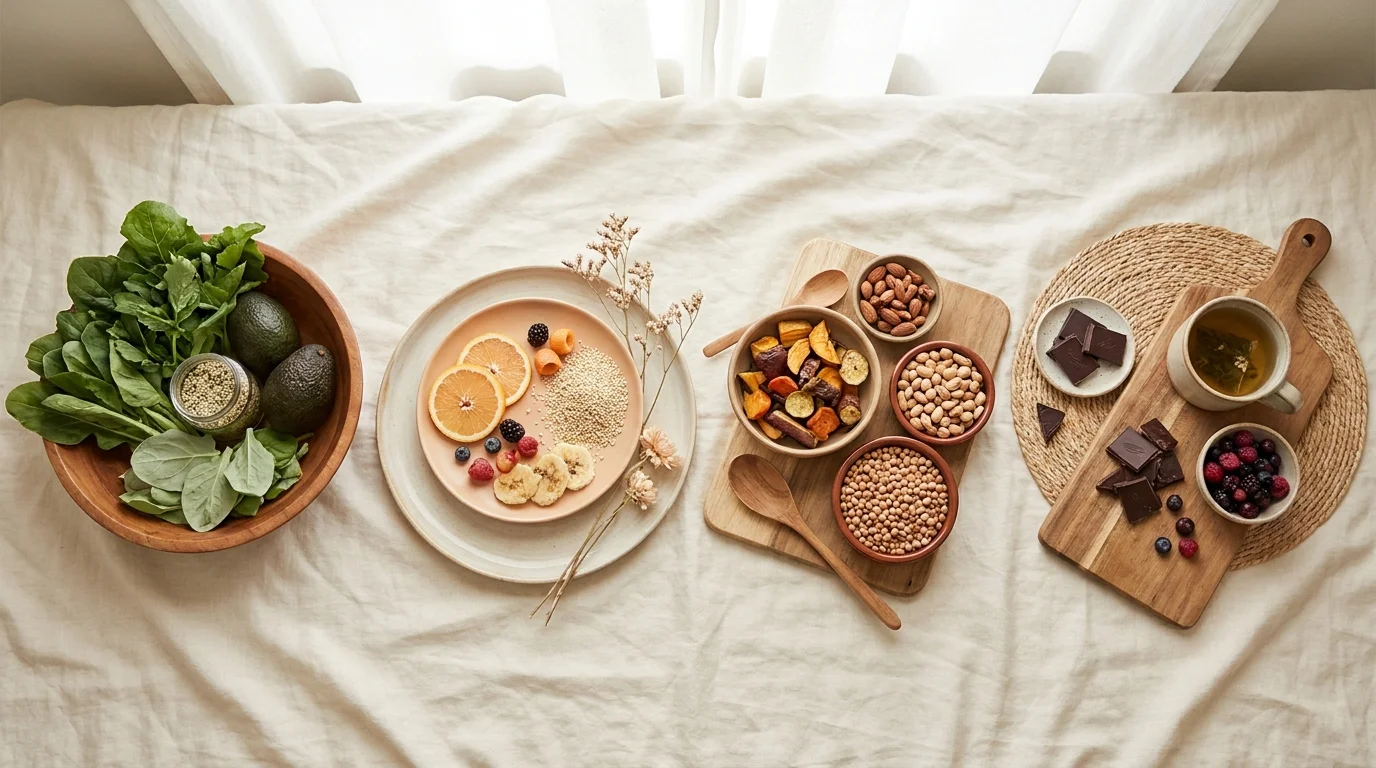
Key follicular phase nutrition priorities include:
- Fermented foods: Kimchi, sauerkraut, kefir, and yoghurt support the gut microbiome, which plays a direct role in estrogen metabolism via the estrobolome.
- Cruciferous vegetables: Broccoli, cauliflower, Brussels sprouts, and kale contain indole-3-carbinol and DIM, compounds that support healthy estrogen metabolism.
- Zinc-rich foods: Pumpkin seeds, beef, chickpeas, and cashews support follicle development and healthy ovulation.
- Lean proteins: Adequate protein supports follicle maturation and provides the amino acid building blocks for neurotransmitters like serotonin and dopamine.
- Healthy fats: Omega-3 rich foods like salmon, walnuts, and flaxseed support hormone production and reduce systemic inflammation.
"What you eat during the follicular phase directly influences the quality of ovulation. Follicle development requires specific micronutrients, and a nutrient-dense diet during this window can meaningfully support reproductive outcomes."
- Dr. Felice Gersh, MD, OB/GYN and Integrative Medicine Physician, Integrative Medical Group of Irvine
Exercise in the Follicular Phase: When to Push Harder
From a fitness perspective, the follicular phase is often the most performance-friendly time of your cycle. Estrogen has muscle-protective and tendon-supportive properties, and research suggests that muscle recovery and strength gains may be more efficient during the estrogen-dominant phase of the cycle.
A study published via the National Institutes of Health found that resistance training during the follicular phase resulted in greater strength gains compared to the same training performed in the luteal phase, suggesting hormonal environment influences training adaptation.
Practically, this means the follicular phase can be an excellent time to:
- Increase training intensity or volume
- Focus on strength and power work
- Try new or challenging movement patterns
- Schedule longer or more demanding cardio sessions
- Work on skill-based sports or coordination-heavy activities
One important note: while estrogen supports muscle tissue, it can also increase ligament laxity slightly as you approach ovulation, particularly in the late follicular phase. If you are prone to knee or ankle injuries, this is worth being aware of, especially in sports that involve pivoting or sudden directional changes.
Sleep During the Follicular Phase
Many people find sleep feels more natural and restful during the follicular phase. Low progesterone means you are less likely to experience the temperature dysregulation that can disrupt sleep in the luteal phase, and rising estrogen generally supports both REM sleep quality and the ease of falling asleep.
Body temperature tends to run slightly cooler during the follicular phase compared to post-ovulation, which further supports sleep onset. This is also one of the reasons that tracking basal body temperature is a useful tool for identifying where you are in your cycle: the temperature shift that occurs at ovulation marks the transition from follicular to luteal phase.
If you have been experiencing disrupted sleep, heavy fatigue, or brain fog during your menstrual phase (the first few days of your cycle, which overlap with early follicular), these typically ease considerably as you move into mid-follicular phase and estrogen gains momentum.
Skin During the Follicular Phase
From a skin perspective, the follicular phase is generally kind. Rising estrogen stimulates collagen production, increases skin thickness and hydration, and supports the skin barrier. Many people notice their skin looks brighter, feels more plump, and is less prone to sensitivity during this phase compared to the late luteal phase.
Sebum production is typically lower in the early follicular phase, which means oiliness and congestion tend to be at their lowest. As you approach ovulation and estrogen peaks, a slight rise in testosterone can increase oil production a little, but for many this is a period of relative skin clarity compared to the premenstrual window.
This phase is a good time to introduce or intensify active skincare ingredients like retinoids, exfoliants, or vitamin C serums, as your skin barrier is more resilient and recovery from any potential irritation is faster.
Emotional Themes and Inner Rhythm
Beyond the physical, the follicular phase has a distinct emotional and psychological texture. After the inward, quieter energy of menstruation, the follicular phase brings a natural movement outward. Social energy tends to increase. There is often more willingness to communicate, engage, initiate, and take risks.
This is not a performance mandate. Not every person will feel dramatically different between phases, and factors like stress, sleep, nutrition, and underlying health conditions all modulate the cycle experience. But for many people, tuning into the follicular phase as a time of natural expansion and fresh starts can feel genuinely useful.
Common follicular phase themes include:
- A sense of optimism or forward momentum
- Increased desire for social connection and conversation
- Greater creative inspiration and willingness to begin new things
- Higher tolerance for uncertainty or novelty
- More energy for both physical and cognitive demands
What Can Disrupt a Healthy Follicular Phase
Not every follicular phase feels like a peak. Several factors can blunt the typical energy and mood-lifting effects of this phase:
- Low estrogen: If estrogen does not rise adequately, you may not experience the mood, energy, and cognitive lift typically associated with this phase. This can happen in perimenopause, after coming off hormonal contraception, with undereating, or with high chronic stress.
- Chronic stress: Elevated cortisol competes with sex hormones at the level of production and signalling. High-stress periods can dampen the follicular phase experience significantly.
- Undereating or under-fuelling: Follicle development is energetically expensive. Chronic caloric restriction or very low carbohydrate diets can impair FSH signalling and follicular development.
- Thyroid dysfunction: The thyroid and reproductive hormones are deeply interconnected. Hypothyroidism can disrupt follicular development and the clarity of hormonal fluctuations across the cycle.
- Poor gut health: An imbalanced gut microbiome can interfere with estrogen recycling and clearance, leading to suboptimal estrogen activity even when production seems normal.
Key Statistics and Sources
- The follicular phase typically lasts 13 to 14 days in an average 28-day cycle, but can range from 10 to 20+ days depending on the individual. Source: NICHD
- Estrogen receptors are found in over 200 tissue types in the human body, reflecting the hormone's far-reaching physiological influence. Source: PMC
- Resistance training during the follicular phase has been associated with greater strength adaptation compared to equivalent training in the luteal phase. Source: NIH/PMC
- Estrogen supports serotonin synthesis and receptor sensitivity, contributing to the mood-lifting effects observed during the follicular phase. Source: PMC
- Women in the follicular phase score higher on verbal memory and fine motor tasks compared to the early luteal phase in controlled studies. Source: Office on Women's Health
- Adequate zinc intake is associated with better follicle quality and ovulation outcomes, with deficiency linked to disrupted menstrual cycles. Source: NIH Office of Dietary Supplements