Why Iron Is a Cycle Issue, Not Just a Diet Issue
If you regularly feel exhausted in the days after your period, struggle to concentrate, feel cold all the time, or notice your hair coming out in the shower, iron deficiency might be the missing piece. And if you have heavy periods, your risk is significantly higher than most women realise.
Iron is one of the most important minerals your body uses, and it is also one of the most commonly depleted in women of reproductive age. Yet it rarely gets talked about in the same breath as hormonal health. That is a problem, because low iron does not just make you tired. It can disrupt your cycle, impair ovulation, worsen PMS, and affect the very hormones you are trying to balance.
This guide covers everything you need to know: what iron does, how your cycle depletes it, the signs that you might be running low, how to restore it through food and supplementation, and how to track your recovery with your cycle in mind.
What Iron Actually Does in Your Body
Iron is a trace mineral that plays a central role in oxygen transport. It is a core component of haemoglobin, the protein in red blood cells that carries oxygen from your lungs to every tissue in your body. Without enough iron, your cells are essentially starved of oxygen, which is why fatigue is the most universal symptom of deficiency.
But iron does far more than that. It is also essential for:
- Producing thyroid hormones, specifically the conversion of T4 to active T3
- Supporting dopamine, serotonin, and noradrenaline synthesis, all of which influence mood and motivation
- Powering mitochondrial energy production at a cellular level
- Maintaining healthy hair follicle cycling and nail strength
- Supporting immune function and reducing susceptibility to infection
Iron also plays a direct role in reproductive health. Research shows that adequate iron status is associated with more regular ovulatory cycles, while chronic deficiency has been linked to anovulation and irregular periods.
How Your Menstrual Cycle Depletes Iron Every Month
Every period, you lose blood, and blood loss means iron loss. The average woman loses around 30 to 40 ml of blood per cycle, which equates to approximately 15 to 20 mg of iron. But if you have heavy menstrual bleeding, also known as menorrhagia, you can lose two to three times that amount, sometimes significantly more.
Heavy periods are more common than most women realise. Studies estimate that up to 1 in 5 women experience heavy menstrual bleeding, defined as soaking through a pad or tampon every hour for several consecutive hours, or bleeding for more than seven days. Conditions like fibroids, endometriosis, adenomyosis, and PCOS are all commonly associated with heavier flow.
The problem is cumulative. If you are not replenishing iron at the rate you are losing it, your stores gradually decline over months and years. Many women are living with depleted iron stores without ever reaching the clinical threshold for anaemia, a state sometimes called iron deficiency without anaemia, or latent iron deficiency. This stage can still cause significant symptoms.
"The majority of women I see with fatigue, brain fog, and low mood have sub-optimal iron stores, even when their haemoglobin looks normal on a standard blood test. Ferritin is the key marker, and it is often overlooked."
- Dr. Jolene Brighten, NMD, FABNE, Functional Medicine Physician and Author, Brighten Natural Medicine
Iron Deficiency vs Iron Deficiency Anaemia: Know the Difference
These two terms are often used interchangeably, but they are distinct stages on a spectrum. Understanding the difference matters because many women are dismissed with a normal blood test result when their ferritin, the storage form of iron, is actually far too low to feel well.
Stage 1: Iron Depletion
Your ferritin levels drop but haemoglobin remains normal. Symptoms are often subtle at this stage: mild fatigue, slightly reduced exercise tolerance, occasional brain fog.
Stage 2: Iron Deficiency Without Anaemia
Ferritin is low, and iron-dependent processes start to be compromised. This is where most symptomatic women fall. Hair loss, persistent fatigue, poor mood, restless legs, and reduced thyroid function are common.
Stage 3: Iron Deficiency Anaemia
Haemoglobin drops below normal. Fatigue becomes severe, skin looks pale, shortness of breath appears, and heart palpitations may occur. This stage requires medical treatment.
Many healthcare providers only test haemoglobin, which will look normal until Stage 3. If you suspect iron issues, ask your doctor to test your serum ferritin specifically. Many integrative practitioners consider an optimal ferritin for symptom-free wellbeing to be above 70 to 100 ng/mL, even though lab reference ranges often flag deficiency only below 12 to 15 ng/mL.
Signs Your Iron May Be Low
Low iron can disguise itself as many other things. The most common signs to look out for include:
- Persistent fatigue that does not improve with rest
- Brain fog, difficulty concentrating, and poor memory
- Feeling cold, especially in your hands and feet
- Hair thinning or increased shedding
- Brittle nails, or nails with ridges or a concave (spoon-shaped) appearance
- Pale inner eyelids or pale gums
- Heart palpitations, especially during exercise
- Restless leg syndrome, particularly at night
- Worsened PMS and heightened emotional sensitivity before your period
- Cravings for ice, dirt, or starch, a condition known as pica
"Iron deficiency is the world's most common nutritional deficiency, yet it remains significantly underdiagnosed in women. Given that blood loss through menstruation is an ongoing monthly drain, it needs to be part of every woman's routine health conversation."
- Dr. Rebecca Levy-Gantt, MD, FACOG, OB-GYN and Menopause Specialist, Premier ObGyn Napa
How to Replenish Iron Through Food
Food is always the first line of support. Iron from food comes in two forms: haem iron and non-haem iron. Understanding the difference will help you eat smarter for absorption.
Haem Iron (from Animal Sources)
Haem iron is found in red meat, liver, poultry, and seafood. It is significantly more bioavailable than non-haem iron, with an absorption rate of around 15 to 35 percent. The richest sources include:
- Beef liver (the single most concentrated dietary source)
- Oysters and clams
- Beef and lamb
- Sardines and tuna
- Chicken thighs and turkey
Non-Haem Iron (from Plant Sources)
Non-haem iron has a lower absorption rate of around 2 to 20 percent, but it is found in a wide range of plant foods. Good sources include:
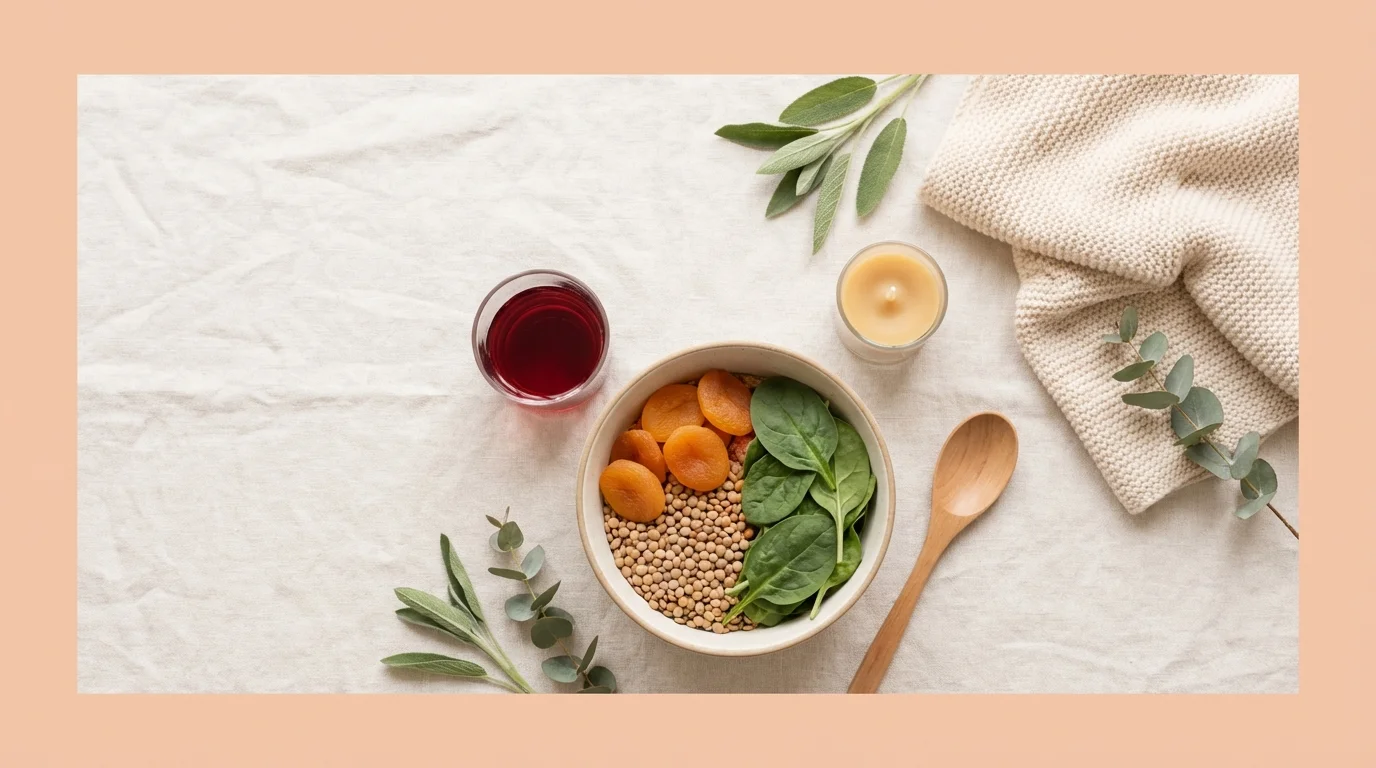
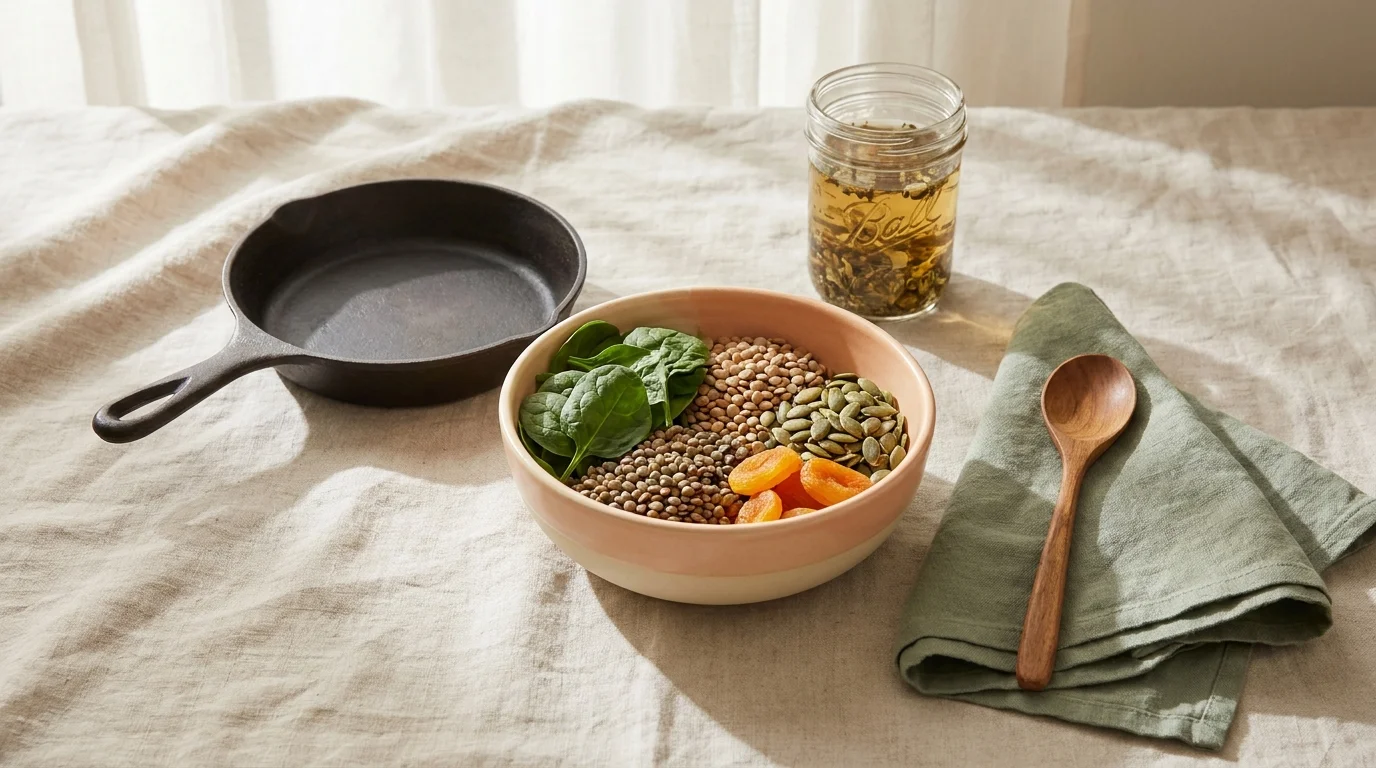
- Lentils, chickpeas, and black beans
- Tofu and tempeh
- Pumpkin seeds and hemp seeds
- Dark leafy greens such as spinach, kale, and Swiss chard
- Dried apricots, raisins, and prunes
- Fortified cereals and whole grains
The Vitamin C Pairing Rule
One of the most evidence-based ways to boost non-haem iron absorption is to pair iron-rich plant foods with vitamin C. Studies show that vitamin C can increase non-haem iron absorption by up to three to six times. Practical pairings include squeezing lemon juice over lentils, eating bell pepper with your spinach salad, or having a small glass of orange juice with your fortified oats.
What Blocks Iron Absorption
Equally important is knowing what to avoid consuming at the same time as your iron-rich meals:
- Calcium-rich foods and supplements: Calcium competes directly with iron for absorption. Avoid taking iron and calcium supplements together.
- Coffee and tea: Tannins and polyphenols in both coffee and tea significantly inhibit iron absorption. Aim to have these drinks at least one to two hours away from iron-rich meals.
- Phytates: Found in raw grains and legumes. Soaking, sprouting, or fermenting these foods can reduce phytate content and improve iron absorption.
When Supplementation Makes Sense
If your ferritin is low, food alone may not be enough to restore your stores quickly, especially if you continue to lose iron through heavy periods each month. In this case, supplementation is often necessary alongside dietary changes.
There are several forms of iron supplement, and they are not all equal in terms of tolerability and absorption:
- Ferrous sulphate: The most commonly prescribed form. Highly absorbable but notorious for causing digestive side effects including constipation, nausea, and dark stools.
- Ferrous bisglycinate (iron glycinate): A chelated form with gentler gastrointestinal effects and good absorption. Often better tolerated and a popular choice in integrative medicine.
- Ferric forms: Generally less well absorbed and less effective than ferrous forms for replenishing stores.
- Liposomal iron: A newer form with high bioavailability and minimal gut side effects, suitable for those who struggle with other forms.
Dosing and duration should always be guided by a healthcare provider and ideally by serial ferritin testing. Taking iron every other day rather than daily has been shown in recent research to improve absorption and reduce side effects by giving the gut time to reset.
Cycle Syncing Your Iron Support
Your cycle is not just a risk factor for iron depletion. It is also a useful map for when to prioritise iron support most strategically.
Menstrual Phase (Days 1-5)
This is when iron loss is highest. Prioritise iron-rich meals every day. If you supplement, be consistent. Add warming, mineral-rich broths and cooked leafy greens. Avoid coffee with meals.
Follicular Phase (Days 6-13)
Continue building your iron stores as oestrogen rises. Your digestive function tends to be stronger in this phase, which may support better nutrient absorption overall. This is a great time to focus on liver, seafood, and legume-based meals.
Ovulatory Phase (Days 14-16)
Energy tends to peak here partly because your haemoglobin is carrying oxygen more efficiently as stores rebuild. Use this window for higher intensity activity, but keep supporting iron through diet.
Luteal Phase (Days 17-28)
Progesterone rises and energy may begin to dip. If your iron stores are low, this phase tends to feel harder. Focus on maintaining iron-rich eating and managing the inflammatory load that can worsen period heaviness next cycle. Reducing alcohol and processed foods here can help reduce flow the following month.
Key Statistics and Sources
- Iron deficiency is the most common nutritional deficiency globally, affecting approximately 1.62 billion people, with women of reproductive age at highest risk (WHO).
- Up to 20 percent of women of reproductive age experience heavy menstrual bleeding (Office on Women's Health).
- Vitamin C can increase non-haem iron absorption by up to six times when consumed in the same meal (NIH Office of Dietary Supplements).
- Research shows that alternate-day dosing of iron supplements improves fractional absorption compared with daily dosing and reduces side effects, as detailed in a 2017 study in The Lancet Haematology.
- Low ferritin has been associated with anovulatory cycles, suggesting iron is a key nutrient for ovulatory health, per research published in the American Journal of Epidemiology.
- The average menstrual cycle causes a loss of 0.5 to 1 mg of iron per day across the month, rising to 2 to 3 mg per day during bleeding in those with heavy periods (NIH).