Why Iron and Your Cycle Are Deeply Connected
Every month, your body does something extraordinary: it builds a thick, nutrient-rich uterine lining, then sheds it. That process requires resources, and iron is one of the most significant. Yet iron is also one of the most commonly depleted nutrients in women of reproductive age, with research from the Centers for Disease Control and Prevention estimating that around 10% of women in the US are iron deficient, with many more sitting in a subclinical grey zone that leaves them tired, foggy, and struggling without ever knowing why.
Understanding how your iron needs shift across your cycle, and how to meet them through food, is one of the most practical things you can do for your energy, mood, and hormonal health. This guide breaks it all down.
What Iron Actually Does in the Body
Iron is a mineral with a wide job description. Most people know it carries oxygen in red blood cells via haemoglobin, but its role goes much further. Iron is essential for energy production at the cellular level, for immune function, for thyroid hormone synthesis, and for the production of dopamine and serotonin, the neurotransmitters that govern your mood and motivation.
This is why low iron does not just make you feel physically tired. It can leave you feeling emotionally flat, mentally sluggish, anxious, and irritable. If you have ever noticed that your PMS symptoms feel worse in the days before your period, low iron could be part of the picture.
"Iron deficiency affects far more than oxygen transport. When stores are low, we see disruptions to neurotransmitter synthesis, impaired thyroid function, and a blunted stress response. Women of reproductive age are uniquely vulnerable, especially if their dietary intake does not compensate for monthly losses."
Dr. Georgianna Donadio, PhD, Founder and Director, National Institute of Whole Health
How Your Cycle Affects Your Iron Levels
Your iron status is not static. It fluctuates across your cycle in response to blood loss, hormonal shifts, and changes in how your gut absorbs nutrients.
Menstrual Phase: Your Highest Need
This is the most obvious point of iron loss. The average woman loses between 30 and 80ml of blood during her period, with each millilitre of blood containing approximately 0.5mg of iron. For most women, this is manageable. But for those with heavy periods, fibroids, or endometriosis, monthly losses can be significantly higher, making dietary iron replacement genuinely difficult to keep pace with.
During menstruation, prioritising iron-rich foods alongside vitamin C (which dramatically boosts absorption) is one of the most effective nutritional strategies you can apply.
Follicular Phase: A Recovery Window
Once bleeding stops, oestrogen begins to rise. Oestrogen has a mild protective effect on iron metabolism, supporting red blood cell production and helping to restore depleted stores. This phase is a good time to build iron back up through diet, with absorption generally being efficient when your gut is not under the inflammatory stress that can accompany menstruation.
Ovulatory Phase: Riding the Oestrogen Peak
At ovulation, oestrogen peaks sharply. Energy tends to feel highest here, and iron stores, if replenished during the follicular phase, will support that vitality. There is nothing specific to do with iron at ovulation, but continuing to eat well sets you up for the second half of your cycle.
Luteal Phase: Where Deficiency Shows Up
Progesterone rises after ovulation and, for many women, digestive function slows slightly, constipation can become more common, and inflammation edges upward in the days before menstruation. If iron stores are already low going into the luteal phase, this is when the symptoms become most noticeable: bone-deep fatigue, low mood, difficulty concentrating, and worsened PMS. Research published through the National Institutes of Health has linked iron deficiency with increased severity of premenstrual symptoms, suggesting that addressing iron status may offer a meaningful route to PMS relief.
Haem vs. Non-Haem Iron: Understanding the Difference
Not all dietary iron is absorbed equally. There are two forms:
- Haem iron comes from animal sources such as red meat, poultry, and fish. It is absorbed at a rate of roughly 15 to 35%, making it the most bioavailable form.
- Non-haem iron comes from plant sources: lentils, beans, tofu, leafy greens, seeds, and fortified foods. Absorption rates are lower, typically 2 to 20%, and can be significantly influenced by what else you eat at the same meal.
This does not mean plant-based eaters cannot meet their iron needs. It means they need to be more strategic. Pairing non-haem iron sources with vitamin C is one of the most well-supported strategies in nutritional science, and it genuinely works.
The Best Iron-Rich Foods to Eat Across Your Cycle
Animal Sources (Haem Iron)
- Red meat (beef, lamb): Approximately 2.5 to 3.5mg of iron per 100g. Also rich in zinc, B12, and complete protein, all of which support hormonal health.
- Liver and organ meats: One of the most concentrated food sources of iron available, with chicken liver providing up to 13mg per 100g serving. Also exceptionally high in folate and vitamin A.
- Oysters and clams: Shellfish are surprisingly rich in iron, with oysters providing around 7mg per 100g, alongside zinc, which supports progesterone production.
- Sardines and salmon: Lower in iron than red meat but still a useful contributor, and their omega-3 content also helps reduce menstrual inflammation.
Plant Sources (Non-Haem Iron)
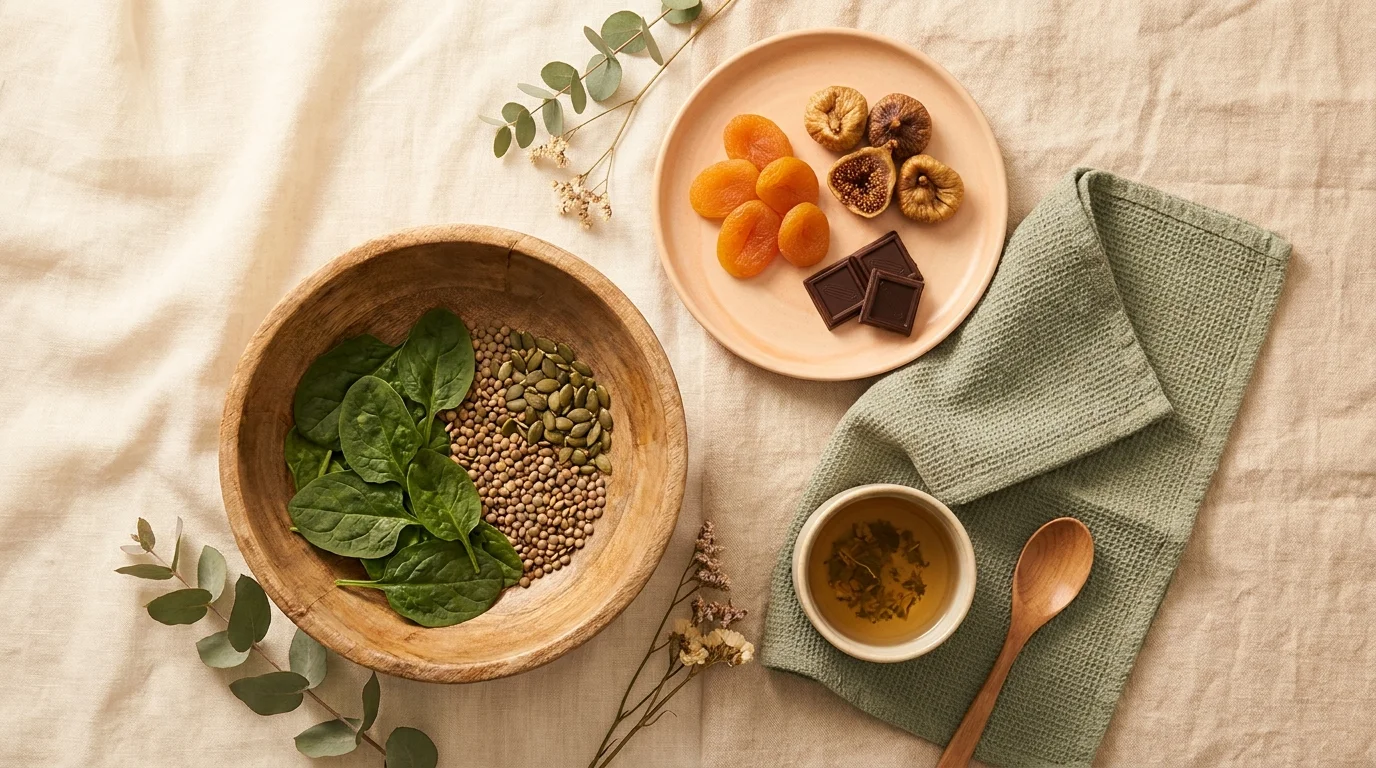
- Lentils: Around 3.3mg per cooked cup, plus fibre that supports oestrogen clearance through the gut.
- Chickpeas and kidney beans: Versatile, affordable, and offering roughly 2 to 3mg per cooked cup.
- Tofu: A solid option for plant-based eaters, with around 3mg per half-cup serving.
- Pumpkin seeds: Around 2.5mg per 30g portion, plus magnesium and zinc. A seed cycling staple for good reason.
- Dark leafy greens: Spinach, Swiss chard, and kale all contribute iron, though absorption is affected by their oxalate content. Lightly cooking or pairing with vitamin C improves uptake.
- Dried apricots, figs, and prunes: A convenient way to boost iron between meals.
- Fortified cereals and breads: Variable in quality but can be a meaningful source if other options are limited.
- Blackstrap molasses: Often overlooked, but one tablespoon contains around 3.5mg of iron.
What Blocks Iron Absorption (and What Helps)
Inhibitors to Know About
Some compounds in food reduce iron absorption, and being aware of them, especially around your period, is worth the effort:
- Calcium: High doses can compete with iron for absorption. Avoid taking calcium supplements at the same time as iron-rich meals.
- Tannins in tea and coffee: Drinking tea or coffee with meals can reduce iron absorption by up to 60%. Try to leave a gap of at least an hour around iron-rich meals, particularly during menstruation.
- Phytates: Found in whole grains and legumes. Soaking, sprouting, or fermenting these foods reduces phytate content significantly.
- Polyphenols in red wine and some vegetables: A minor consideration for most people, but worth noting if iron status is already low.
Enhancers to Lean Into
- Vitamin C: The most effective absorption enhancer. A glass of orange juice, a squeeze of lemon, or a side of red peppers alongside an iron-rich meal can increase non-haem iron absorption by up to three-fold.
- Haem iron alongside non-haem iron: Eating a small amount of meat with plant-based iron sources, known as the meat factor, improves absorption of the plant iron too.
- Cooking in cast iron pans: A genuinely useful tip, particularly for acidic foods like tomato-based sauces, which leach small amounts of iron from the pan into the food.
"The timing of coffee and tea consumption relative to meals is one of the simplest, most overlooked dietary adjustments women can make to meaningfully improve their iron absorption. Shifting that morning cup to before or after eating rather than during can make a measurable difference over time."
Dr. Victor Katch, EdD, Professor Emeritus of Kinesiology, University of Michigan
Signs Your Iron May Be Low
Iron deficiency exists on a spectrum. Full anaemia, where haemoglobin drops below normal, is the most severe end, but many women experience significant symptoms at the subclinical stage, where ferritin (stored iron) is low but blood counts appear normal. Common signs to watch for include:
- Persistent fatigue that does not resolve with sleep
- Shortness of breath on mild exertion
- Heart palpitations
- Brain fog and difficulty concentrating
- Cold hands and feet
- Pale gums or inner eyelids
- Brittle nails or hair loss
- Restless legs, especially at night
- Worsened PMS or mood changes before your period
- Unusual cravings for ice, dirt, or non-food items (a phenomenon called pica)
If several of these resonate, it is worth asking your GP for a full iron panel, including ferritin, serum iron, transferrin saturation, and haemoglobin. Ferritin in particular is the most sensitive early marker of depletion, yet it is often left off routine blood tests unless specifically requested.
Iron Through the Phases: A Practical Eating Strategy
Rather than treating iron as a static daily target, think of it as something to actively prioritise at particular points in your cycle:
- Days 1 to 5 (Menstrual phase): Increase haem iron intake, particularly red meat and shellfish if you eat them. Add vitamin C to every iron-containing meal. Reduce tea and coffee during mealtimes. A warming beef and lentil stew is genuinely one of the best cycle foods you can eat during this window.
- Days 6 to 13 (Follicular phase): Continue building iron stores. This is a good time for liver pate on sourdough, sardines on toast, or a big spinach and chickpea curry with lemon squeezed over the top.
- Days 14 to 16 (Ovulatory phase): Maintain good intake without overthinking it. Focus on variety and overall nutrient density.
- Days 17 to 28 (Luteal phase): If you notice PMS worsening as your period approaches, review your iron intake over the preceding weeks. Pumpkin seeds, dark chocolate (yes, it contains iron), and lentil-based meals are easy additions in this phase.
When Food Is Not Enough
For some women, particularly those with heavy periods, absorption issues, or a history of low ferritin, diet alone may not be sufficient to restore iron stores. In this case, supplementation under medical supervision is appropriate. Research from the NIH Office of Dietary Supplements outlines dosage guidance and forms, with ferrous bisglycinate generally being better tolerated than ferrous sulphate for those who experience digestive side effects.
Always check with your GP before supplementing with iron. Unlike many nutrients, iron can accumulate to harmful levels if taken unnecessarily, and testing before you supplement is genuinely important.
Key Statistics and Sources
- Approximately 10% of women in the US are iron deficient, with higher rates among women of reproductive age. CDC
- Vitamin C can increase non-haem iron absorption by up to 300% when consumed at the same meal. NIH
- Tea consumed with meals can reduce iron absorption by up to 60% due to tannin content. NIH Office of Dietary Supplements
- The average menstrual blood loss is 30 to 80ml per cycle, equating to 15 to 40mg of iron lost each month. NIH
- Low ferritin, even without anaemia, is associated with fatigue, poor mood, and impaired cognitive function in women. NIH Office of Dietary Supplements
- Haem iron from animal sources is absorbed at a rate of 15 to 35%, compared to 2 to 20% for non-haem iron from plant sources. NIH Office of Dietary Supplements