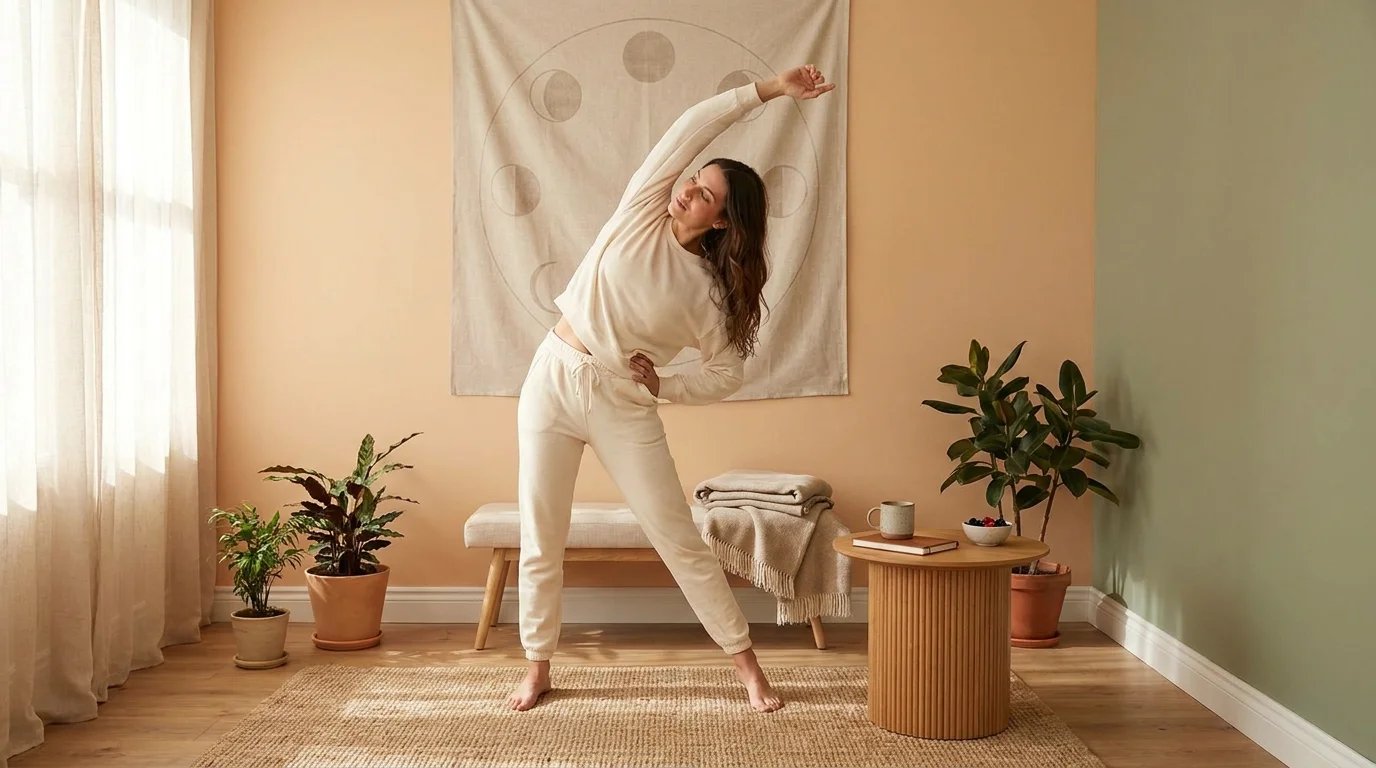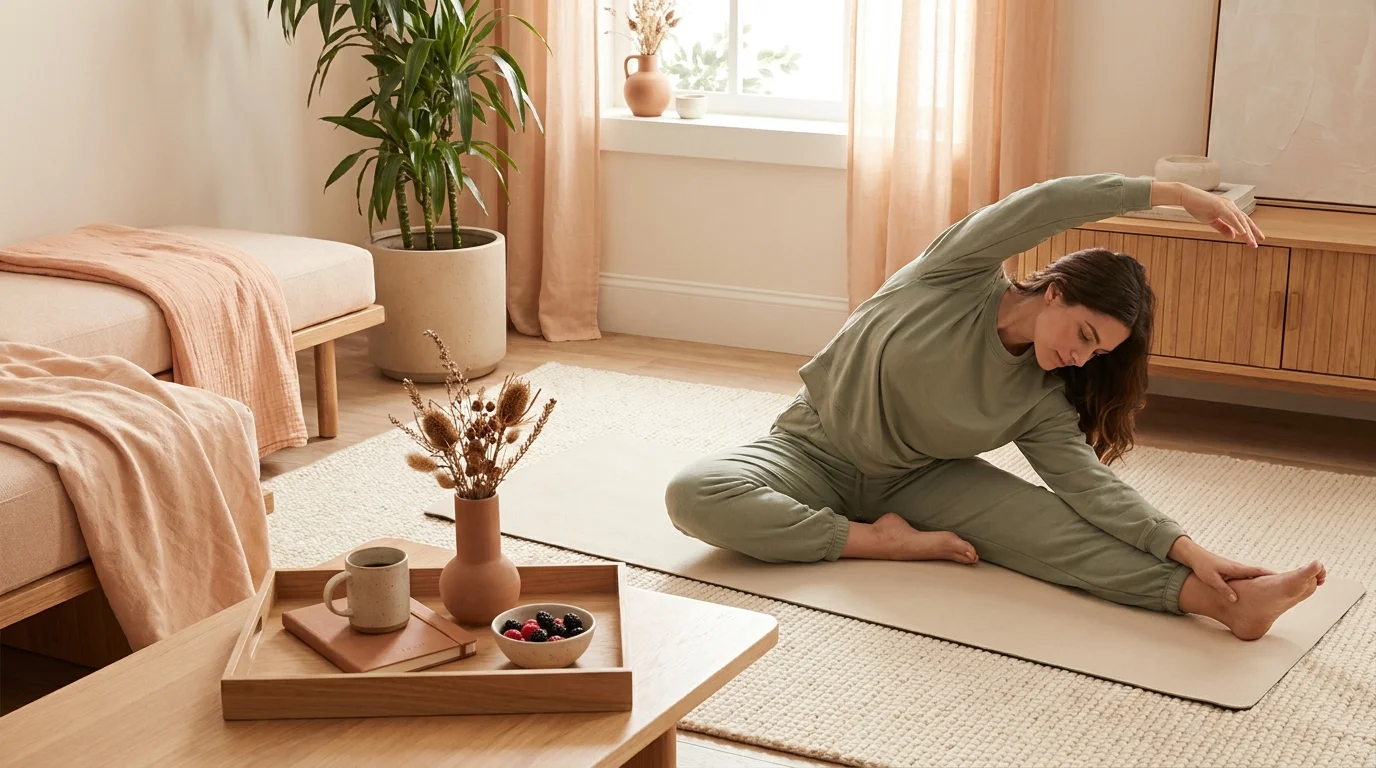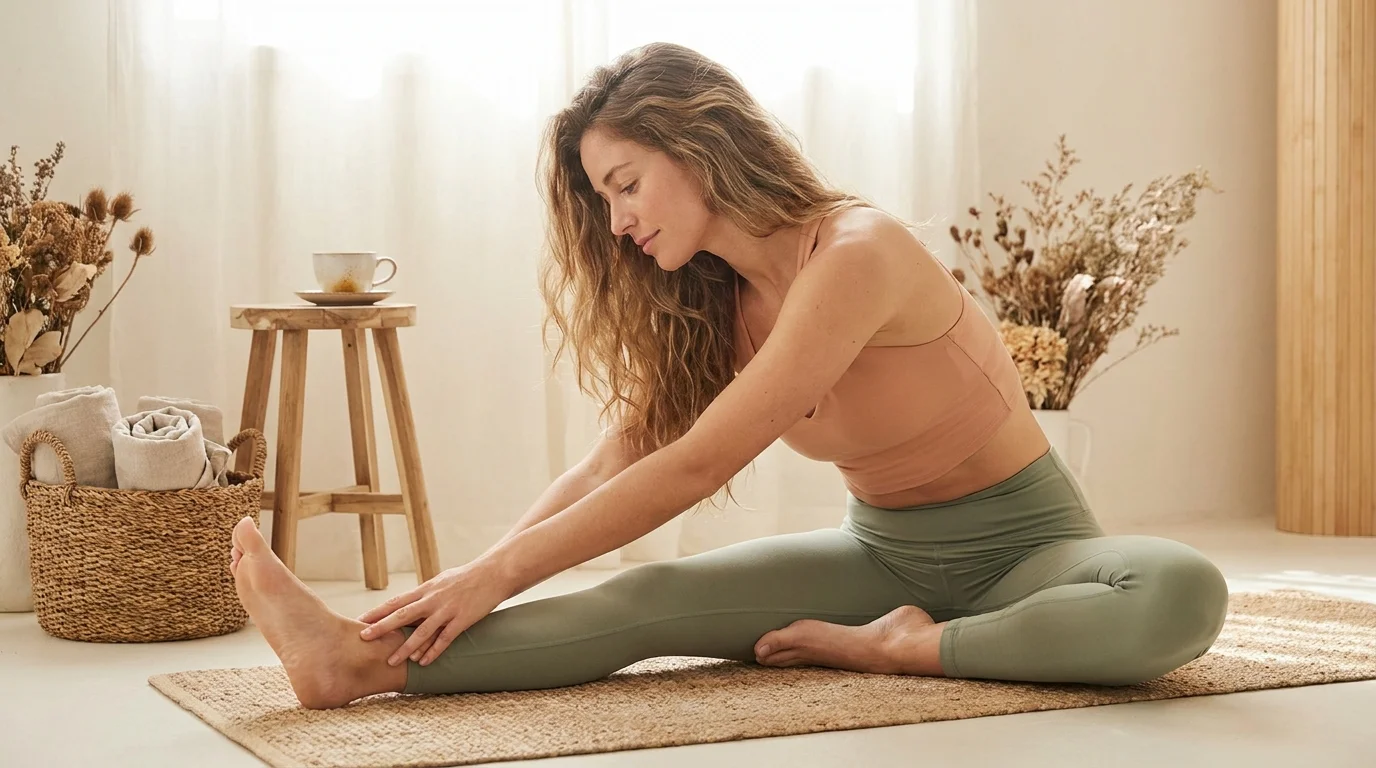
What is hypermobility and why does your cycle make it worse?
Hypermobility is the ability of joints to move beyond their typical range of motion. For women with hypermobile joints, estrogen fluctuations across the menstrual cycle can amplify joint laxity, increase pain sensitivity, and raise injury risk, particularly in the days around ovulation and the late luteal phase.
If you have ever noticed that your knees feel clicky, your hips ache more before your period, or you twisted your ankle at a time when you were not doing anything particularly risky, your hormones may deserve some of the blame. Connective tissue is not as static as we once thought. It responds to the hormonal shifts of your cycle in ways that genuinely change how your body feels and moves, day to day.
This is not just relevant for people with a formal diagnosis of hypermobile Ehlers-Danlos Syndrome (hEDS) or Hypermobility Spectrum Disorder (HSD). Many women without a clinical label experience subtler versions of this: more flexibility before their period, more joint pain in the luteal phase, or a strange vulnerability to strains and sprains at certain points in the month.
How does estrogen affect connective tissue and joint laxity?
Estrogen directly influences the production and degradation of collagen, the primary structural protein in tendons, ligaments, and cartilage. Higher estrogen levels, especially the surge around ovulation, can reduce the stiffness of ligaments and increase joint laxity, making joints less stable and more prone to injury.
Connective tissue contains estrogen receptors. When estrogen rises, it signals fibroblasts (the cells that build connective tissue) to alter their collagen output. Research published in the American Journal of Sports Medicine found that the risk of anterior cruciate ligament (ACL) injury in female athletes is significantly higher in the preovulatory phase, when estrogen peaks, compared to other phases of the cycle.
The mechanism is two-fold. First, estrogen reduces the mechanical stiffness of the ACL itself. Second, it can impair proprioception, the brain's ability to sense where a joint is in space. Both effects together create a window where joints are looser and the neuromuscular feedback that would normally protect them is slightly dulled.
"Estrogen has a direct effect on the structural integrity of ligaments. We see this most dramatically in the ACL, but the principle applies across all connective tissue. Women need to understand that their injury risk is not constant across the month."
Dr. Malachy McHugh, PhD, Director of Research, Nicholas Institute of Sports Medicine and Athletic Trauma, Lenox Hill Hospital
Does progesterone protect joints, or make things worse?
Progesterone has a more complex and somewhat protective role compared to estrogen. It tends to increase ligament stiffness and may partially counteract estrogen-driven laxity, but in the late luteal phase when both hormones drop sharply, many women with hypermobility report their worst symptoms, including joint pain, instability, and fatigue.
The late luteal phase, roughly days 22 to 28 of a 28-day cycle, is when progesterone falls quickly. This drop is closely associated with PMS symptoms, but for hypermobile women it often brings a specific pattern: joints that feel "loose and achy," increased subluxations (partial dislocations), and a general sense of physical fragility. The simultaneous drop in both estrogen and progesterone seems to leave connective tissue in a particularly vulnerable state.
A study in the Journal of Orthopaedic Research found that progesterone receptors are present in the ACL, suggesting that this hormone actively participates in maintaining ligament integrity throughout the cycle. When progesterone support drops in the late luteal phase, that protective influence is temporarily withdrawn.
What is the ovulation window and why is it the highest-risk time for injury?
The 3 to 5 days surrounding ovulation represent the highest-risk window for ligament and tendon injuries in women, due to the LH surge driving peak estrogen levels. For hypermobile women especially, this is the time to modify high-impact or high-instability activities and prioritise neuromuscular warm-ups.
During ovulation, the body releases a surge of luteinising hormone (LH) and estrogen reaches its monthly peak. For most women, this is when they feel strong, energised, and physically capable. And they often are, in terms of muscle power. But connective tissue is simultaneously at its most lax.
This is the paradox of the ovulatory phase for hypermobile women: your muscles are ready to go hard, but your joints need extra support. High-impact sports, deep stretching, and activities requiring rapid direction changes carry elevated risk during this window. This does not mean avoiding exercise, it means adding targeted support: longer warm-ups, resistance band work to activate stabilisers, and avoiding extreme ranges of motion.
- Estrogen peaks at ovulation, softening ligaments and reducing proprioception
- This is NOT the time to push maximum flexibility or unstable movements
- Activate glutes, hip stabilisers, and core before any demanding session
- Consider lower-impact alternatives on your highest-estrogen days if you have hEDS or HSD
How does relaxin fit into the picture?
Relaxin is a hormone primarily associated with pregnancy, but it is also produced in smaller amounts during the luteal phase of every cycle. It acts directly on collagen, reducing its cross-linking and making connective tissue more pliable. For hypermobile women, even small rises in relaxin can noticeably amplify laxity.
Relaxin's role in non-pregnant women is underappreciated. Research from the National Institute of Child Health and Human Development has shown that relaxin levels rise in the luteal phase and can contribute to the joint instability and pelvic girdle pain many women report in the second half of their cycle.
For women with hypermobility, this additional softening on top of already-lax connective tissue creates a compounding effect. The luteal phase, particularly the second half of it, is often when hypermobile women experience pelvic instability, SI joint pain, and a general "falling apart" feeling in the body.
"Relaxin is not just a pregnancy hormone. It fluctuates every cycle, and for women with connective tissue disorders it can be the difference between a manageable week and one where everything hurts. Tracking the cycle is genuinely useful clinical information."
Dr. Clare Fraser, MBBS FRACP, Rheumatologist and Hypermobility Specialist, Royal North Shore Hospital
Which cycle phases are easiest and hardest for hypermobile women?
Menstrual phase (days 1-5): Pain and fatigue often peak
Prostaglandins released during menstruation can amplify systemic inflammation and pain sensitivity. For hypermobile women who already have mast cell involvement or widespread pain, this phase often feels the hardest. Gentle movement, heat therapy, and rest are appropriate priorities.
Follicular phase (days 6-13): The body's best window
Rising estrogen in early to mid-follicular actually improves muscle strength and coordination at lower levels. This phase tends to be the most functional for hypermobile women: joints feel more manageable, fatigue is lower, and exercise tolerance is better. This is the time to build strength in stabilising muscles.
Ovulatory phase (days 12-16): High energy, high laxity risk
As discussed above, this is the highest-risk window for injury despite feeling physically capable. Modify rather than avoid, and focus on controlled, supported movement.
Luteal phase (days 17-28): Manage the drop
Early luteal can feel stable, but the second half of this phase, particularly days 22 to 28, brings the combined drop in estrogen and progesterone that many hypermobile women find most destabilising. Restorative movement, pelvic floor support, and avoiding high-impact or extreme-range activities is wise here.
| Phase | Joint Stability | Best Movement |
| Menstrual | Low | Walking, gentle yoga (avoid deep hip openers) |
| Follicular | Improving | Strength training, Pilates, swimming |
| Ovulatory | Most lax | Supported strength work, avoid max flexibility |
| Luteal | Variable to low | Pilates, resistance bands, restorative movement |
What exercises help stabilise hypermobile joints across the cycle?
Targeted neuromuscular training, particularly Pilates, resistance band work, and isometric exercises, builds the muscular support that compensates for loose connective tissue. These should be prioritised in the follicular phase when training adaptations are strongest, and maintained as gentler practice through the luteal phase.
The goal for hypermobile women is not to stretch further, it is to build strength through the full range that their joints already allow. This means:
- Isometric holds: Wall sits, plank variations, and static hip exercises build stability without moving through vulnerable ranges.
- Resistance band work: Banded clamshells, hip abductions, and banded squats recruit the stabilising muscles around the hips and knees without destabilising load.
- Pilates: The emphasis on controlled movement, neutral spine, and deep stabilisers makes Pilates particularly well-suited to hypermobile bodies.
- Proprioception training: Single-leg balance work, balance board practice, and agility drills help retrain the neuromuscular system to protect joints more effectively.
Importantly, hypermobile women should avoid end-range stretching, particularly around ovulation and the late luteal phase. Flexibility is not the limiting factor. Stability is.
Should you avoid certain activities in specific phases?
Rather than avoiding activities outright, the goal is to modify intensity, depth, and load based on where you are in your cycle. Avoiding all exercise can worsen joint instability over time by reducing muscular support. Thoughtful modification is more effective than avoidance.
Some specific modifications worth considering:
- Hot yoga and deep flexibility classes: The combination of heat and peak estrogen at ovulation significantly increases passive flexibility, which can lead to overstretching. Keep classes to supported styles in the ovulatory and late luteal phases.
- High-impact sports: Netball, basketball, and similar sports involve rapid direction changes with high ACL demand. Ensure thorough neuromuscular warm-up and consider bracing if you have known instability.
- Weightlifting: Focus on controlled tempo, avoid ego lifting in the late luteal phase when proprioception may be reduced, and prioritise form over load.
- Women are 2-8x more likely to sustain ACL injuries than men, with hormonal factors cited as a significant contributor. American Journal of Sports Medicine, 2007
- Approximately 1 in 500 people has hEDS; broader hypermobility spectrum disorders may affect up to 10% of the population. NIH, StatPearls 2023
- ACL laxity increases by approximately 20-30% in the preovulatory phase compared to the early follicular phase. Journal of Orthopaedic Research, 2015
- Estrogen receptors have been identified in the ACL, patellar tendon, and articular cartilage, confirming direct hormonal influence on joint tissue. American Journal of Sports Medicine, 2007
- Women with hypermobility report significantly worse symptom scores during the luteal phase compared to the follicular phase. BMC Musculoskeletal Disorders, 2020