You might have noticed a pattern: you catch every cold that goes around in the week before your period, or you feel almost invincible mid-cycle, breezing past the sniffles that take down your colleagues. That is not a coincidence. Your immune system does not operate on a flat, unchanging baseline. It rises, shifts, and dips in direct response to the hormonal rhythms of your menstrual cycle, and understanding that rhythm could change how you approach everything from nutrition to rest to scheduling social events.
The connection between reproductive hormones and immune function is one of the more fascinating and underappreciated areas of women's health research. Estrogen, progesterone, and even testosterone have receptors on immune cells, meaning your body is in constant hormonal conversation with its own defenses. Getting familiar with that conversation is one of the most practical things you can do for your long-term wellbeing.
Why Your Hormones Talk to Your Immune System
Immune cells including T cells, B cells, natural killer cells, and macrophages all carry receptors for sex hormones. This means estrogen and progesterone are not just reproductive signals; they are active modulators of how aggressively or gently your immune system responds at any given moment.
Research published by the National Institutes of Health confirms that estrogen generally promotes a more robust, pro-inflammatory immune response, while progesterone tends to be immunosuppressive, dampening that response to protect a potential pregnancy. Both functions are essential, but they mean your vulnerability and resilience fluctuate in a predictable, trackable cycle.
"Sex hormones are not peripheral to immunity. They are central regulators. Understanding how estrogen and progesterone shift immune tone across the cycle gives us a powerful framework for personalized health strategies in women."
- Dr. Sabra Klein, Ph.D., Professor of Molecular Microbiology and Immunology, Johns Hopkins Bloomberg School of Public Health
This also helps explain why women are more likely than men to develop autoimmune conditions, which now affect roughly 8 percent of the population, with women accounting for nearly 80 percent of cases. A more reactive immune system has benefits, but it also carries risks when it becomes chronically over-stimulated.
Phase by Phase: Your Immune System Through the Cycle
Menstrual Phase (Days 1-5, approximately)
As your period begins, both estrogen and progesterone are at their lowest. This hormonal trough can leave your immune system in a temporarily depleted state. Prostaglandins, the compounds that trigger uterine contractions, also drive systemic inflammation during this phase, which is part of why you might feel achier, more fatigued, or more susceptible to illness when you are bleeding.
Inflammatory markers tend to be elevated during menstruation. A study from the National Library of Medicine found that cytokine levels, the signalling proteins that coordinate immune responses, fluctuate significantly across the menstrual cycle, with notable shifts during menstruation itself.
This is the phase to prioritise rest, warm nourishing foods, and reducing unnecessary immune stressors like alcohol, late nights, and intense exercise. Your body is already managing significant internal work.
Follicular Phase (Days 6-13, approximately)
As estrogen begins to rise in the follicular phase, it brings with it a lift in energy, mood, and immune resilience. Estrogen has been shown to enhance the activity of natural killer cells and promote antibody production, making this phase one where your immune system is sharpening and becoming more vigilant.
You may notice you feel robust, energised, and less likely to get sick during this window. Your body is gearing up for ovulation, and from an evolutionary standpoint, this is the phase where you are most likely to be reproductively active and therefore most in need of a strong immune defence.
This is a great time to schedule vaccinations if you have been putting them off. Research suggests that immune responses to vaccines may be stronger during the follicular phase, when estrogen is rising and immune activity is heightened.
Ovulatory Phase (Days 14-16, approximately)
Ovulation itself represents a fascinating immune compromise. For fertilisation to be possible, the immune system must briefly tolerate what would otherwise be recognised as foreign cells. Estrogen peaks just before ovulation, but there is also a subtle local immune modulation happening in the reproductive tract to allow sperm to survive.
You are generally still in a strong immune state during the ovulatory window, though you may be slightly more susceptible to respiratory infections, since the immune system is engaged in this delicate reproductive balancing act. Many women report feeling at their physical peak during this phase, which reflects the combined lift of peak estrogen and the surge in luteinising hormone (LH).
Luteal Phase (Days 17-28, approximately)
This is where things get most noticeable for many women. After ovulation, progesterone rises significantly and remains elevated through the second half of the cycle. Progesterone's immunosuppressive effects are intentional: if fertilisation occurs, the immune system must not attack an embryo. But even when pregnancy does not occur, this dampening effect stays in place until progesterone drops just before your period.
A lower immune vigilance in the luteal phase means you are genuinely more vulnerable to viruses, bacterial infections, and inflammatory flares. Women with autoimmune conditions like lupus, rheumatoid arthritis, and multiple sclerosis often report symptom flares in the late luteal phase. Allergies and asthma can also worsen during this window.
"The luteal phase is a period of relative immune suppression, and we see this clinically in women who experience worsening autoimmune symptoms before their period. Tracking these patterns helps us understand what the body is doing and respond more intelligently."
- Dr. Janelle Luk, MD, Reproductive Endocrinologist and Fertility Specialist, Generation Next Fertility
Pre-menstrual immune dips are real and validated. If you tend to get sick right before your period, or feel run down and inflamed in that final week, your hormones are a significant contributing factor.
Practical Strategies for Each Phase
Support Your Defences During the Luteal Phase
Because your immune system is working with less capacity in the second half of your cycle, this is the time to be most proactive. Consider:
- Prioritising sleep: Immune repair happens during deep sleep, and progesterone can disrupt sleep quality in the late luteal phase, creating a compounding vulnerability. Aim for consistent sleep and dark sleeping environments.
- Reducing alcohol: Alcohol suppresses immune function even in small amounts. During an already immunosuppressed phase, the impact is amplified.
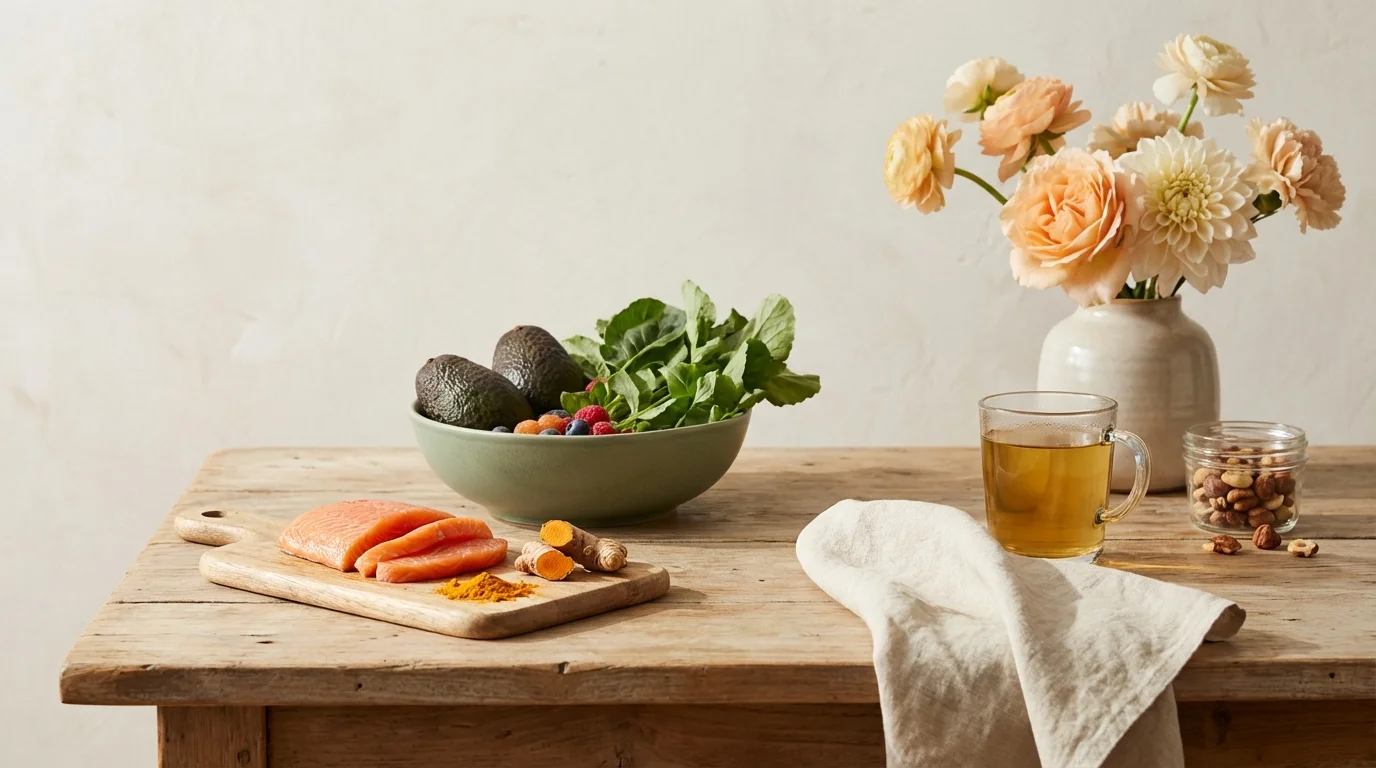
- Anti-inflammatory foods: Turmeric, ginger, leafy greens, and oily fish can help buffer the inflammatory surge that peaks as progesterone drops at the end of the cycle.
- Managing stress: Cortisol further suppresses immune function. The luteal phase is not the time for your most demanding commitments if you can help it.
Capitalise on Follicular Strength
Use the follicular and early ovulatory phases to do the things that tax your immune system most, including high-intensity exercise, social commitments in crowded spaces, and exposure to new environments or travel. Your immune system is better equipped to handle those challenges during rising estrogen.
If you are considering supplementing with immune-supportive nutrients like zinc or vitamin C, the follicular phase is also a good time to assess your baseline and build up reserves.
Menstrual Phase: Reduce the Inflammatory Load
During menstruation, focus on reducing anything that adds to the body's inflammatory burden. This includes ultra-processed foods, excessive caffeine, and intense physical training. Instead, lean into:
- Iron-rich foods to replace blood loss and support energy
- Warming, easy-to-digest meals like soups and stews
- Gentle movement like walking or yin yoga
- Adequate rest, because your body is doing a significant amount of biological housekeeping
Autoimmune Conditions and the Cycle Connection
For women living with autoimmune conditions, cycle tracking is not just wellness advice, it is genuinely useful clinical information. Many autoimmune conditions are driven by an overactive immune response, and the estrogen-dominant follicular phase can trigger flares in conditions like lupus, where the immune system is already prone to over-reactivity.
Conversely, the progesterone-dominant luteal phase can bring temporary relief for some autoimmune conditions while worsening others. Multiple sclerosis research has shown that relapse rates may vary across the cycle. Tracking your symptoms alongside your cycle phases gives you and your healthcare provider a much clearer picture of what is actually happening.
If you have an autoimmune condition, discuss cycle tracking with your specialist. The patterns you observe could be genuinely clinically significant.
Nutrition for Immune-Hormone Balance All Cycle Long
Beyond phase-specific strategies, there are foundational nutrients that support both hormonal health and immune function throughout the entire cycle:
- Vitamin D: Deficiency is common and linked to both hormonal disruption and reduced immune defence. Aim for regular sun exposure and consider supplementing, especially in winter months.
- Zinc: Essential for immune cell development and has a role in progesterone production. Found in pumpkin seeds, red meat, and legumes.
- Omega-3 fatty acids: Help regulate inflammatory pathways that are particularly active during menstruation and the late luteal phase.
- Probiotics and fermented foods: Your gut microbiome directly influences immune function and also helps regulate estrogen metabolism. Supporting gut health is one of the most effective things you can do for your hormonal immune balance.
- Magnesium: Supports progesterone production, reduces inflammation, and helps regulate the stress response that compounds immune suppression.
What Cycle Tracking Reveals About Your Immunity
One of the most empowering aspects of understanding the immune-cycle connection is that you stop pathologising your body's natural fluctuations. That week before your period when you feel depleted, achier, and more prone to every virus going around is not a sign that something is wrong with you. It is your hormones doing their job, and knowing that means you can plan around it rather than push through it.
Tracking your energy, illness episodes, and inflammatory symptoms alongside your cycle phases over two or three months will reveal your personal immune map. You will start to see when you are resilient and when you need to be protective. That is not just useful information; it is a form of body literacy that most women are never given access to.
Key Statistics and Sources
- Women account for approximately 80% of autoimmune disease cases, likely linked to sex hormone influence on immune regulation. NIH, 2019
- Estrogen has been shown to enhance natural killer cell activity and promote antibody production. National Library of Medicine
- Cytokine levels fluctuate significantly across the menstrual cycle, with notable changes during menstruation and the luteal phase. National Library of Medicine
- Progesterone exerts immunosuppressive effects to protect a potential embryo, leaving the immune system more vulnerable in the luteal phase. NIH
- Zinc is essential for the development and function of immune cells and plays a role in reproductive hormone synthesis. NIH Office of Dietary Supplements
- Vitamin D deficiency has been associated with increased susceptibility to infection and with hormonal imbalances including disrupted menstrual cycles. NIH Office of Dietary Supplements