If you have PCOS and you've tried managing insulin resistance with little success, inflammatory PCOS might be the missing piece of your picture. Understanding what inflammatory PCOS is and how to treat it can completely change your approach to symptoms like fatigue, painful periods, acne, and stubborn weight. Chronic low-grade inflammation is now recognised as a core driver in a significant subset of PCOS cases, and yet it's often overlooked in standard care. For a broader overview of the condition, start with The Complete Guide to PCOS, then come back here to go deeper on the inflammatory type.
What Is Inflammatory PCOS?
Inflammatory PCOS is a subtype of polycystic ovary syndrome in which chronic, low-grade systemic inflammation is the primary hormonal disruptor. Unlike insulin-resistant PCOS, the root driver here is immune dysregulation that interferes with ovarian function, elevates androgens, and disrupts the menstrual cycle even in the absence of classic blood sugar problems.
When we talk about PCOS types, inflammatory PCOS sits alongside insulin-resistant, adrenal, and post-pill subtypes. Identifying which type or combination of types you have matters enormously, because the treatment approach differs. In inflammatory PCOS, the immune system is chronically activated, producing pro-inflammatory cytokines that signal the ovaries to produce excess androgens. This inflammatory cascade can suppress ovulation, thin the uterine lining, and worsen common PCOS symptoms like hair thinning, acne, and irregular cycles.
Research published in the Journal of Clinical Endocrinology and Metabolism confirmed that women with PCOS show significantly elevated markers of oxidative stress and chronic inflammation compared to women without the condition, independent of body weight or insulin sensitivity. This tells us inflammation isn't just a secondary symptom, it can be a primary cause.
What Are the Signs You Might Have Inflammatory PCOS?
Signs of inflammatory PCOS include persistent fatigue, skin issues like acne or eczema, joint pain, digestive problems, food sensitivities, and elevated inflammatory markers on blood tests, such as high CRP, white blood cell count, or elevated homocysteine, often alongside irregular cycles and androgen excess.
One distinguishing feature of inflammatory PCOS is that women often have normal or near-normal fasting insulin and blood glucose levels, but still experience classic PCOS symptoms. You might also notice that your symptoms flare alongside gut disturbances or periods of high stress, both of which are potent triggers for the immune system.
Key signs to look for include:
- Chronic fatigue that isn't explained by poor sleep alone
- Skin conditions including hormonal acne, rosacea, or eczema
- Digestive symptoms: bloating, IBS-type patterns, or food sensitivities
- Headaches or joint stiffness, particularly in the mornings
- Elevated CRP or white blood cell count on a standard blood panel
- Irregular or absent ovulation with relatively normal insulin markers
If you suspect your hormones are off but your standard tests look normal, it is worth exploring further. Our guide to how to test your hormones at home accurately can help you identify what to look for and ask your doctor about.
"Inflammation is not a peripheral issue in PCOS. For a meaningful proportion of women, it is the engine driving the whole condition. Until we address the inflammatory load, hormonal balance remains elusive."
Dr. Felice Gersh, MD, Integrative Gynaecologist, Integrative Medical Group of Irvine
How Does Inflammation Drive Hormonal Imbalance in PCOS?
Chronic inflammation activates the immune system in a way that directly disrupts ovarian function. Pro-inflammatory cytokines, particularly TNF-alpha and interleukin-6, stimulate theca cells in the ovaries to produce excess androgens like testosterone, while also impairing the LH surge needed for ovulation, creating a cycle of hormonal disruption.
This mechanism helps explain why women with inflammatory PCOS often have elevated testosterone or DHEA-S without the insulin resistance that typically triggers androgen overproduction. The inflammatory pathway is essentially hijacking the same signalling routes that hormones use, confusing the body's internal messaging system.
Chronic inflammation also affects the gut microbiome, which in turn influences oestrogen metabolism via the estrobolome. When the gut is inflamed, oestrogen is reabsorbed rather than excreted, contributing to relative oestrogen excess and progesterone deficiency. This hormonal imbalance can worsen PCOS symptoms and make cycles more irregular. You can read more about this connection in our article on Inflammation and Hormones: Your Cycle Guide.
A 2018 review in Frontiers in Physiology highlighted that inflammatory markers including CRP, TNF-alpha, and IL-6 are consistently elevated in women with PCOS, and that this inflammation precedes and predicts many of the metabolic and reproductive complications associated with the condition.
What Is the Best Inflammatory PCOS Diet?
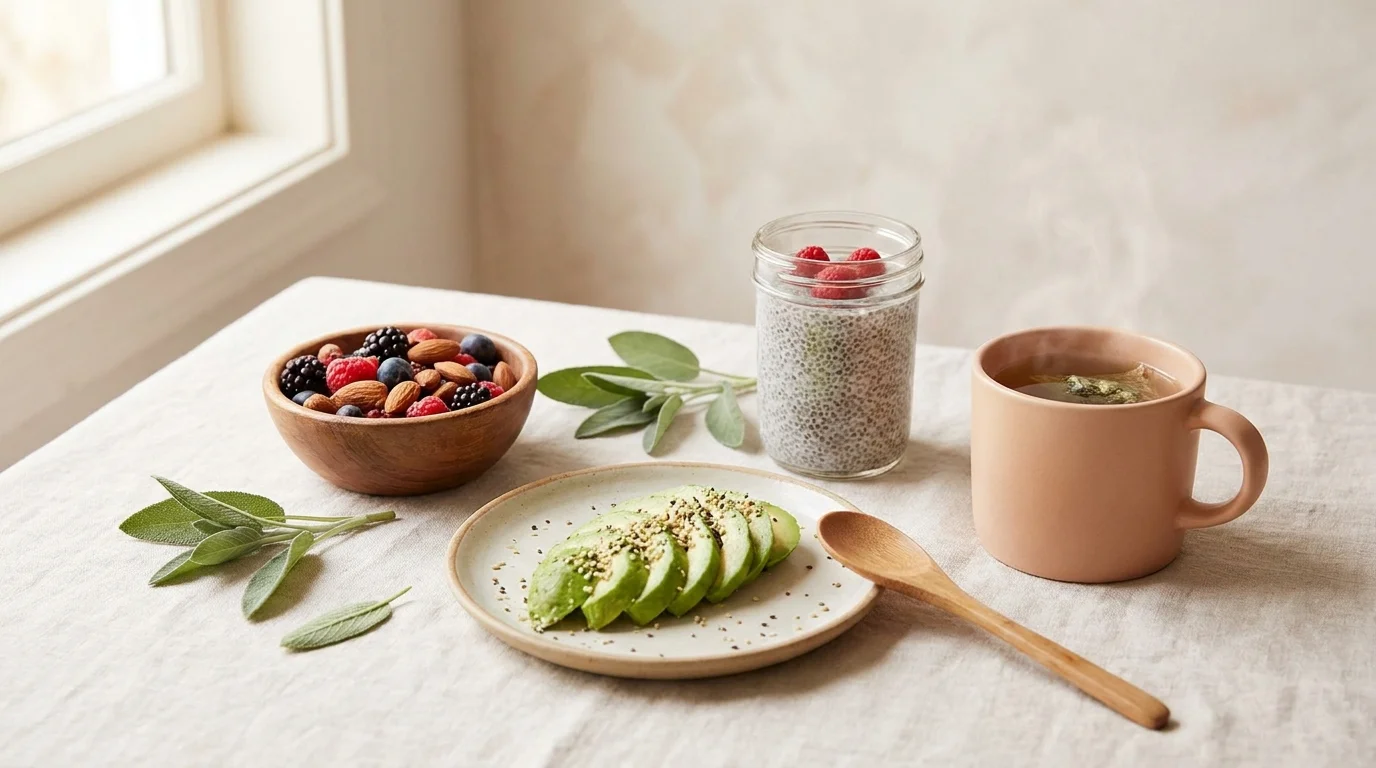
An inflammatory PCOS diet centres on whole, unprocessed foods that reduce immune activation and support gut health. The focus is on colourful vegetables, quality proteins, anti-inflammatory fats like omega-3s, and low-glycaemic carbohydrates, while minimising ultra-processed foods, refined sugar, seed oils, and potential trigger foods like gluten and dairy for sensitive individuals.
Building a solid anti-inflammatory PCOS plan around food is one of the most evidence-backed approaches available. Here is what the research and clinical practice consistently recommend:
Foods to prioritise
- Fatty fish (salmon, sardines, mackerel): rich in EPA and DHA, which directly reduce inflammatory cytokines
- Dark leafy greens (spinach, kale, rocket): high in magnesium and antioxidants that lower oxidative stress
- Berries and colourful produce: packed with polyphenols that modulate immune responses
- Extra virgin olive oil: oleocanthal has a COX-inhibiting effect similar to ibuprofen
- Turmeric and ginger: well-studied for their NF-kB pathway inhibition
- Fermented foods (kefir, kimchi, sauerkraut): support gut microbiome diversity and reduce intestinal inflammation
Choosing PCOS-friendly snacks for blood sugar control is also key, since blood sugar spikes can trigger secondary inflammation even when insulin resistance is not your primary driver.
Foods to reduce or avoid
- Refined sugars and high-fructose corn syrup
- Ultra-processed foods and seed oils (canola, sunflower, soybean)
- Alcohol, which increases intestinal permeability and elevates inflammatory markers
- Conventional dairy and gluten, particularly if you notice digestive symptoms or skin flares after eating them
"In my clinical experience, removing ultra-processed foods and seed oils while adding omega-3s and fermented foods produces measurable changes in inflammatory markers within eight to twelve weeks in women with PCOS."
Dr. Lara Briden, ND, Naturopathic Doctor and Author of Period Repair Manual
How Does an Anti-Inflammatory PCOS Plan Go Beyond Diet?
A comprehensive anti-inflammatory PCOS plan addresses sleep, stress, movement, and environmental exposures alongside nutrition. Each of these factors independently modulates inflammatory pathways, meaning diet alone will not fully resolve inflammatory PCOS if sleep is poor, stress is chronic, or the body is regularly exposed to endocrine-disrupting chemicals.
Sleep
Poor sleep is one of the most potent inflammation triggers there is. Even a single night of disrupted sleep significantly raises CRP and IL-6. Prioritising seven to nine hours, keeping a consistent sleep-wake schedule, and reducing blue light exposure in the evening are non-negotiable parts of an anti-inflammatory PCOS protocol.
Stress management
Cortisol, when chronically elevated, activates the same inflammatory pathways as dietary triggers. Practices like breathwork, yoga, walking in nature, and even consistent social connection have measurable anti-inflammatory effects. If stress is a major factor for you, the adrenal PCOS subtype may also be relevant to explore alongside the inflammatory picture.
Movement
Regular moderate exercise reduces inflammatory markers. Walking, swimming, Pilates, and resistance training are all excellent choices. High-intensity training every day can backfire if it raises cortisol further, so a varied approach works best. The key is consistency over intensity.
Environmental toxin reduction
Endocrine-disrupting chemicals (EDCs) found in plastics, non-stick cookware, conventional beauty products, and pesticide-laden produce can fuel inflammation and interfere with hormonal signalling. Swapping to glass or stainless steel food storage, choosing organic where possible for the 'dirty dozen', and simplifying your personal care products are practical starting points.
What Supplements Support an Anti-Inflammatory PCOS Plan?
Evidence-backed supplements for inflammatory PCOS include omega-3 fatty acids, vitamin D, magnesium, NAC (N-acetylcysteine), berberine, and inositol. These nutrients target different aspects of the inflammatory and hormonal cascade, and several have been studied specifically in women with PCOS.
A 2019 meta-analysis in Reproductive Biology and Endocrinology found that omega-3 supplementation significantly reduced testosterone levels and improved inflammatory markers in women with PCOS. Vitamin D deficiency is also highly prevalent in PCOS and has been directly linked to greater inflammatory activity, making testing and correcting levels a priority.
NAC is particularly interesting for inflammatory PCOS because it acts as a precursor to glutathione, the body's master antioxidant, and has been shown to reduce androgen levels and improve ovulation rates. Inositol, especially the myo-inositol form, improves cellular signalling and has anti-inflammatory downstream effects, even in women without pronounced insulin resistance.
Always work with a healthcare provider to identify your specific deficiencies and appropriate dosages before starting a supplement protocol.
Key Statistics and Sources
- Women with PCOS have CRP levels up to 96% higher than women without PCOS, independent of BMI. Source: JCEM, 2017
- Inflammatory markers including TNF-alpha and IL-6 are elevated in up to 63% of women diagnosed with PCOS. Source: Frontiers in Physiology, 2018
- Omega-3 supplementation reduced testosterone by an average of 13% in women with PCOS across multiple randomised trials. Source: Reproductive Biology and Endocrinology, 2019
- Up to 85% of women with PCOS are estimated to have some degree of vitamin D insufficiency, which correlates with higher inflammation scores. Source: NCBI, 2015
- A Mediterranean-style anti-inflammatory diet reduced testosterone and improved menstrual regularity in PCOS within 12 weeks in one clinical trial. Source: Nutrients, 2020