A Simple Cup With a Surprisingly Powerful Effect
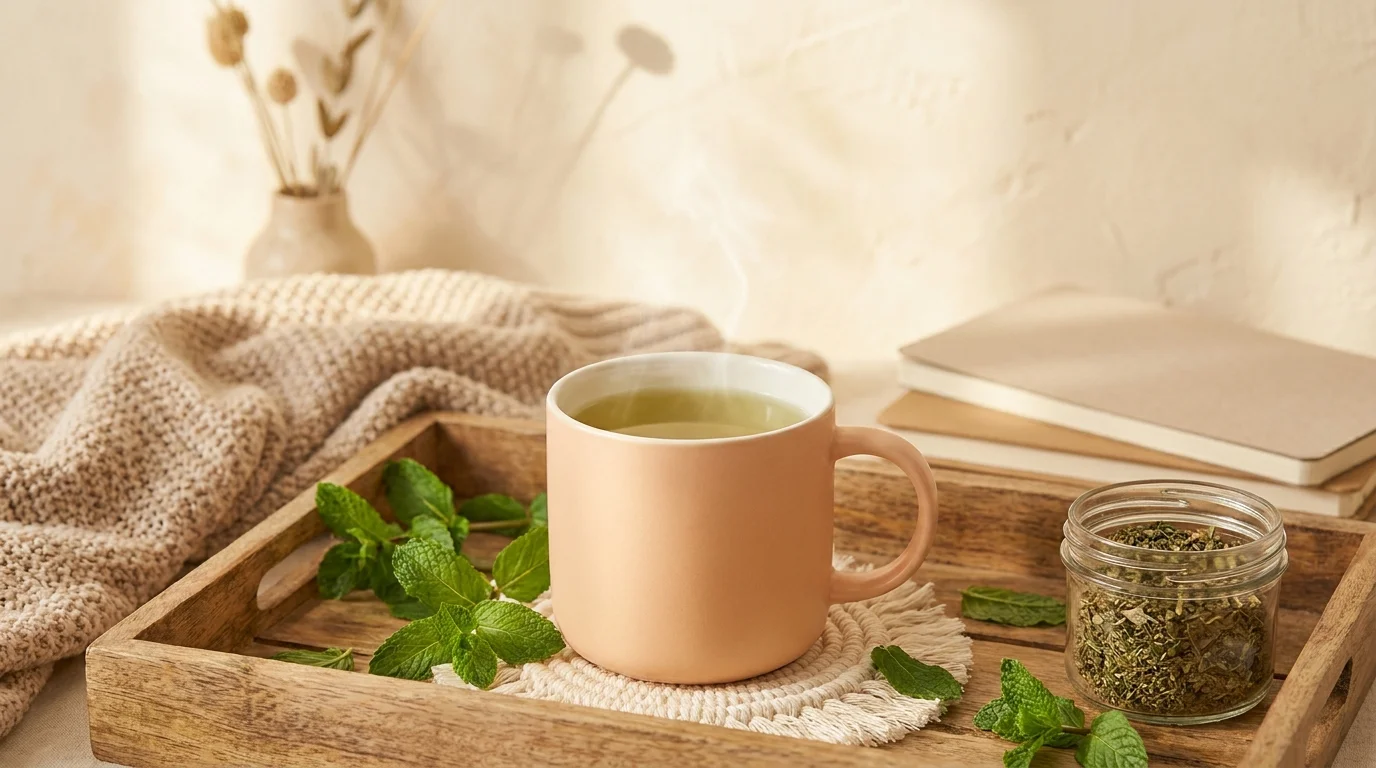
If you have ever Googled "natural ways to lower androgens" or searched for something, anything, to help with PCOS-related hair growth, acne, or irregular cycles, you have probably come across spearmint tea. It sounds almost too simple. A cup of herbal tea, twice a day, shifting your hormone profile? And yet, the research is more compelling than most people expect.
Spearmint (Mentha spicata) is not the same as peppermint, and that distinction matters. Spearmint contains a compound called rosmarinic acid, along with other polyphenols and phytonutrients that have genuine, measurable effects on androgen hormones. This is not folk medicine. There are published clinical trials. And for people with elevated androgens, whether due to PCOS, hormonal acne, or just the fluctuations of a regular cycle, this is worth understanding properly.
What Are Androgens and Why Do They Matter for Your Cycle?
Androgens are often called "male hormones," but that framing is unhelpful. Everyone with ovaries produces androgens, including testosterone, DHEA, and androstenedione. These hormones play important roles in libido, bone density, mood, and energy. The problem arises when androgen levels climb too high, a state called hyperandrogenism.
Elevated androgens are a hallmark of polycystic ovary syndrome (PCOS), affecting up to 10-13% of people with ovaries worldwide. But you do not need a PCOS diagnosis to experience the effects of mildly elevated androgens. Things like stress, poor sleep, blood sugar dysregulation, and high dairy or refined carbohydrate intake can all nudge androgen levels upward, contributing to:
- Hormonal breakouts, particularly around the jaw and chin
- Excess facial or body hair (hirsutism)
- Irregular or anovulatory cycles
- Thinning hair at the scalp (androgenic alopecia)
- Reduced sex hormone-binding globulin (SHBG), meaning more "free" testosterone circulates
Conventional treatments include oral contraceptives and anti-androgen medications like spironolactone. These can be effective, but they also come with side effects, and many people want to explore dietary and lifestyle options first or alongside medical treatment.
The Science Behind Spearmint and Androgens
The most widely cited study on spearmint and hormones is a randomised controlled trial published in Phytotherapy Research in 2010. Forty-two women with PCOS were divided into two groups: one drank two cups of spearmint tea daily for 30 days, the other drank a herbal placebo tea. At the end of the trial, the spearmint group showed significantly lower free testosterone levels and a reduction in self-reported hirsutism, alongside an increase in luteinising hormone (LH) and follicle-stimulating hormone (FSH), both important markers of ovarian function.
"The spearmint herbal tea had clear anti-androgenic properties. There was a significant decrease in free testosterone levels in the spearmint tea group compared with the control group."
An earlier pilot study from 2007, published in the same journal, had already shown that just five days of twice-daily spearmint tea consumption reduced free testosterone levels in women with hirsutism, while total testosterone remained stable. This is a meaningful distinction: it is the free (unbound) testosterone that drives most androgen symptoms at tissue level.
The proposed mechanism involves rosmarinic acid and other polyphenols in spearmint inhibiting the enzyme 5-alpha reductase, which converts testosterone into dihydrotestosterone (DHT), the more potent androgen responsible for hair loss and certain types of acne. Spearmint also appears to reduce the activity of enzymes involved in androgen synthesis at the adrenal and ovarian level, though the precise pathway is still being studied.
What This Means Phase by Phase
Spearmint tea is not a phase-specific supplement in the way some nutrients are, but understanding your cycle can help you use it more intentionally and interpret any changes you notice.
Menstrual Phase (Days 1-5)
During menstruation, all hormones are at their lowest. Androgens are not dramatically elevated for most people during this phase, but inflammation is often higher and skin can feel more reactive. Spearmint's anti-inflammatory properties, driven by its rosmarinic acid content, may help reduce prostaglandin-related inflammation during this time. A warm cup of spearmint tea is also simply soothing.
Follicular Phase (Days 6-13)
As oestrogen rises during the follicular phase, SHBG also tends to increase, which means free testosterone naturally decreases for most people. If you have been drinking spearmint tea consistently, this phase is often when people first notice improvement in skin clarity, as the combination of rising oestrogen and lower free androgens creates a clearer complexion.
Ovulatory Phase (Days 14-16)
Testosterone actually peaks just before ovulation, and for many people this is a welcome boost to libido, confidence, and energy. You do not necessarily want to suppress androgens aggressively during this window. Spearmint tea is a gentle modulator rather than a pharmaceutical blocker, so two cups a day is unlikely to flatten this natural peak entirely, but it is worth being aware of.
Luteal Phase (Days 17-28)
This is when many people with elevated androgens feel the worst. Progesterone can convert to androgens in some individuals, acne flares in the week before menstruation, and both DHT activity and skin oiliness tend to peak. Consistent spearmint tea consumption throughout the luteal phase may help reduce the severity of these symptoms over time, though it typically takes four to eight weeks of regular use to see meaningful changes.
Expert Perspectives
"Spearmint is one of the most evidence-backed herbal options we have for mild to moderate hyperandrogenism. I often recommend it as a first step before jumping to pharmaceutical anti-androgens, particularly for younger patients who are not yet ready for medication."
Dr. Aviva Romm, MD, Integrative Physician and Midwife, Yale School of Medicine-trained herbalist
"The data on spearmint and free testosterone is genuinely interesting. Two cups a day is a very accessible intervention, and for people with PCOS who are resistant to pharmaceutical options or seeking complementary support, it is worth a serious conversation."
Dr. Jolene Brighten, NMD, Naturopathic Endocrinologist and Author of Is This Normal
Beyond Androgens: Other Hormonal Benefits of Spearmint
The research on spearmint is primarily focused on androgens, but there are several other reasons this herb supports hormonal health more broadly.
Blood Sugar Regulation
Elevated insulin is one of the key drivers of androgen overproduction in PCOS. Spearmint contains compounds that have shown mild insulin-sensitising effects in animal studies, and its polyphenol content supports healthy glucose metabolism. While it is no replacement for dietary changes, it adds to the overall picture of metabolic support.
Anti-Inflammatory Action
Chronic low-grade inflammation disrupts the HPG (hypothalamic-pituitary-gonadal) axis, the communication pathway that governs hormone production and release. Research published in the Journal of Clinical Endocrinology demonstrates that inflammatory cytokines directly impair ovarian steroidogenesis. Spearmint's anti-inflammatory polyphenols support a less inflammatory internal environment, which has downstream benefits for the whole cycle.
Gut Microbiome Support
A healthy gut microbiome is essential for proper oestrogen metabolism via the estrobolome. Spearmint has mild antimicrobial properties that appear to selectively reduce pathogenic bacteria while supporting beneficial strains. Studies on Mentha species and gut health suggest positive modulation of gut flora composition, which may indirectly support oestrogen clearance and hormone balance.
Adrenal Support
Rosmarinic acid, found abundantly in spearmint, has been shown in several studies to support healthy cortisol regulation. Research has found that rosmarinic acid inhibits the enzyme 11-beta-hydroxysteroid dehydrogenase, which is involved in cortisol activation at the tissue level. Given that chronic stress elevates DHEA-S and other adrenal androgens, this cortisol-modulating action adds another layer of hormonal support.
How to Use Spearmint Tea Effectively
The studies that showed significant results used two cups of spearmint tea per day for 30 days as the protocol. Here is how to do it well:
- Choose loose leaf or whole herb tea bags over flavoured blends that may contain only a small amount of actual spearmint.
- Steep for five to ten minutes, covered, to preserve the volatile oils and polyphenols that would otherwise escape as steam.
- Use freshly boiled water that has cooled slightly (around 85-90°C) to avoid destroying heat-sensitive compounds.
- Allow four to eight weeks before expecting to see changes in skin, hair growth, or cycle regularity. Hormonal change is slow, not overnight.
- Pair with consistent sleep, blood sugar balance, and stress management for best results. Spearmint is a complement to a hormone-supportive lifestyle, not a standalone fix.
Who Should Be Cautious?
Spearmint tea is generally very safe. However, a few groups should exercise caution:
- People who are pregnant or trying to conceive: High doses of spearmint have traditionally been associated with uterine-stimulating effects. The two-cup-a-day protocol used in research is considered low risk, but always discuss with your healthcare provider.
- People on hormonal medications: Spearmint's androgen-lowering effects are mild, but if you are already on spironolactone, metformin, or hormonal contraceptives, it is worth discussing with your doctor to avoid unintended interactions.
- People with acid reflux or GERD: All mints, including spearmint, can relax the lower oesophageal sphincter and worsen reflux symptoms in those who are prone.
Spearmint vs. Other Androgen-Lowering Herbs
Spearmint is not alone in its androgen-modulating potential. It is worth knowing how it compares to other commonly recommended options:
- Saw palmetto: Better studied for 5-alpha reductase inhibition than spearmint, particularly for scalp hair loss. Often used alongside spearmint for more comprehensive androgenic support.
- Vitex (chaste tree berry): Primarily supports progesterone production and LH/FSH balance. Works on a different hormonal axis to spearmint and can be complementary.
- Licorice root: Contains glycyrrhizin, which inhibits 17-hydroxysteroid dehydrogenase and has anti-androgen effects. More potent but also more risk of side effects including elevated blood pressure with long-term use.
- Green tea (EGCG): Has mild androgen-lowering and insulin-sensitising properties, and combines well with spearmint as part of a daily tea ritual.
Key Statistics and Sources
- PCOS affects 10-13% of people with ovaries worldwide, with hyperandrogenism present in approximately 60-80% of cases. Source: NICHD, NIH
- A 30-day randomised controlled trial found significant reductions in free testosterone in women with PCOS drinking two cups of spearmint tea daily. Source: Grant P., Phytotherapy Research (2010)
- Rosmarinic acid, a key compound in spearmint, inhibits 11-beta-HSD, an enzyme involved in cortisol activation and adrenal androgen production. Source: PubMed, 2014
- Free testosterone, rather than total testosterone, is the primary driver of androgen symptoms at tissue level, including acne and hirsutism. Source: NIH StatPearls
- Anti-inflammatory cytokines directly impair ovarian steroidogenesis, contributing to hormonal imbalance. Source: Journal of Clinical Endocrinology, NIH
- Spearmint tea at two cups per day for five days significantly reduced free testosterone in women with hirsutism in an early pilot study. Source: Akdogan M. et al., Phytotherapy Research (2007)