The Fat Your Hormones Have Been Asking For
For decades, fat was the villain of nutrition. We stripped it from yogurt, avoided it on toast, and quietly congratulated ourselves for choosing the low-fat option. But here is the thing: your hormones are made almost entirely from fat. Specifically, from cholesterol and fatty acids. Without the right kinds of dietary fat, your body simply cannot produce the hormones it needs to keep your cycle running smoothly.
Omega-3 fatty acids are among the most important of these fats, and most of us are not getting nearly enough of them. If you experience painful periods, irregular cycles, low mood in the luteal phase, or heavy bleeding, there is a good chance that your omega-3 intake is part of the picture. Here is what the science says, and what you can actually do about it.
What Are Omega-3 Fatty Acids, Exactly?
Omega-3s are a family of polyunsaturated fatty acids. The three main types relevant to your health are:
- ALA (alpha-linolenic acid): Found in plant foods like flaxseeds, chia seeds, and walnuts. This is an essential fatty acid, meaning your body cannot make it and you must get it from food.
- EPA (eicosapentaenoic acid): Found primarily in fatty fish and algae. EPA has strong anti-inflammatory effects and plays a key role in mood regulation and prostaglandin balance.
- DHA (docosahexaenoic acid): Also found in fatty fish and algae. DHA is critical for brain health, cell membrane integrity, and fetal development.
Your body can technically convert ALA into EPA and DHA, but the conversion rate is notoriously poor, often as low as 5-10% for EPA and even less for DHA. This is why getting pre-formed EPA and DHA from food or supplements matters, especially if you do not eat fish.
How Omega-3s Influence Your Menstrual Cycle
The connection between omega-3 fatty acids and menstrual health is not a wellness trend. It is rooted in biochemistry. Here is how these fats directly shape your cycle experience.
Prostaglandins and Period Pain
Prostaglandins are hormone-like compounds that trigger uterine contractions during your period. When prostaglandin levels are too high, or when the ratio of inflammatory to anti-inflammatory prostaglandins is out of balance, the result is the kind of cramping that sends you to bed with a heating pad.
Omega-3 fatty acids, particularly EPA, compete with omega-6 fatty acids (found in vegetable oils and processed foods) for the same enzymes that produce prostaglandins. When you have more omega-3s in your system, your body produces less of the inflammatory prostaglandins (PGE2 and PGF2-alpha) and more of the gentler, anti-inflammatory variety.
"Dietary omega-3 supplementation appears to reduce the severity of primary dysmenorrhea by modulating prostaglandin synthesis and shifting the inflammatory balance in uterine tissue."
Rahbar et al., 2012, published in the Journal of Psychosomatic Obstetrics and Gynecology
A randomised controlled trial found that women who supplemented with omega-3s experienced significantly less menstrual pain than those taking a placebo, and some were able to reduce their use of ibuprofen as a result. This is not a small finding.
Estrogen Metabolism and Hormonal Balance
Omega-3s also influence how your body processes and clears estrogen. They support liver function, which is where estrogen is broken down before being eliminated. They also interact with the gut microbiome (your estrobolome) in ways that affect how much estrogen gets reabsorbed into circulation versus properly excreted.
Chronically low omega-3 intake, combined with high omega-6 intake from processed foods, creates a pro-inflammatory environment that can impair liver detoxification pathways and tip estrogen balance in the wrong direction. This may contribute to symptoms like bloating, breast tenderness, heavy periods, and PMS.
Mood, the Luteal Phase, and PMDD
If you dread the two weeks before your period because of low mood, irritability, or anxiety, omega-3s deserve your attention. EPA in particular has been extensively studied for its effects on mood and brain function. It influences serotonin and dopamine signalling, both of which fluctuate significantly across your cycle.
Research published by the National Institutes of Health Office of Dietary Supplements highlights omega-3 fatty acids as a promising area of research for mood disorders, with EPA showing particular benefit. For women with PMDD or significant luteal phase mood changes, increasing omega-3 intake is often one of the first dietary strategies worth trying.
"I regularly recommend omega-3s to patients struggling with luteal phase mood symptoms. The evidence is compelling enough, and the intervention is low-risk enough, that it is one of the first nutritional conversations I have."
Dr. Lara Briden, ND, Author of Period Repair Manual, naturopathic doctor specialising in women's hormonal health
Ovulation and Reproductive Health
Ovulation is the hormonal event that defines your cycle. Without a healthy, robust ovulation, your luteal phase is shortened, progesterone is lower, and PMS tends to be worse. Omega-3s support ovulatory function in several ways: they improve blood flow to ovarian follicles, support the anti-inflammatory environment that healthy ovulation requires, and may influence the quality of the egg itself.
Research from Harvard T.H. Chan School of Public Health highlights DHA's importance in egg quality and early fetal development, making omega-3 intake particularly relevant for anyone thinking about pregnancy in the future.
The Omega-3 to Omega-6 Ratio: Why It Matters More Than Total Intake
Here is something that often gets overlooked: it is not just how much omega-3 you consume, it is the ratio of omega-3s to omega-6s in your diet.
Omega-6 fatty acids are essential too, but they tend to be pro-inflammatory in excess. The typical Western diet has an omega-6 to omega-3 ratio of somewhere between 15:1 and 20:1. Researchers estimate that our ancestors ate closer to a 4:1 or even 1:1 ratio. This dramatic shift is largely due to the widespread use of vegetable oils (soybean, sunflower, corn) in cooking and food processing.
When omega-6 intake is very high relative to omega-3, the inflammatory pathways win. The result is worsened period pain, increased PMS severity, and a hormonal environment that is harder for your body to regulate. Reducing refined vegetable oils and ultra-processed foods while increasing omega-3-rich foods is the two-pronged approach that makes the biggest difference.
Best Food Sources of Omega-3s
Getting omega-3s from food is always preferable to relying solely on supplements. Here are the richest sources:
Fatty Fish (EPA and DHA)
- Sardines: One of the best bang-for-buck options, rich in both EPA and DHA, and low in mercury.
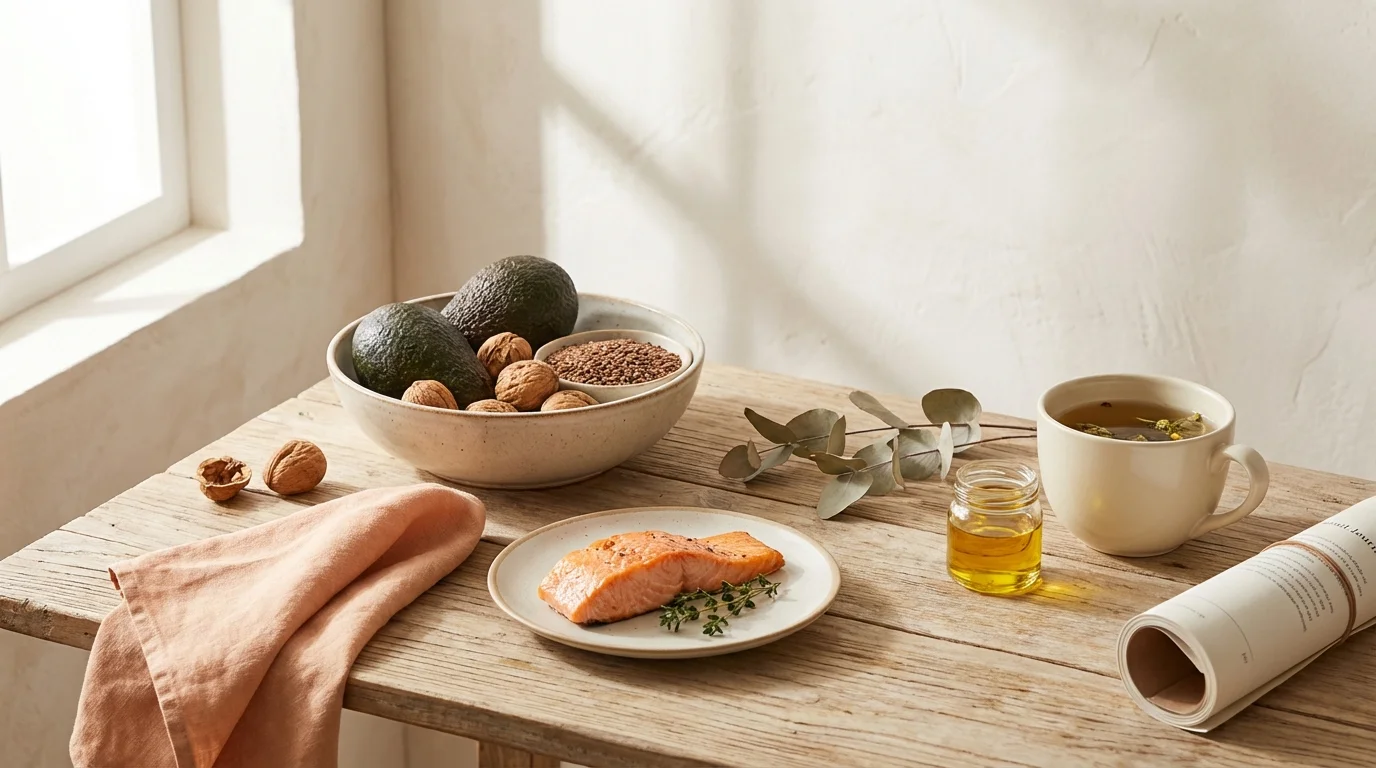
- Salmon (wild-caught): Approximately 1,500-2,000mg of combined EPA and DHA per 85g serving.
- Mackerel: Exceptionally high in omega-3s, affordable, and sustainable when sourced well.
- Anchovies: Easy to add to sauces, dressings, and pasta. Surprisingly high in omega-3s.
- Herring: A traditional food that deserves a comeback.
Plant Sources (ALA)
- Flaxseeds (ground): One tablespoon of ground flaxseed contains approximately 1,600mg of ALA.
- Chia seeds: Two tablespoons provide around 5,000mg of ALA.
- Walnuts: A small handful delivers approximately 2,500mg of ALA.
- Hemp seeds: A good source of ALA with a reasonable omega-3 to omega-6 ratio.
Algae Oil (EPA and DHA - Vegan)
Algae is where fish get their omega-3s in the first place. Algae-derived omega-3 supplements provide pre-formed EPA and DHA without the fish, making them an excellent option for vegans, vegetarians, or anyone who dislikes fish.
Should You Take an Omega-3 Supplement?
If you eat fatty fish two to three times per week, you may be meeting your needs from food alone. But many people do not, and supplementation can be a practical solution. When choosing a supplement, here is what to look for:
- Combined EPA and DHA content: Look for at least 1,000mg of combined EPA and DHA per daily dose (not just "fish oil" content, which is lower).
- Third-party testing: Choose a brand that tests for heavy metals, PCBs, and oxidation. Look for IFOS (International Fish Oil Standards) certification or similar.
- Form: Triglyceride form is better absorbed than ethyl ester form.
- Freshness: Rancid fish oil does more harm than good. It should smell fresh, not fishy. Store in the fridge after opening.
- Algae oil for plant-based options: Delivers pre-formed EPA and DHA without the fish.
"Omega-3 supplementation is one of the most evidence-backed nutritional interventions for menstrual health, yet it remains underutilised. I see patients dramatically reduce their period pain simply by correcting a long-standing omega-3 deficiency over the course of two to three cycles."
Dr. Felice Gersh, MD, OB/GYN and integrative medicine physician, founder of the Integrative Medical Group of Irvine
Cycle Syncing Your Omega-3 Intake
While omega-3s benefit you throughout your entire cycle, certain phases may call for more intentional focus:
- Menstrual phase: Prioritise omega-3-rich foods in the days leading up to and during your period to help dampen inflammatory prostaglandin activity and ease cramping.
- Follicular phase: Continue building a good baseline as your body ramps up toward ovulation.
- Ovulatory phase: EPA and DHA support the anti-inflammatory conditions needed for a healthy ovulatory event.
- Luteal phase: Omega-3s, particularly EPA, can help support serotonin signalling as progesterone rises and mood can become more vulnerable.
Key Takeaways
- Omega-3 fatty acids reduce inflammatory prostaglandins that cause period pain.
- EPA and DHA are the most active forms; plant-based ALA converts poorly, so include algae or fish sources if possible.
- The omega-6 to omega-3 ratio matters as much as total omega-3 intake.
- Omega-3s support mood, ovulation quality, estrogen metabolism, and cycle regularity.
- Aim for two to three servings of fatty fish per week, or supplement with 1,000-2,000mg combined EPA and DHA daily.
- Benefits for period pain typically become noticeable after two to three full cycles of consistent intake.
Key Statistics and Sources
- Up to 90% of women experience some degree of painful periods (dysmenorrhea); omega-3 supplementation has been shown to reduce pain scores significantly. Rahbar et al., NIH/PubMed
- The average Western diet has an omega-6 to omega-3 ratio of 15:1 to 20:1; ancestral estimates suggest 4:1 or lower was the norm. Simopoulos, NIH/PubMed
- Conversion of plant-based ALA to EPA is estimated at less than 10% in most studies, and conversion to DHA is even lower. NIH Office of Dietary Supplements
- DHA makes up approximately 97% of the omega-3 fatty acids found in the brain, underlining its role in mood and cognitive function. Innis, NIH/PubMed
- One 85g serving of wild-caught salmon provides approximately 1,500-2,000mg of combined EPA and DHA. NIH Office of Dietary Supplements
- Harvard research identifies omega-3s as important for oocyte (egg) quality and early embryo development. Harvard T.H. Chan School of Public Health