If your skin feels silky and glowing one week, then suddenly dry, reactive, or breaking out the next, you are not imagining things. Your skin barrier, the outermost layer of skin that locks in moisture and keeps irritants out, is deeply influenced by the hormones that rise and fall across your menstrual cycle. Understanding this connection means you can stop fighting your skin and start working with it instead.
What Is the Skin Barrier and Why Does It Matter?
Your skin barrier, formally called the stratum corneum, is made up of flattened skin cells held together by lipids (fats). Think of it like a brick wall: the cells are the bricks, and the lipids are the mortar. When this structure is intact, skin stays hydrated, resilient, and calm. When it is compromised, water evaporates more quickly (a process called transepidermal water loss, or TEWL), and irritants, bacteria, and allergens get in more easily, leading to redness, tightness, sensitivity, and breakouts.
What many people do not realise is that the production of those barrier-supporting lipids, as well as the skin's ability to renew and repair itself, is directly regulated by sex hormones, especially estrogen and progesterone. Because these hormones fluctuate across your cycle, so does your barrier function.
"Estrogen receptors are present throughout the skin, including in keratinocytes, fibroblasts, and sebaceous glands. This means that shifts in estrogen levels have measurable effects on skin hydration, collagen production, and barrier integrity."
Dr. Rajani Katta, MD, Clinical Professor of Dermatology, McGovern Medical School at UTHealth Houston
The Four Phases: What Is Happening to Your Skin
Menstrual Phase (Days 1-5): Low Hormones, High Sensitivity
At the start of your period, both estrogen and progesterone are at their lowest. This hormonal drop triggers a measurable decrease in skin hydration. Research published by the National Institutes of Health confirms that skin moisture content and barrier function fluctuate across the menstrual cycle, with the lowest levels often coinciding with menstruation.
During this phase you may notice:
- Skin that feels tighter or more fragile than usual
- Increased redness or reactivity to products you normally tolerate
- Flare-ups of eczema, rosacea, or other inflammatory skin conditions
- More noticeable pores and dullness due to lower cellular turnover
Prostaglandins, the hormone-like compounds responsible for uterine cramping, also contribute to systemic inflammation during this phase, which can worsen skin sensitivity. This is not the week to try a new exfoliant or a high-strength active ingredient.
Follicular Phase (Days 6-13): Barrier Rebuilding Begins
As estrogen begins to rise in the follicular phase, the skin starts to recover. Estrogen plays several key roles in barrier function: it stimulates the production of ceramides (the lipids that form the mortar between skin cells), boosts collagen synthesis, and increases hyaluronic acid content in the skin. The result is skin that looks and feels more plump, dewy, and resilient.
Cell turnover also picks up during this phase, which means the skin sheds old cells more efficiently and absorbs active ingredients more readily. If you have been wanting to introduce a new serum, a gentle exfoliant, or a more potent treatment, this is a good window to try it.
"We know that estrogen upregulates aquaporins, the proteins responsible for water transport in skin cells, which is one reason why skin appears more hydrated in the follicular and early ovulatory phases. This is a real, measurable biological shift, not a placebo effect."
Dr. Barbara Gilchrest, MD, Professor Emerita of Dermatology, Boston University School of Medicine
Ovulatory Phase (Days 14-16): Peak Glow, Peak Sebum
The surge of luteinising hormone (LH) and the peak of estrogen around ovulation is when many people report their skin looking its best. Collagen density is higher, hydration is optimal, and the skin has a natural luminosity. Interestingly, research suggests that skin appearance around ovulation may have an evolutionary basis, with measurable changes in skin colour and texture that signal fertility.
However, this phase also brings a rise in testosterone (yes, people with ovaries produce testosterone too). Testosterone stimulates the sebaceous glands to produce more sebum. For most, this is a subtle shift. For those with oily or acne-prone skin, it can mean increased shine and, for some, the beginning of a pre-period breakout cycle. Keeping pores clear with a gentle, non-stripping cleanser supports barrier health without removing the sebum that actually protects the skin.
Luteal Phase (Days 17-28): Inflammation, Oiliness, and Barrier Stress
The luteal phase, the two weeks between ovulation and your next period, is where most skin complaints are concentrated. After the estrogen peak, levels drop sharply before rising slightly again alongside progesterone. Progesterone further stimulates sebum production and can slow down the skin's renewal process.
In the late luteal phase (roughly days 22-28), both estrogen and progesterone decline again. This hormonal withdrawal creates a pro-inflammatory environment throughout the body, including in the skin. Mast cells in the skin become more active, histamine sensitivity rises, and the barrier becomes progressively more permeable. This is the physiological reason behind hormonal breakouts, increased sensitivity, and that specific pre-period skin "dullness" that no amount of hydration seems to fix.
A study published in the journal Skin Pharmacology and Physiology found statistically significant changes in TEWL, skin hydration, and sebum output across cycle phases, confirming that these are not subjective experiences but measurable physiological events.
Conditions That Worsen Cyclically
Understanding the hormonal influence on barrier function is particularly important for people managing chronic skin conditions:
- Eczema and atopic dermatitis: Flares often track with the late luteal and menstrual phases when barrier function is weakest. Estrogen has anti-inflammatory properties, so its withdrawal creates a vulnerability window.
- Rosacea: Flushing and papule formation often worsen pre-period, likely due to increased mast cell activity and vascular reactivity in low-estrogen states.
- Perioral dermatitis: Many people notice this condition worsens cyclically, particularly in the two weeks before menstruation.
- Hormonal acne: Typically concentrated along the jawline and chin, this type of breakout is driven by the late-luteal testosterone and progesterone surge combined with compromised barrier function that allows bacteria to penetrate more easily.
How to Support Your Skin Barrier Across Your Cycle
Menstrual Phase: Protect and Soothe
Strip everything back to the basics during your period. Use a gentle, fragrance-free cleanser, a barrier-supportive moisturiser containing ceramides, and SPF. Avoid exfoliants, retinoids, and acids. Your skin does not need stimulation right now, it needs protection.
Follicular Phase: Treat and Renew
This is the ideal time to introduce or reintroduce active ingredients. AHAs, BHAs, vitamin C serums, and retinoids are all better tolerated in this phase when the barrier is rebuilding and cellular turnover is increasing. Your skin can handle more right now.
Ovulatory Phase: Maintain and Balance
Keep up your routine, but pay attention to oil production. If you are prone to congestion, a gentle enzyme exfoliant or salicylic acid cleanser a couple of times a week can keep pores clear without damaging the barrier.
Luteal Phase: Hydrate, Calm, and Pre-empt
Focus on barrier support and anti-inflammatory ingredients. Niacinamide is particularly useful here: it helps regulate sebum, reduces redness, and strengthens the barrier. Centella asiatica, azelaic acid, and bakuchiol (a gentler alternative to retinol) are all well-suited to this phase. Reduce your use of active exfoliants as you approach your period.
Nutrition and Lifestyle for Barrier Health
Your skin barrier is built from the inside out. The lipids that form your barrier come partly from your diet, and several nutrients directly support its integrity.
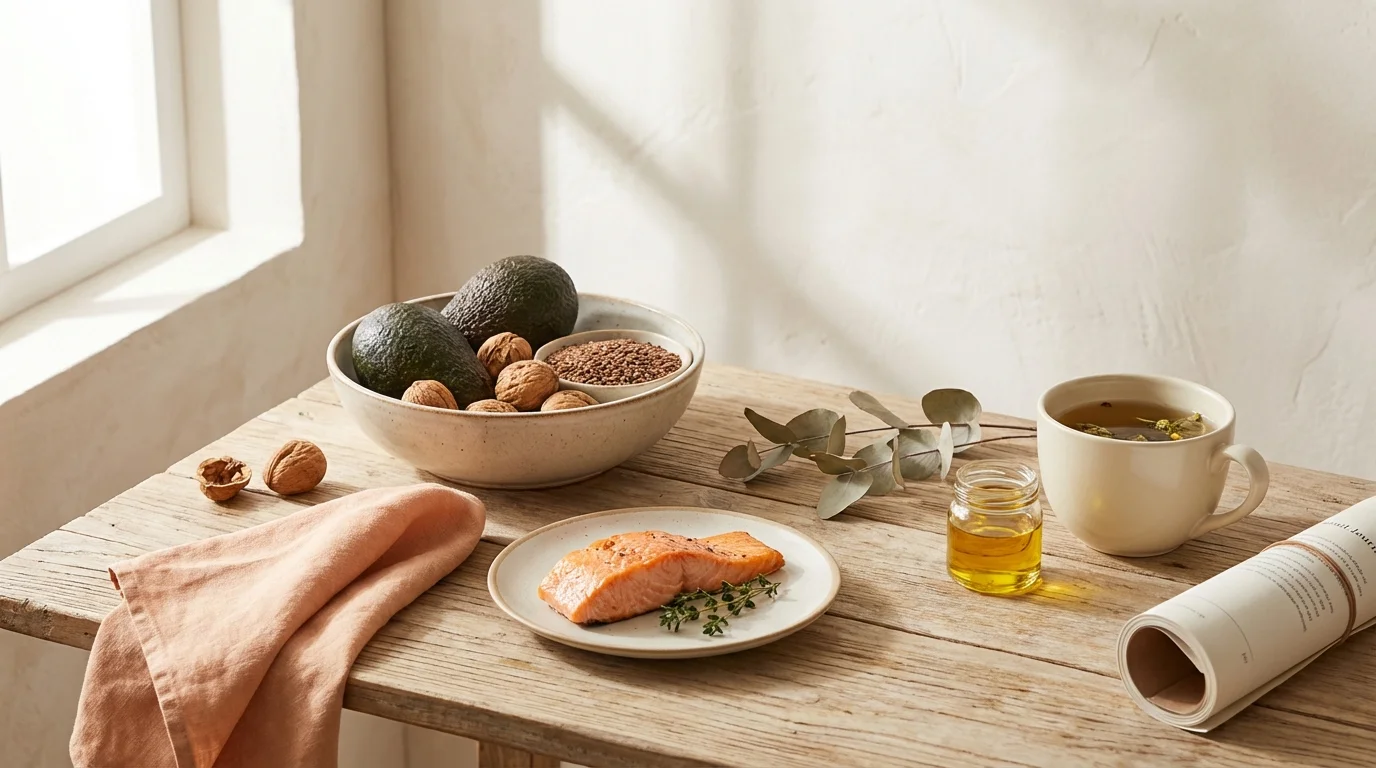
Essential fatty acids: Omega-3 and omega-6 fats, found in fatty fish, flaxseeds, walnuts, and hemp seeds, are structural components of skin cell membranes. Low intake is associated with higher TEWL and more reactive skin. Research from the National Institutes of Health Office of Dietary Supplements supports the role of omega-3s in reducing inflammatory skin conditions.
Zinc: This mineral regulates sebum production, supports skin cell renewal, and has anti-inflammatory properties. It is particularly relevant in the luteal phase when sebum output is elevated.
Vitamin E and C: Both are key antioxidants in skin tissue. Vitamin C is also required for collagen synthesis, which means its dietary adequacy matters for barrier resilience, not just topical application.
Hydration: Skin hydration reflects both internal water intake and barrier integrity. Drinking adequate water supports the skin from within, but a compromised barrier will lose that moisture quickly, which is why topical occlusive ingredients (like squalane, shea butter, or dimethicone) are also important during low-estrogen phases.
Sleep and stress: Cortisol is a known skin disruptor. Elevated cortisol degrades collagen, impairs barrier repair, and increases sebum production. Prioritising sleep and stress management, particularly in the luteal phase when cortisol sensitivity is already higher, directly benefits your skin.
Key Statistics and Sources
- Skin hydration and TEWL show statistically significant variation across the menstrual cycle, with the lowest hydration values recorded during menstruation. NIH, 2012
- Estrogen receptors are found in multiple skin cell types including keratinocytes, fibroblasts, melanocytes, and sebaceous gland cells, explaining the hormone's broad influence on skin function. Skin Pharmacology and Physiology, 2018
- Sebum production has been shown to increase in the pre-ovulatory and luteal phases due to rising androgen levels, contributing to hormonal acne in susceptible individuals. NIH, 2009
- Omega-3 supplementation has been associated with reduced skin roughness and improved hydration in clinical studies, supporting its role in barrier maintenance. NIH Office of Dietary Supplements
- Approximately 54% of women report worsening of existing skin conditions, including eczema and acne, in the week before menstruation, consistent with the hormonal changes of the late luteal phase. NIH, 2013
- Niacinamide has been shown to significantly improve skin barrier function by increasing ceramide production and reducing TEWL in randomised controlled trials. PubMed, 2000