You eat well, you sleep, you try to manage stress, and yet every month like clockwork you feel it: puffiness, joint aches, a mood that tips into darkness, cramps that radiate into your back. Most people chalk these things up to "just PMS." But there is a more precise explanation, and it has everything to do with how inflammation moves through your body in rhythm with your hormones.
Inflammation is not inherently bad. It is a core part of your immune function and your cycle itself. The problem is when it runs too hot, for too long, or at the wrong time. Understanding where inflammation sits in each phase of your cycle changes how you eat, move, and recover in ways that genuinely reduce suffering and not just mask it.
What Is Inflammation, Really?
Inflammation is your immune system's response to a perceived threat: injury, infection, stress, or even certain foods. Acutely, it is protective. Chronically, it damages tissue, disrupts hormonal signaling, and makes every phase of your cycle feel harder than it needs to.
Your body produces inflammatory messengers called cytokines and prostaglandins. These are not fringe biology. They are directly involved in ovulation, menstruation, and the hormonal cascade that governs your entire cycle. When they are out of balance, you feel it in very specific ways depending on where you are in your month.
"Inflammation is not separate from the menstrual cycle. It is woven into it. Ovulation itself is an inflammatory event, and menstruation requires a coordinated inflammatory response to shed the uterine lining. The issue is when systemic, chronic inflammation amplifies these natural processes into pain and dysfunction."
- Dr. Stacy Missmer, Sc.D., Professor of Obstetrics, Gynecology and Reproductive Biology, Michigan State University
How Inflammation Shifts Across Your Cycle
Menstrual Phase: Inflammation Is at Its Peak
During menstruation, your body releases prostaglandins to trigger uterine contractions that shed the lining. This is an intentionally inflammatory process. In women with balanced hormones and good dietary habits, this is brief and manageable. In women with high systemic inflammation, excess prostaglandin production leads to severe cramping, heavy flow, nausea, and whole-body aching.
Research published by the National Institute of Child Health and Human Development has shown that women with conditions like endometriosis and dysmenorrhea have significantly elevated prostaglandin levels during menstruation, driving the disproportionate pain response many experience.
Oestrogen and progesterone are both at their lowest during this phase. Without progesterone's natural anti-inflammatory effect, inflammatory signalling has less opposition. The result: this is typically the highest-inflammation window of your entire cycle.
Follicular Phase: Natural Anti-Inflammation Begins
As oestrogen begins to rise after your period ends, something interesting happens. Oestrogen has immune-modulating properties, and at moderate levels it actually helps regulate the inflammatory response. Many women notice a dramatic lift in energy, clarity, and physical comfort during this phase, and reduced inflammation is a big part of why.
Joints feel less stiff. Skin may calm. Mood tends to stabilize. This is a good phase for higher-intensity physical training, social activity, and taking on more cognitive load, partly because your body is operating in a lower-inflammation environment.
Ovulation: A Brief but Real Inflammatory Event
Ovulation itself requires localised inflammation. The dominant follicle ruptures and releases the egg, which triggers a short-lived, targeted inflammatory response in the ovary. For most women, this passes unnoticed or causes only mild mid-cycle twinges (known as mittelschmerz). For women with high baseline inflammation, this window can feel more pronounced: bloating, pelvic discomfort, and heightened sensitivity may appear around days 12 to 16.
Luteal Phase: The Inflammation Slow Build
After ovulation, progesterone rises steeply. Progesterone has a genuinely anti-inflammatory role in the body: it helps modulate immune function, reduces prostaglandin synthesis, and supports the nervous system. When progesterone is healthy and sufficient, the luteal phase can feel relatively calm, especially in the first half.
But as progesterone drops sharply in the days before your period, and if oestrogen has been running high relative to progesterone (a pattern called oestrogen dominance), inflammatory signalling ramps back up. This is when PMS symptoms, including brain fog, breast tenderness, irritability, and pelvic pressure, tend to peak. It is not a coincidence. It is inflammation, driven by hormonal shifts.
"The luteal phase drop in progesterone is one of the most significant neuroimmune events of the female cycle. The downstream effects on inflammatory cytokines, gut permeability, and mood regulation are real and measurable. This is not just 'hormones.' This is physiology that deserves clinical attention."
- Dr. Jolene Brighten, NMD, Board-Certified Naturopathic Endocrinologist and author of "Is This Normal?"
What Drives High Cycle-Related Inflammation
Not everyone experiences inflammation the same way across their cycle. Several factors amplify the natural inflammatory peaks into something more disruptive:
- Diet high in ultra-processed foods and refined oils: Omega-6 fatty acids from seed oils, when consumed in excess without balancing omega-3s, shift the body toward pro-inflammatory prostaglandin production.
- Blood sugar instability: Glucose spikes drive the release of inflammatory cytokines. If your diet causes frequent blood sugar swings, inflammation stays elevated throughout the cycle, especially in the luteal phase when insulin sensitivity shifts.
- Chronically elevated cortisol: Stress hormones and inflammatory hormones share pathways. Chronic stress keeps the immune system in a low-grade alert state that amplifies every cyclic inflammatory peak.
- Poor gut health: A disrupted gut microbiome increases intestinal permeability, allowing inflammatory compounds to enter the bloodstream. The gut also plays a direct role in oestrogen metabolism through the estrobolome, meaning gut imbalance can worsen the hormonal swings that drive inflammation.
- Low magnesium: Magnesium deficiency is one of the most documented contributors to heightened prostaglandin activity and menstrual cramping. Many women are chronically deficient.
- Excess body fat tissue: Adipose tissue is metabolically active and produces inflammatory cytokines. It also converts androgens to oestrogen, potentially worsening oestrogen dominance patterns.
How to Eat to Support Inflammation Across Your Cycle
Menstrual Phase: Prioritise Anti-Inflammatory Foods
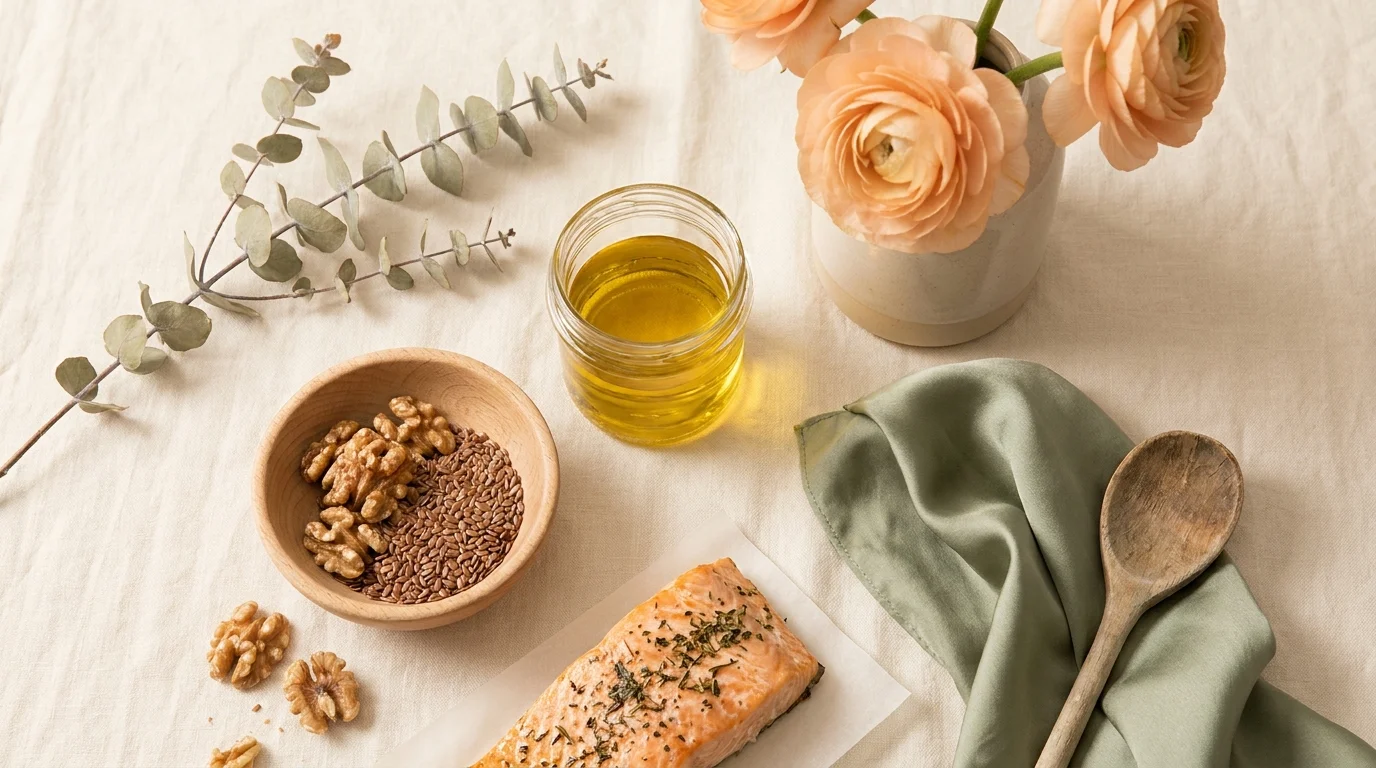
This is the phase where diet matters most acutely. Focus on omega-3 rich foods (oily fish, flaxseeds, chia seeds) to counteract prostaglandin excess. Include turmeric with black pepper, ginger, and dark leafy greens. Warm, cooked foods are easier to digest and gentler on a system already under inflammatory load. Reduce alcohol and caffeine, both of which can amplify prostaglandin sensitivity.
Research from the National Institutes of Health has shown that omega-3 supplementation can significantly reduce dysmenorrhea severity, likely through suppression of pro-inflammatory prostaglandins.
Follicular Phase: Load Up on Phytoestrogens and Fibre
With inflammation naturally lower, this is a good phase to focus on building nutritional foundations: adequate fibre to support oestrogen clearance, phytoestrogen-rich foods like flaxseeds and legumes to modulate oestrogen activity, and cruciferous vegetables (broccoli, cauliflower, Brussels sprouts) to support liver detoxification pathways that clear oestrogen metabolites.
Ovulatory Phase: Keep Blood Sugar Stable
The brief inflammatory peak of ovulation is best supported by keeping blood sugar steady. Prioritise protein and healthy fats at each meal to blunt glucose spikes. Zinc-rich foods (pumpkin seeds, oysters, beef) support ovulatory function and help regulate inflammatory immune responses. Antioxidant-rich fruits like berries help neutralise the oxidative stress that accompanies follicular rupture.
Luteal Phase: Focus on Magnesium, B6, and Stable Blood Sugar
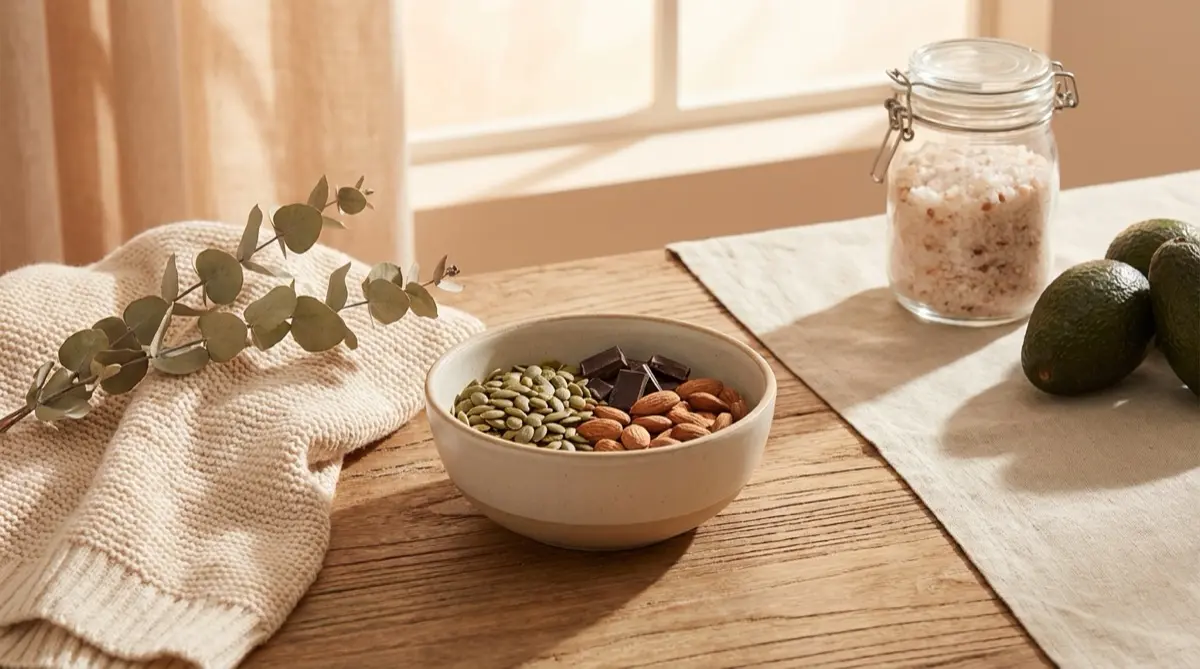
The luteal phase is where dietary strategy pays off most visibly in PMS symptom reduction. Magnesium-rich foods (dark chocolate, pumpkin seeds, spinach, avocado) help reduce prostaglandin activity and support progesterone function. Vitamin B6 is critical for progesterone synthesis and serotonin production. Foods like salmon, turkey, chickpeas, and bananas are good sources.
A study published via PubMed Central found that magnesium supplementation significantly reduced both the number and severity of PMS symptoms in women compared to placebo, with effects visible from the second menstrual cycle of supplementation.
Reduce inflammatory triggers in this phase: cut back on alcohol, refined sugar, and trans fats. These not only spike inflammation directly but disrupt blood sugar, further amplifying the mood and energy crashes that define late luteal phase for many women.
Movement, Recovery, and Inflammation
Exercise is itself an anti-inflammatory tool, but the dose matters across your cycle. During the menstrual phase, high-intensity training adds to an already high inflammatory load. Gentle movement like walking, yoga, and stretching supports blood flow and prostaglandin clearance without adding physiological stress.
In the follicular and ovulatory phases, when inflammation is lower and oestrogen is higher, your body is more resilient to high-intensity effort. This is the window to push harder in training. Recovery is faster, and the anti-inflammatory benefits of intense exercise are well-absorbed.
In the luteal phase, intensity should taper progressively as you approach menstruation. Over-training in this phase elevates cortisol, which suppresses progesterone and amplifies the inflammatory cascade you are trying to manage. Moderate strength training and Pilates tend to feel good in the early luteal phase, while the late luteal phase calls for lower intensity and more deliberate recovery.
Other Lifestyle Factors That Matter
Sleep is one of the most powerful anti-inflammatory levers available. During deep sleep, the glymphatic system clears inflammatory waste from the brain, and the body suppresses pro-inflammatory cytokine production. Consistently poor sleep disrupts this and raises baseline inflammation across the entire cycle, making every phase harder.
Stress management deserves its own mention because chronic psychological stress is a direct inflammatory driver. Practices like breathwork, meditation, nature exposure, and setting genuine boundaries on your social and professional energy are not luxuries: they are cycle-supportive, anti-inflammatory interventions.
Environmental toxin load also contributes. Plastics, synthetic fragrances, and certain pesticides act as endocrine disruptors that mimic oestrogen and contribute to inflammatory dysregulation. Reducing exposure where practical (choosing glass storage, fragrance-free products, organic produce for high-pesticide crops) supports your hormonal environment across the whole cycle.
Key Statistics and Sources
- Up to 90% of menstruating women report at least one PMS symptom, with inflammation-driven symptoms (cramps, bloating, mood changes) among the most common. (NICHD)
- Omega-3 supplementation has been shown to reduce the severity of primary dysmenorrhea by up to 36% compared to placebo in randomised controlled trials. (NIH/PubMed)
- Magnesium supplementation significantly reduced PMS symptom scores in clinical trials, with effects emerging from the second cycle of use. (PubMed Central)
- Women with endometriosis have been found to have markedly elevated peritoneal prostaglandin and cytokine levels, linking inflammation directly to menstrual pain severity. (NICHD)
- Chronic psychological stress has been shown to increase levels of pro-inflammatory cytokines including IL-6 and TNF-alpha, both of which amplify cyclic pain and mood dysregulation. (NIH)
- Blood sugar instability is associated with higher levels of C-reactive protein, a key inflammatory marker, with implications for the severity of luteal phase symptoms. (NIDDK)