You track your mood, your energy, your skin. But have you ever noticed that your digestion seems to have a mind of its own depending on where you are in your cycle? One week you feel light and comfortable. The next you are bloated, cramping, or running to the bathroom before your period even starts. This is not random, and it is not in your head. Your hormones directly influence how your gut functions, and understanding that connection can change how you eat, how you move, and how you support yourself every single week of the month.
Why Hormones and Your Gut Are Deeply Connected
Your gut and your endocrine system are in constant two-way communication. Estrogen and progesterone, the two primary sex hormones that rise and fall across your cycle, both have receptors in the gastrointestinal tract. This means your gut literally responds to hormonal shifts the same way your mood or your skin does.
Progesterone is a smooth muscle relaxant. When it rises after ovulation in the luteal phase, it slows the movement of food through your intestines, a process called gut motility. This is one of the main reasons so many people experience constipation or bloating in the week or two before their period. Estrogen, on the other hand, tends to support faster gut transit, which is why diarrhea or looser stools are more common in the follicular phase and right before menstruation, when estrogen is either rising or dropping sharply.
"The gastrointestinal tract is exquisitely sensitive to sex hormones. Estrogen and progesterone receptors are found throughout the gut lining, and their fluctuations across the menstrual cycle directly affect motility, permeability, and even pain perception in the gut."
- Dr. Emeran Mayer, MD, PhD, Professor of Medicine, Gastroenterology, and Neuroscience, UCLA David Geffen School of Medicine
Research published by the National Institutes of Health confirms that gut motility varies significantly across the menstrual cycle, with the slowest transit times occurring during the mid-to-late luteal phase when progesterone is at its peak.
Phase-by-Phase: What Is Happening in Your Gut
Menstrual Phase (Days 1-5)
When your period begins, progesterone drops sharply. At the same time, your body releases prostaglandins, hormone-like compounds that trigger uterine contractions to shed the lining. The problem is that prostaglandins do not stay neatly confined to the uterus. They also stimulate contractions in the bowel, which is why diarrhea, cramping, and urgent bathroom trips are so common in the first one to two days of your period.
Higher prostaglandin levels are directly linked to more severe menstrual symptoms, including both period cramps and digestive upset. Anti-inflammatory eating in the days leading up to your period, and during it, can help reduce prostaglandin production and ease both types of cramping.
Support strategies for menstruation:
- Prioritize cooked, warm, easy-to-digest foods like soups, stews, and root vegetables
- Reduce raw vegetables, which require more digestive effort
- Eat smaller, more frequent meals to reduce pressure on the gut
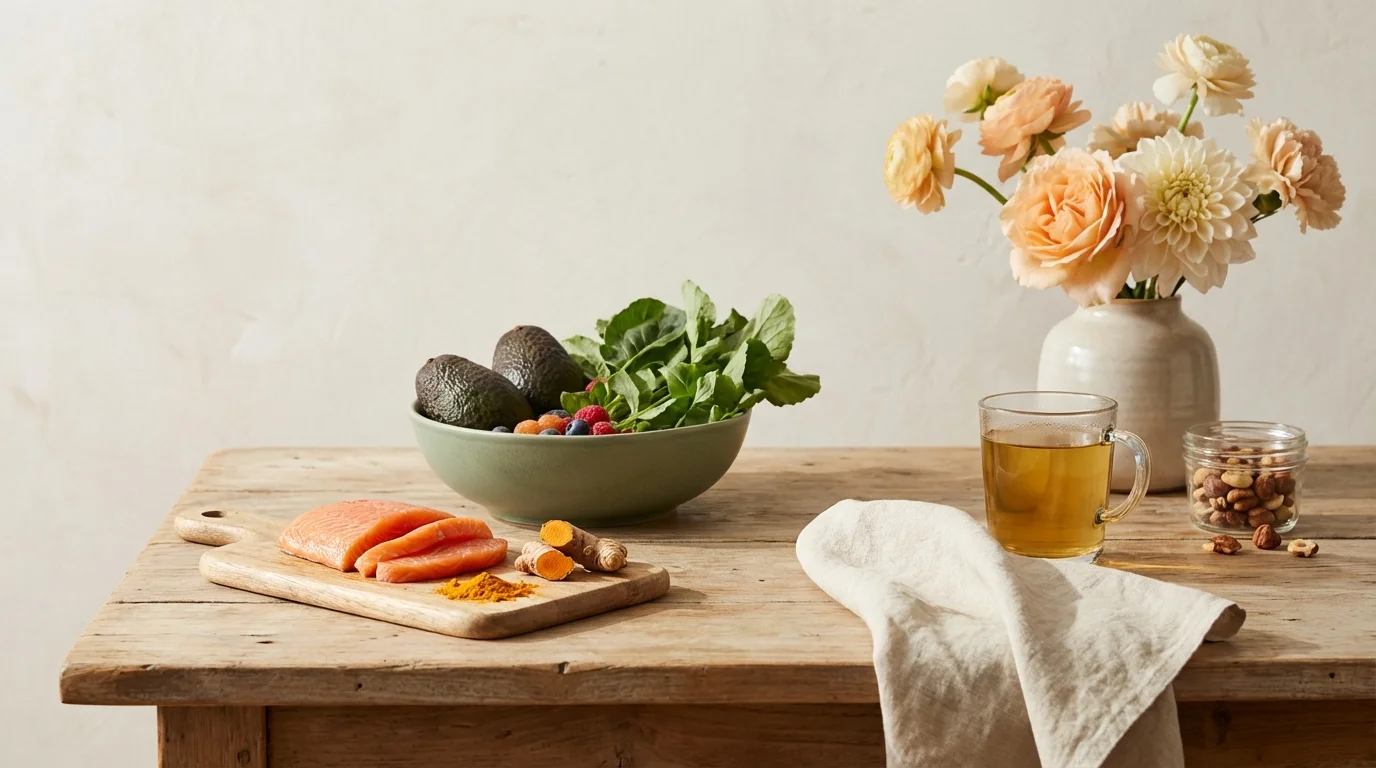
- Increase omega-3-rich foods like salmon, flaxseed, and walnuts to counter prostaglandin activity
- Avoid excess caffeine and alcohol, which can worsen loose stools and inflammation
Follicular Phase (Days 6-13)
As estrogen rises and progesterone stays low, most people feel their gut functioning at its best. Motility is faster, digestion is more efficient, and bloating tends to be minimal. This is typically the phase where you feel most comfortable eating a wider variety of foods, including raw salads, cruciferous vegetables, and higher-fiber options.
Estrogen also supports a more diverse and resilient gut microbiome. Research from Harvard Medical School has shown that estrogen plays a role in maintaining microbial diversity in the gut, which in turn supports estrogen metabolism through a community of bacteria known as the estrobolome.
Support strategies for the follicular phase:
- Introduce higher-fiber foods gradually, your gut can handle more now
- Fermented foods like yogurt, kefir, kimchi, and sauerkraut support the estrobolome
- Cruciferous vegetables like broccoli, cauliflower, and cabbage support liver-based estrogen clearance
- Stay well hydrated to keep everything moving smoothly
Ovulatory Phase (Days 14-16)
The ovulatory window is brief, but some people notice a slight increase in bloating around this time due to a small secondary estrogen surge and a rise in luteinizing hormone (LH). Water retention and mild pelvic heaviness can contribute to digestive discomfort, though it usually passes within a day or two.
This phase is also associated with higher energy levels and appetite, so it is a good time to eat nutrient-dense meals without overthinking it. Your digestion is still efficient, and your body can handle a wider range of foods.
Luteal Phase (Days 17-28)
This is where most people feel the biggest shift in their digestion. As progesterone climbs to its peak in the mid-luteal phase, gut motility slows significantly. Food spends more time in the intestines, which allows more gas and water to be absorbed, leading to that familiar bloated, sluggish feeling.
At the same time, many people experience increased appetite and cravings for carbohydrates and sugar, driven by the natural drop in serotonin that occurs as progesterone rises. Eating more without the digestive efficiency to match can worsen bloating and discomfort.
"Progesterone's relaxant effect on smooth muscle is well-established, and the gut is one of the most affected organs. Luteal phase digestive slowdown is not a disorder, it is a physiological response, but diet and lifestyle choices can significantly reduce how much it impacts daily comfort."
- Dr. Robynne Chutkan, MD, Gastroenterologist and Founder, Digestive Center for Wellness, Georgetown University Hospital
Support strategies for the luteal phase:
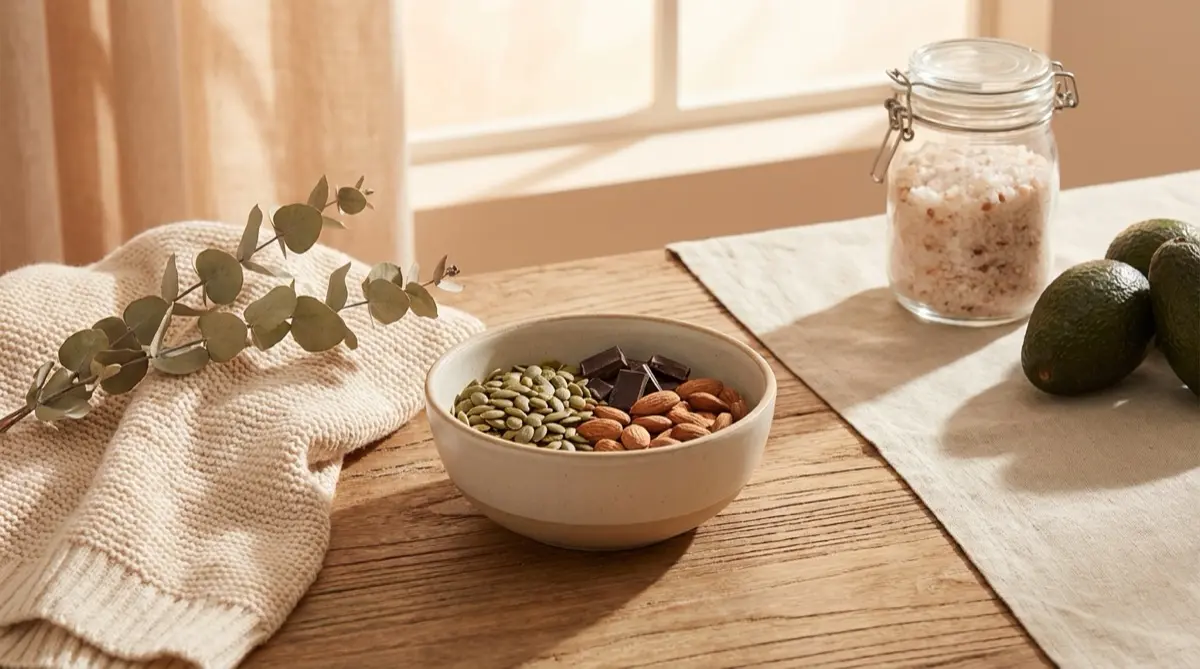
- Increase magnesium-rich foods like dark leafy greens, pumpkin seeds, and dark chocolate to support bowel motility
- Reduce salt and processed foods that drive water retention and bloating
- Choose cooked vegetables over raw to reduce fermentation and gas production
- Eat regular meals rather than large ones to avoid overwhelming a slower gut
- Gentle movement like walking and yoga supports gut motility when progesterone slows it down
- Probiotic-rich foods help maintain microbial balance during this more vulnerable phase
The Bloating Question: What Is Actually Causing It
Bloating is one of the most common premenstrual complaints, and it has more than one cause. Progesterone-driven slowing of the gut is one factor. But hormonal fluctuations also affect fluid retention, with estrogen and aldosterone contributing to water being held in the tissues around the abdomen. Both types of bloating tend to resolve within a day or two of your period starting, as progesterone and estrogen both drop.
There is also a connection between hormones and gut permeability. Some research suggests that estrogen helps maintain the tight junctions of the gut lining, meaning that when estrogen drops in the late luteal phase, the gut may become temporarily more permeable. This can increase sensitivity to certain foods and contribute to the general discomfort many people feel in the days before their period.
A study published via PubMed Central found that women with irritable bowel syndrome (IBS) consistently reported worsening symptoms in the premenstrual and menstrual phases, strongly suggesting a hormonal driver for gut dysfunction rather than just a coincidence.
The Gut-Hormone Feedback Loop
Here is where it gets especially interesting: your gut does not just respond to hormones, it also helps regulate them. The estrobolome, a subset of gut bacteria responsible for metabolising estrogen, plays a critical role in determining how much estrogen circulates in your body. When the gut microbiome is healthy and diverse, used estrogen is packaged and excreted efficiently. When the microbiome is disrupted, an enzyme called beta-glucuronidase can reactivate estrogen and send it back into circulation, contributing to estrogen dominance.
This means that supporting your gut health is not just about reducing bloating. It is a fundamental part of hormonal balance. A high-fiber diet that feeds beneficial gut bacteria, along with fermented foods and limited antibiotic use, directly supports the estrobolome and healthy estrogen clearance.
Practical Daily Habits That Support Digestive and Hormonal Health Together
Fibre First
Dietary fibre binds to excess estrogen in the digestive tract and helps carry it out of the body. Aim for a variety of fibre sources including vegetables, legumes, wholegrains, and fruit. A diverse fibre intake feeds a diverse microbiome, which in turn better regulates your hormone levels.
Fermented Foods Regularly
Yogurt, kefir, kimchi, sauerkraut, miso, and kombucha all contribute beneficial bacteria that support the estrobolome. Even small daily amounts have been shown to improve microbial diversity over time.
Movement as Medicine
Walking is one of the most underrated tools for gut motility. Even 20 to 30 minutes of gentle walking after meals can significantly improve digestive transit time during the luteal phase when progesterone is working against you. Yoga poses that compress and twist the abdomen also support gut movement and can ease bloating.
Stress Management Is Non-Negotiable
Chronic stress elevates cortisol, which disrupts both gut barrier function and hormonal balance. The gut-brain axis means your stress response is felt directly in your digestive tract. Practices that activate the parasympathetic nervous system, including diaphragmatic breathing, meditation, and adequate sleep, directly support gut health.
Eating in a Calm State
Digestion is a parasympathetic function, meaning it works best when you are relaxed. Eating on the go, at your desk under stress, or while distracted impairs the digestive process from the very beginning. Sitting down, taking a few breaths before eating, and chewing thoroughly all make a measurable difference in how your body processes food.
When Symptoms Go Beyond the Cycle
While some digestive variation across the cycle is completely normal, certain symptoms warrant further investigation. Severe diarrhea with every period, debilitating cramps in the gut alongside period cramps, or a pattern of worsening digestive symptoms that do not improve with lifestyle changes can sometimes indicate conditions like endometriosis, which can affect the bowel, or irritable bowel syndrome with a hormonal component. If symptoms are significantly impacting your quality of life, working with a gastroenterologist or gynaecologist who understands the hormonal dimension is worth pursuing.
Key Statistics and Sources
- Up to 73% of women with IBS report that their symptoms worsen around menstruation, pointing to a strong hormonal influence on gut function. Source: PubMed Central
- Gut transit time can be up to 30% slower during the luteal phase compared to the follicular phase due to elevated progesterone. Source: NIH
- Women experience gastrointestinal complaints including bloating, constipation, and diarrhea at significantly higher rates than men, with hormonal fluctuation cited as a primary driver. Source: NIDDK
- Prostaglandins released during menstruation stimulate both uterine and intestinal smooth muscle, explaining why period-related diarrhea and cramping often occur simultaneously. Source: PubMed Central
- A diverse gut microbiome, particularly the estrobolome, is essential for healthy estrogen metabolism and clearance, with imbalances linked to estrogen dominance. Source: Harvard/NIH