Why Your Hair Acts Differently Every Week of the Month
If you have ever noticed that your hair looks glossy and full for a stretch, then suddenly feels limp, greasy, or starts shedding more than usual a couple of weeks later, you are not imagining things. Your hair and scalp are exquisitely sensitive to the hormonal shifts that happen across your menstrual cycle. Estrogen, progesterone, testosterone, and even cortisol all play a role in how your hair grows, how your scalp behaves, and how your strands feel from one week to the next.
Understanding this connection is not just useful for vanity. Significant changes in hair texture, density, or scalp condition can serve as an early signal that something in your hormonal environment needs attention. This guide breaks down exactly what is happening phase by phase, and what you can do to work with your hormones rather than against them.
The Hormonal Drivers of Hair Health
Before diving into each phase, it helps to understand the key hormonal players and what they do to your hair follicles.
Estrogen: The Growth Protector
Estrogen prolongs the anagen (active growth) phase of the hair cycle and reduces the rate at which follicles transition into shedding. This is why people with higher circulating estrogen tend to have thicker, faster-growing hair. It also helps to keep sebum production balanced, meaning your scalp stays moisturised without becoming overly oily.
Progesterone: The Double-Edged Hormone
Progesterone has a more nuanced relationship with hair. It competes with the enzyme 5-alpha reductase, which converts testosterone into dihydrotestosterone (DHT), the androgen most strongly linked to follicle miniaturisation and hair thinning. In this sense, progesterone can be protective. However, progesterone also increases sebum secretion in some people, which can lead to a greasier scalp in the second half of the cycle.
Androgens: The Thinning Trigger
Testosterone and DHT are present in everyone with a menstrual cycle, and they play a normal physiological role. Problems arise when androgen levels are disproportionately high relative to estrogen, or when scalp follicles are particularly sensitive to DHT. This sensitivity is partly genetic and partly influenced by nutritional status, inflammation, and insulin levels.
"Hair follicles are genuine hormone target organs. They express receptors for estrogen, androgen, and even thyroid hormone, so the state of your hair is often a real-time readout of your hormonal environment."
Dr. Antonella Tosti, MD, Professor of Dermatology, University of Miami Miller School of Medicine
Phase by Phase: What to Expect
Menstrual Phase (Days 1-5)
Estrogen and progesterone are both at their lowest during menstruation. For most people, this is not a phase of dramatic hair change, but some notice increased shedding in the days just before and during their period. This is a delayed effect: hair follicles that were triggered to enter the shedding (telogen) phase by the progesterone drop two to three weeks earlier are now releasing. You might also find your scalp feels drier or more sensitive during this window, particularly if prostaglandin-driven inflammation is high.
What helps: A gentle, anti-inflammatory scalp oil massage using jojoba or rosehip oil can support circulation and reduce scalp sensitivity. This is also a good time for a nourishing deep conditioning treatment rather than any chemical processing.
Follicular Phase (Days 6-13)
As estrogen begins rising, this is typically the best week for your hair. Estrogen extends the growth phase of each follicle, supports keratin production, and helps maintain scalp moisture balance. Many people notice their hair feels stronger, shinier, and easier to style in the days leading up to ovulation. Sebum production is relatively balanced, so your scalp is unlikely to feel excessively oily or dry.
What helps: Take advantage of this phase for any hair treatments that require your hair to be in good condition: colour, highlights, or heat styling if necessary. A protein-rich diet supports keratin synthesis, so focus on eggs, legumes, fish, and nuts during this window.
Key Takeaway
The follicular phase, particularly the days just before ovulation, is typically your hair's hormonal sweet spot. Rising estrogen supports growth, shine, and a balanced scalp. Use this window for treatments and enjoy the good hair days.
Ovulation (Around Day 14)
The estrogen peak at ovulation is often when hair looks and feels its absolute best. The LH surge that triggers ovulation is accompanied by a brief testosterone peak, which can be a double-edged sword: for some, it adds a sense of vitality and volume, while for those with androgen-sensitive follicles, it may contribute to slightly increased scalp oiliness. Overall, though, most people find this is a high-confidence hair day.
Luteal Phase (Days 15-28)
This is where things get more complex. After ovulation, progesterone rises significantly. As noted above, progesterone can increase sebum production, so you may notice your scalp becoming greasier more quickly, even if you wash your hair on the same schedule as usual. Some people also experience increased scalp sensitivity or mild itching as progesterone levels peak.
In the second half of the luteal phase, as both estrogen and progesterone begin to decline ahead of menstruation, some follicles receive a signal to shift from active growth into the resting phase. This contributes to the shedding that shows up a few weeks later. For people with conditions like PCOS, where androgens may already be elevated, the luteal phase can bring more noticeable thinning or shedding.
What helps: Adjusting your washing frequency to accommodate increased sebum is more sensible than using harsh clarifying shampoos repeatedly. Look for a gentle, balancing shampoo with ingredients like salicylic acid or tea tree oil if your scalp leans oily. Scalp massage remains valuable here: research published via the NIH has shown that standardised scalp massage can increase hair thickness over time by stretching dermal papilla cells and stimulating growth signals.
Hormonal Hair Loss: When Shedding Becomes a Signal
Some degree of daily shedding is completely normal. The average person sheds between 50 and 100 hairs per day. When that number consistently exceeds this range, or when you notice thinning at the temples, crown, or part line, it is worth investigating what your hormones might be doing.
The most common hormonally driven hair loss patterns in people who menstruate include:
- Telogen effluvium: A diffuse shedding triggered by a hormonal disruption, nutritional deficiency, or significant stress event. This often shows up two to three months after the triggering event due to the lag in the hair growth cycle.
- Androgenetic alopecia: A genetically mediated sensitivity to DHT that causes follicle miniaturisation over time, particularly along the part line and crown.
- Postpartum shedding: A dramatic example of estrogen-withdrawal hair loss, as the high estrogen of pregnancy that kept hairs in the growth phase suddenly drops after delivery.
"When a patient comes to me with hair loss, I always look at their full hormonal picture, not just androgens. Thyroid function, iron stores, and even insulin sensitivity can profoundly affect the hair cycle."
Dr. Chesahna Kindred, MD, MBA, Board-Certified Dermatologist and Hair Loss Specialist, Howard University College of Medicine
Research catalogued by the National Institutes of Health confirms that androgenetic alopecia affects an estimated 50% of women by the age of 50, with hormonal shifts around perimenopause being a key driver. However, nutritional status, particularly iron and ferritin levels, is equally important and often overlooked.
Nutrition for Hormonal Hair Health
Your hair follicles are among the most metabolically active structures in the body. They are highly sensitive to nutritional insufficiency, and certain deficiencies map directly onto hormonal hair problems.
Iron and Ferritin
Low ferritin (stored iron) is one of the most common and correctable causes of hair shedding in people who menstruate. According to the NIH Office of Dietary Supplements, premenopausal women have significantly higher iron requirements than men due to menstrual losses, yet iron deficiency remains underdiagnosed. Many practitioners now recommend targeting a ferritin level above 70 ng/mL specifically for hair health, even if standard anaemia markers appear normal.
Protein and Amino Acids
Hair is made almost entirely of keratin, a protein. Insufficient dietary protein means your body will deprioritise hair growth in favour of more critical functions. Aim for at least 1.2-1.6g of protein per kilogram of body weight daily, with particular attention to getting adequate lysine, an amino acid that plays a specific role in iron absorption and hair follicle support.
Zinc
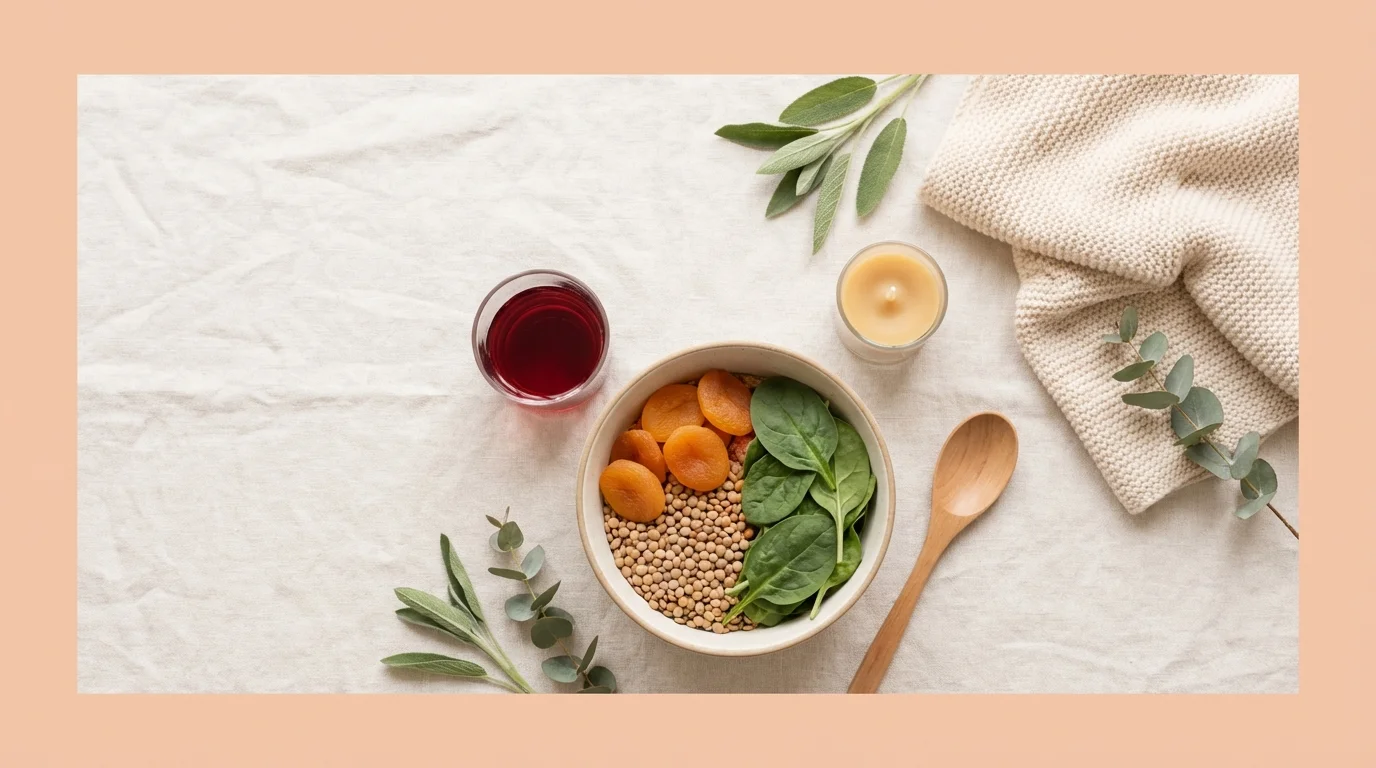
Zinc is a cofactor for the enzymes involved in hair follicle division and repair. It also inhibits 5-alpha reductase, helping to reduce DHT conversion. Food sources include pumpkin seeds, oysters, beef, and lentils.
Biotin
Biotin has become synonymous with hair supplements, though the evidence for supplementation in people without a deficiency is limited. Where biotin genuinely helps is when a deficiency is present, which can occur in people who consume raw egg whites regularly (avidin in egg whites blocks biotin absorption) or those with gut absorption issues.
Nutritional Priorities for Hair Health
- Prioritise iron and ferritin: get levels tested, not just standard haemoglobin
- Eat adequate protein at every meal to support keratin synthesis
- Include zinc-rich foods across your cycle, especially in the luteal phase
- Support scalp circulation with regular gentle massage
- Reduce refined sugar and ultra-processed foods, which drive insulin spikes that can elevate androgens
Scalp Care Across Your Cycle
Your scalp is skin, and like the skin on your face, it responds to hormonal fluctuations in predictable ways. A one-size-fits-all scalp care routine may be leaving some phases underserved.
During the follicular phase, when sebum is balanced, most standard shampoos and conditioners work well. During the luteal phase, you may benefit from washing slightly more frequently or switching to a lighter conditioner applied only to the ends. If scalp sensitivity or itching is a pattern for you in the second half of your cycle, look for calming ingredients like aloe vera, niacinamide, or colloidal oatmeal in your scalp products.
If you use heat styling tools regularly, the premenstrual phase, when hair may already be more fragile and prone to breakage, is the best time to reduce heat exposure and opt for protective styles or air drying.
When to Seek Professional Support
Tracking your hair across your cycle is a powerful way to distinguish normal hormonal fluctuation from a pattern that warrants investigation. If you notice consistent, progressive thinning, large clumps shedding in the shower, or significant changes in hair texture alongside other symptoms like fatigue, weight changes, or irregular cycles, it is worth discussing with a healthcare provider who can assess your thyroid, iron studies, full hormonal panel, and nutrient status.
Cycle tracking itself becomes a diagnostic tool here: if your shedding reliably peaks at a specific phase, or if you notice your hair changing in tandem with other cycle-related symptoms like mood shifts or bloating, you have a richer picture to bring to any clinical appointment.
Key Statistics and Sources
- Up to 50% of women experience androgenetic alopecia by age 50, with hormonal shifts being a primary driver. NIH
- Normal daily hair shedding ranges from 50 to 100 hairs per day; consistent excess shedding warrants investigation. NIH
- Standardised scalp massage has been shown to increase hair thickness in a pilot study by stretching dermal papilla cells. NIH PMC
- Premenopausal women require 18mg of iron daily, nearly double the requirement for adult men, due to menstrual losses. NIH ODS
- Telogen effluvium, the most common hormone-related hair shedding pattern, typically presents 2 to 3 months after the triggering event due to the hair growth cycle lag. NIH
- Zinc deficiency has been associated with hair loss, and zinc supplementation may help restore growth in deficient individuals. NIH ODS