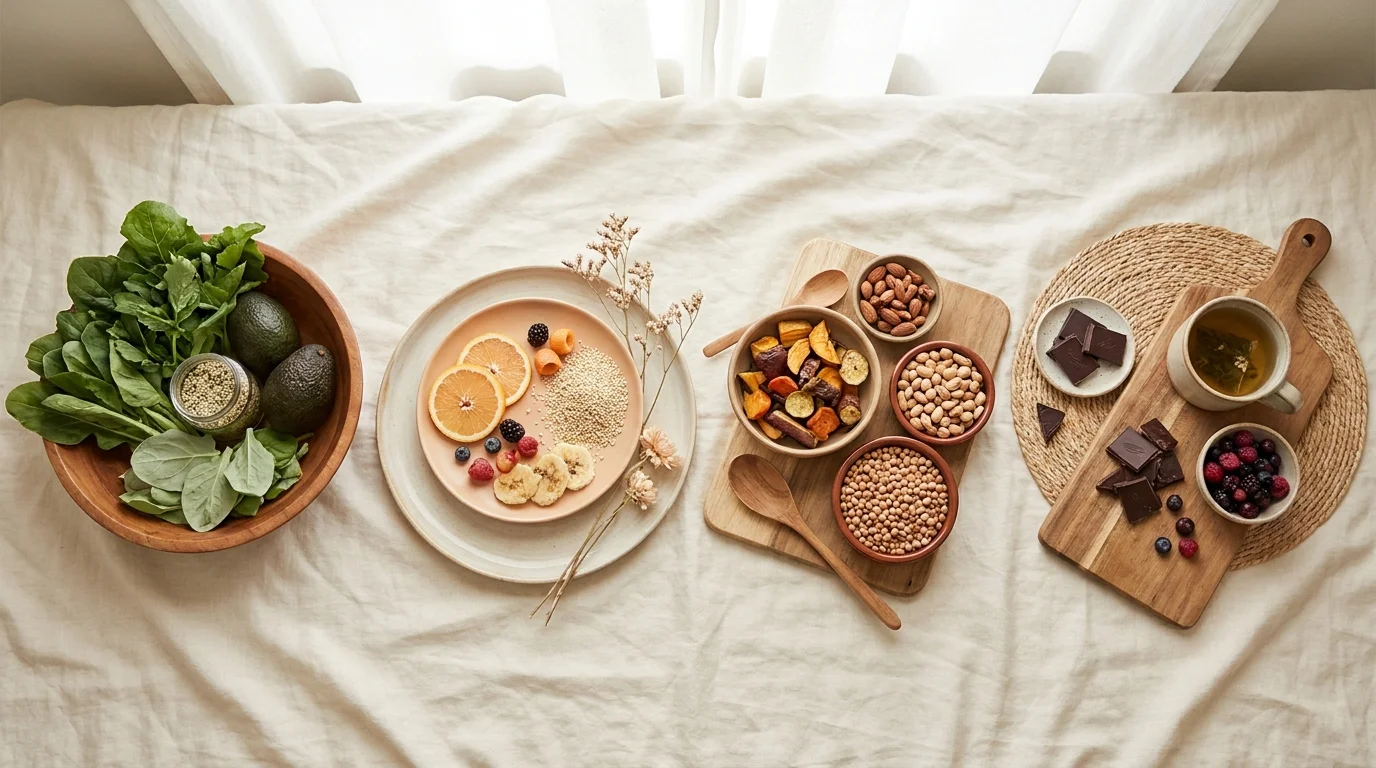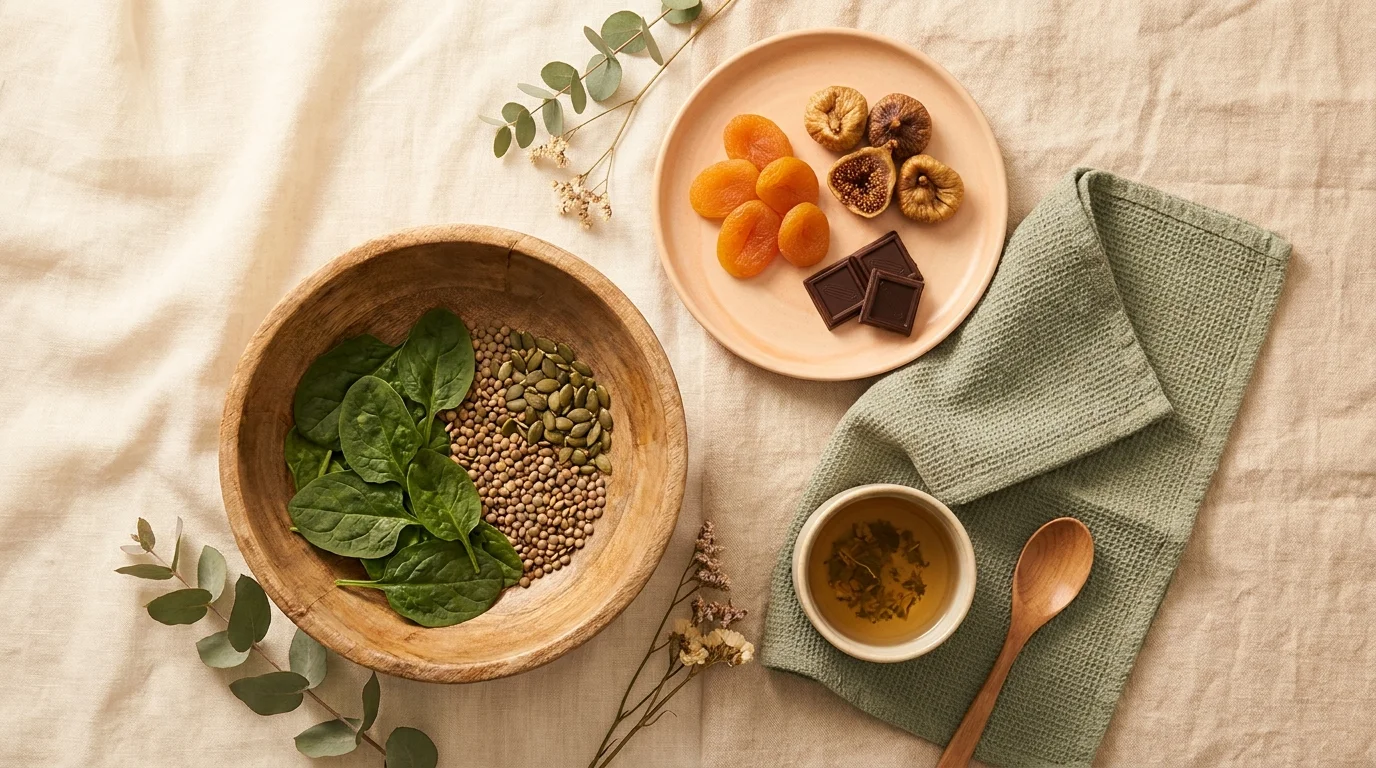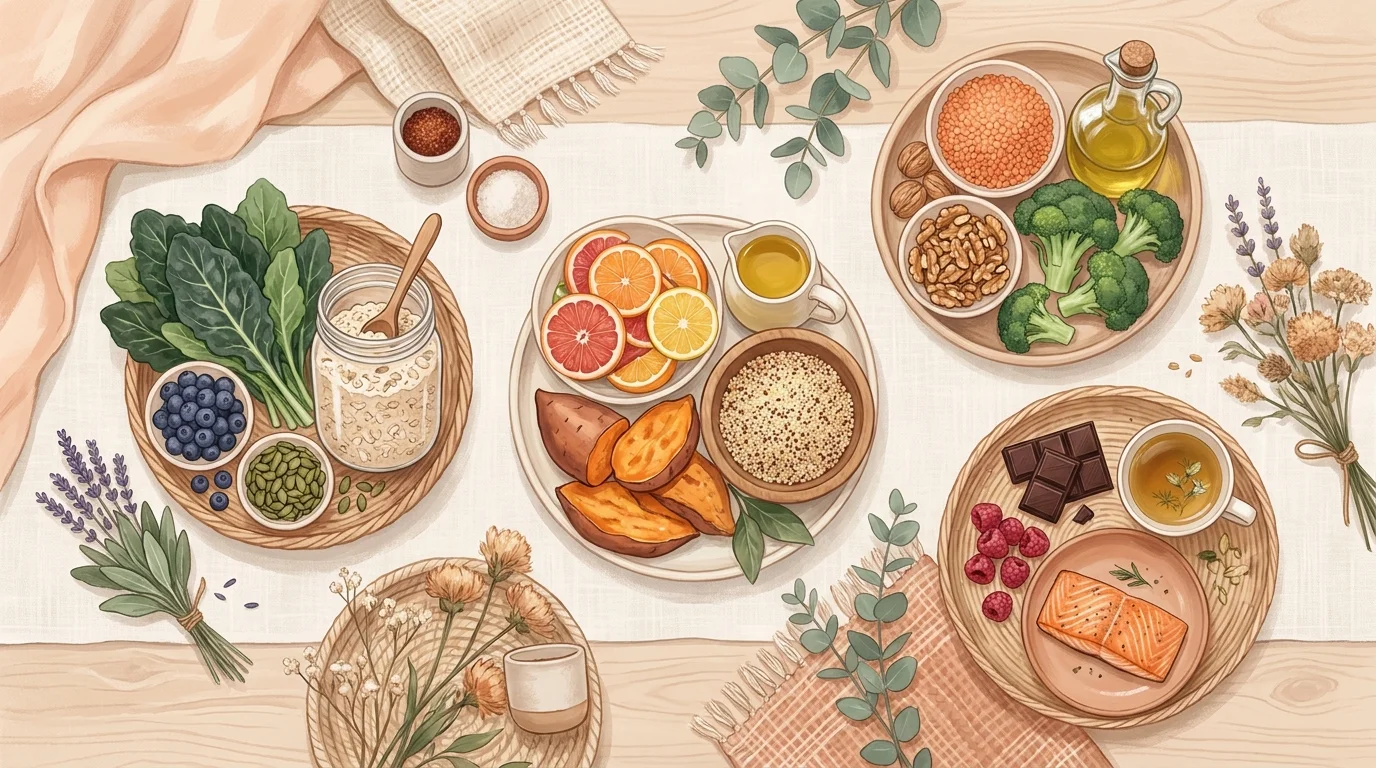
If you have ever stared into your fridge mid-luteal phase and ordered takeaway for the third time that week, you already know that intention alone does not cut it. Cycle syncing meal prep for the week is the practice of planning and cooking your food in advance, organized around the four hormonal phases of your menstrual cycle: menstrual, follicular, ovulatory, and luteal. Done well, it means that the foods your body actually needs are ready and waiting, no matter how tired or brain-foggy you feel.
If you are new to the broader concept, our complete guide to cycle syncing is the best place to start before diving into the kitchen logistics below.
Why Does Your Body Need Different Foods Each Phase?
Each phase of the menstrual cycle is governed by a distinct hormonal landscape. Estrogen, progesterone, testosterone, and FSH shift significantly across the four phases, influencing metabolism, insulin sensitivity, energy demands, and nutrient requirements. Eating to match these shifts supports hormone production, reduces inflammation, and stabilizes mood and energy.
Research published by the National Institutes of Health confirms that resting metabolic rate increases during the luteal phase by approximately 2.5 to 11 percent, meaning your body genuinely needs more calories and more warming, complex carbohydrate-rich foods in the days before your period. Meanwhile, the follicular phase brings rising estrogen, improved insulin sensitivity, and a greater capacity to process lighter, raw, and fermented foods.
Understanding this is the foundation of smart, weekly cycle syncing batch cooking.
"Food is not just fuel; it is hormonal information. When we eat in alignment with our cycle, we are essentially speaking the same language as our endocrine system."
Dr. Sara Gottfried, MD, Integrative Gynecologist and Author, Harvard Medical School
How Do You Set Up a Cycle Syncing Meal Prep for the Week?
Effective cycle syncing meal prep for the week starts by identifying which phase you are in, then choosing a two-hour batch cooking session on a Sunday or Monday to prepare proteins, grains, roasted vegetables, and dressings that can be mixed and matched across five to seven days of phase-appropriate meals.
Here is a practical framework:
Step 1: Know Your Phase Before You Shop
Check the Harmony app or your cycle tracking journal. Your phase determines your entire shopping list and prep strategy. If your cycle is irregular or you are tracking without an app, our article on how to track your cycle without an app walks you through reliable observation-based methods.
Step 2: Build a Phase Pantry
Stock core staples that rotate with your cycle:
- Menstrual phase: Bone broth, dark leafy greens, beets, kidney beans, dark chocolate, warming spices
- Follicular phase: Fermented foods (kimchi, sauerkraut, yogurt), sprouted grains, eggs, avocado, light fish
- Ovulatory phase: Raw vegetables, berries, quinoa, flaxseed, cruciferous vegetables, salmon
- Luteal phase: Sweet potato, chickpeas, pumpkin seeds, tahini, oats, dark chocolate, turkey
Step 3: The Two-Hour Sunday Batch Session
Your weekly cycle syncing batch cooking session does not need to be elaborate. Aim to prepare:
- One large grain batch (quinoa, brown rice, or oats depending on phase)
- Two proteins (roasted chickpeas, poached salmon, boiled eggs, or slow-cooked turkey)
- One tray of roasted vegetables
- One sauce or dressing (tahini-lemon, miso-ginger, or avocado-lime)
- One batch of snacks (energy balls, seed crackers, or fruit and nut mix)
These components can be reconfigured into bowls, wraps, soups, and salads across the week without cooking every day.
What Should Cycle Syncing Meal Prep Look Like for Each Phase?
Phase-based meal prep for the week means tailoring not just what you cook but how you cook it. Warming, slow-cooked foods suit the menstrual phase; bright, raw-forward preparations suit the follicular and ovulatory phases; hearty, complex-carbohydrate-rich batch dishes suit the luteal phase when cravings and calorie needs peak.
Menstrual Phase Meal Prep (Days 1-5 approximately)
During menstruation, your body is shedding the uterine lining and losing iron. Prep focus: replenishment and warmth. Batch cook a big pot of lentil soup with spinach and turmeric, prepare dark leafy greens with sesame and tamari, and make a bone broth to sip or use as a soup base. Iron-rich, anti-inflammatory foods take priority here. For a deeper look at why iron matters so much during this phase, see our guide on iron-rich foods and your cycle.
A 2021 review in the journal Nutrients found that anti-inflammatory dietary patterns significantly reduced menstrual pain severity, supporting the case for turmeric, omega-3-rich foods, and leafy greens during this window.
Follicular Phase Meal Prep (Days 6-13 approximately)
Rising estrogen improves digestion and energy. Your body handles lighter, more varied foods well. Batch prep: a big grain salad with sprouted lentils, roasted seeds, and pickled vegetables; a batch of overnight oats with berries and flaxseed; and hard-boiled eggs for grab-and-go protein. Raw foods, fermented additions, and fresh herbs belong in every meal this week.
Ovulatory Phase Meal Prep (Days 14-17 approximately)
Estrogen and testosterone peak around ovulation, energy is high, and digestion is strong. Prep focus: anti-estrogenic cruciferous vegetables and antioxidant-rich foods to support healthy estrogen metabolism. Batch roast a tray of broccoli, cauliflower, and Brussels sprouts; make a big quinoa tabbouleh with fresh herbs and pomegranate seeds; prep a salmon and avocado bowl base.
Luteal Phase Meal Prep (Days 18-28 approximately)
Progesterone rises and metabolism speeds up. This is the phase where cravings hit and blood sugar stability becomes critical. Batch cook a large pot of warming sweet potato and chickpea curry, prepare tahini energy balls with oats and dark chocolate, and roast a tray of root vegetables. Complex carbohydrates paired with protein and healthy fat at every meal will reduce the blood sugar swings that amplify PMS symptoms.
"In the luteal phase, progesterone drives up appetite and thermogenesis. Women who eat adequate complex carbohydrates and tryptophan-rich foods during this window report significantly fewer mood-related PMS symptoms."
Dr. Jolene Brighten, NMD, Functional Medicine Doctor and Author, National University of Natural Medicine
How Does Cycle Syncing Batch Cooking Save Time Without Losing Nutrition?
Cycle syncing batch cooking saves time by front-loading effort on the weekend so that weekday meals require only assembly, not full cooking. Nutrition is preserved when you store cooked grains and proteins within two hours, keep sauces separate from salad components, and refrigerate most items for three to four days while freezing the rest.
Practical storage tips for your weekly meal prep menstrual phases routine:
- Store cooked grains in airtight glass containers for up to four days in the fridge or three months in the freezer
- Keep raw leafy greens separate from warm proteins to prevent wilting
- Freeze individual portions of soups and curries in labelled bags so luteal-phase emergency meals are always available
- Prepare dressings and sauces in small jars; they keep for up to a week and transform simple components into complete meals
- Use silicone muffin moulds to freeze individual egg muffins, energy balls, or smoothie packs for busy mornings
Research from USDA Food Safety guidelines confirms that most cooked foods stored at or below 40 degrees Fahrenheit remain safe and nutritionally intact for three to four days, giving you the window you need for a full week of prep with a mid-week refresh.
Key Statistics and Sources
- Resting metabolic rate increases by 2.5-11% in the luteal phase, supporting higher calorie and carbohydrate needs. (NIH, 2019)
- Anti-inflammatory diets reduced menstrual pain severity in a 2021 Nutrients review, highlighting the importance of phase-targeted anti-inflammatory foods. (Nutrients, 2021)
- Women lose between 30-80 ml of blood per menstrual cycle, making iron replenishment during menstrual phase meal prep a genuine nutritional priority. (NHLBI)
- Tryptophan intake, found in foods like turkey, oats, and pumpkin seeds, is linked to improved serotonin production and reduced PMS-related low mood. (NIH ODS)
- Batch cooking sessions of two hours or less are associated with higher diet quality scores and reduced reliance on ultra-processed foods during the week. (Harvard T.H. Chan School of Public Health)
What Are the Best Grab-and-Go Cycle Syncing Snacks to Batch Prep?
The best batch-prepped snacks for cycle syncing are ones that travel well, contain protein plus healthy fat, and can be tailored by phase: think pumpkin seed and oat balls for the luteal phase, flaxseed crackers for the follicular phase, and frozen smoothie packs for the ovulatory phase when raw foods are most tolerated.
A simple phase-snack guide:
- Menstrual: Dark chocolate and walnut bites, beet hummus with oat crackers
- Follicular: Fermented yogurt with flaxseed and berries, sprouted lentil dip with raw vegetables
- Ovulatory: Frozen smoothie packs (spinach, pineapple, flaxseed), raw seed and dried berry mix
- Luteal: Tahini and oat energy balls, sweet potato rounds with almond butter, turkey and avocado roll-ups
People Also Ask
Can I meal prep the same way for every cycle phase?
No. Each phase has distinct hormonal and metabolic demands that call for different foods and cooking methods. A phase-based meal prep guide rotates your staples every one to two weeks so that what you eat genuinely supports your body rather than working against it. Variety is the point, and it also prevents nutritional gaps.
What foods freeze well for cycle syncing?
Soups, stews, curries, cooked grains (rice, quinoa, oats), roasted root vegetables, energy balls, and smoothie packs all freeze exceptionally well. Avoid freezing raw leafy greens, avocado, and cooked eggs. Freeze in individual portions labelled by phase so you can pull the right food for your current hormonal needs without planning from scratch.
How do I batch cook for follicular and luteal phases together?
Use a split-prep strategy: cook a neutral grain base like quinoa that works in both phases, then prepare two distinct add-ons, one lighter and fermented-forward for follicular days and one warming and complex-carb-rich for luteal days. Freeze the luteal portions so they are ready when cravings and fatigue peak later in the cycle.