Why Inflammation and Your Hormones Are Deeply Intertwined
If you experience painful periods, persistent PMS, bloating, skin flare-ups, or mood swings before your period, inflammation is very likely part of the picture. Not the dramatic, visible kind of inflammation you get from an injury, but a low-grade, chronic simmer that quietly disrupts the hormonal signals your body depends on every single month.
The connection between inflammation and reproductive hormones runs deeper than most people realise. Inflammatory molecules called cytokines can directly interfere with estrogen and progesterone signalling, disrupt ovulation, and amplify prostaglandin production, which is the very mechanism behind menstrual cramping. The good news is that what you eat has a powerful, measurable influence on your inflammatory load, and by choosing foods thoughtfully across your cycle, you can genuinely shift how you feel.
This is not about following a restrictive diet or cutting out entire food groups. It is about understanding which foods work with your cycling hormones and which ones create unnecessary friction.
What Is Inflammation, Really?
Inflammation is your immune system's natural response to a perceived threat, whether that is an infection, a wound, or a stressor. Short-term inflammation is protective and essential. The problem arises when the inflammatory response becomes chronic, triggered repeatedly by diet, stress, poor sleep, or environmental toxins.
Chronic low-grade inflammation keeps inflammatory pathways switched on. This matters enormously for hormonal health because the same immune cells and signalling molecules that manage inflammation also interact with your hypothalamic-pituitary-ovarian (HPO) axis, the command centre of your menstrual cycle.
"Chronic inflammation can impair the sensitivity of hormone receptors, meaning your cells cannot hear the hormonal messages being sent, even when hormone levels look normal on a blood test."
- Dr. Felice Gersh, MD, OB-GYN and Integrative Medicine Specialist, Integrative Medical Group of Irvine
Research published by the National Institute of Child Health and Human Development highlights inflammation as a central driver in conditions like endometriosis and dysmenorrhea, confirming that the inflammatory environment of the uterus directly influences period pain severity.
How Inflammation Shifts Across Your Cycle
Your cycle is not hormonally uniform, and neither is your inflammatory baseline. Understanding how inflammation naturally fluctuates can help you time your food choices strategically.
Menstrual Phase (Days 1-5)
Prostaglandins are released to trigger uterine contractions and help shed the lining. These are pro-inflammatory molecules by nature, which is why some degree of cramping is normal. However, an excess of inflammatory prostaglandins, often driven by a diet high in refined oils and processed foods, amplifies pain significantly. Prioritising anti-inflammatory foods in the days before and during your period can meaningfully reduce this excess.
Follicular Phase (Days 6-13)
Rising estrogen has a natural anti-inflammatory effect. This is typically when you feel most energetic and resilient. Your body is more tolerant of dietary variation here, though consistently nourishing your gut microbiome during this phase sets you up for a smoother luteal phase ahead.
Ovulatory Phase (Around Day 14)
Ovulation itself triggers a brief, localised inflammatory event to allow the follicle to rupture and release the egg. This is completely normal and necessary. Supporting your body with antioxidant-rich foods around ovulation can help this process unfold smoothly without tipping into excess inflammation.
Luteal Phase (Days 15-28)
Progesterone rises and has a complex relationship with inflammation. While progesterone is generally calming and anti-inflammatory, falling progesterone in the late luteal phase, combined with shifting prostaglandins, can tip the body toward a more inflamed state. This is the window when PMS symptoms, skin breakouts, bloating, and mood changes are most likely to surface, and when dietary choices matter most.
The Most Powerful Anti-Inflammatory Foods for Hormonal Health
Fatty Fish: Omega-3 Powerhouses
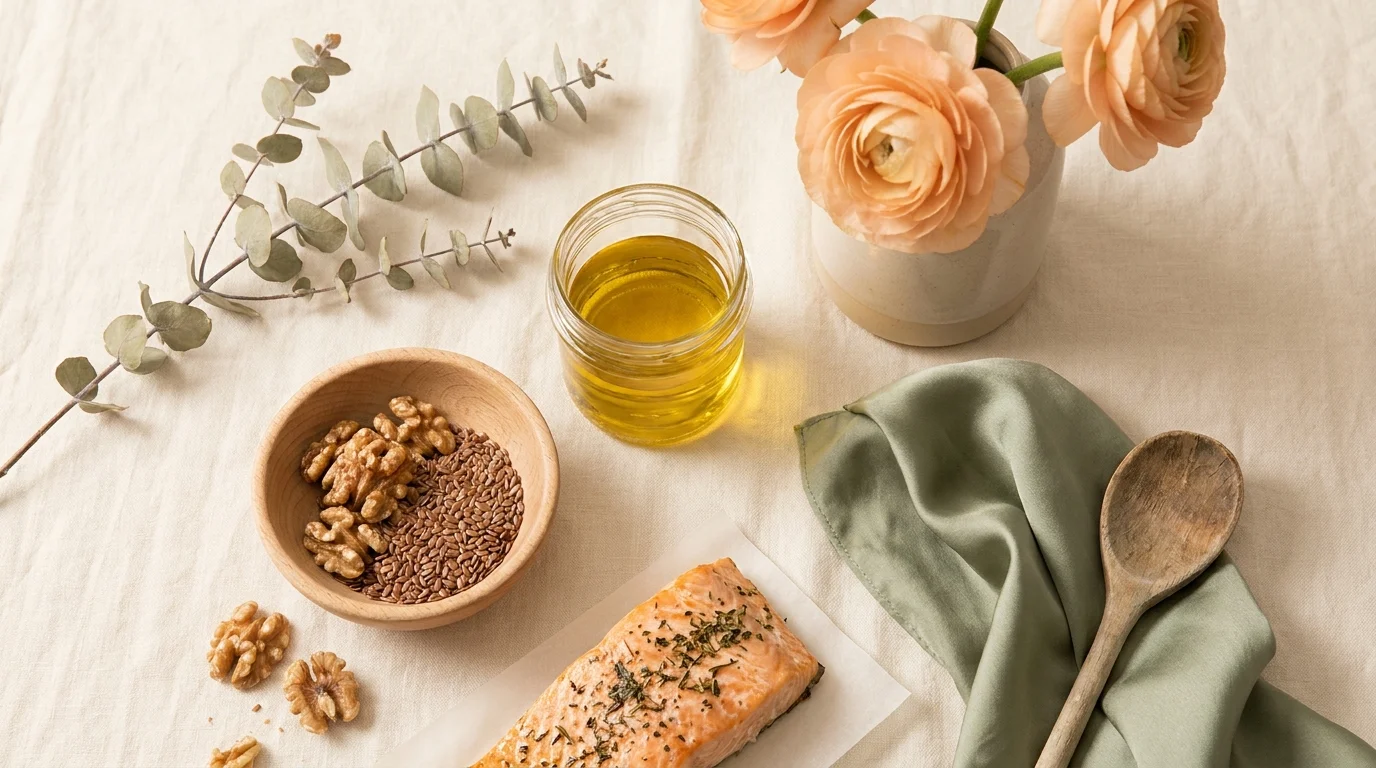
Salmon, sardines, mackerel, and anchovies are rich in EPA and DHA, two omega-3 fatty acids that directly compete with the pro-inflammatory omega-6 pathways responsible for prostaglandin production. Multiple studies have shown that omega-3 supplementation reduces menstrual pain severity. One randomised controlled trial published via PubMed found that fish oil supplementation was more effective than ibuprofen for reducing dysmenorrhea in adolescents, with fewer side effects.
Aim for two to three servings of fatty fish per week across your cycle, with a particular emphasis in the late follicular and early luteal phases when you are building up reserves ahead of your period.
Leafy Greens and Cruciferous Vegetables
Spinach, kale, rocket, broccoli, Brussels sprouts, and cauliflower are rich in antioxidants, folate, and compounds like sulforaphane that support liver detoxification of estrogen. A well-functioning liver is essential for clearing excess estrogen metabolites, which, when they accumulate, drive estrogen dominance and increase inflammatory signalling.
Cruciferous vegetables also contain indole-3-carbinol (I3C), which supports healthier estrogen metabolism pathways, favouring the production of less reactive estrogen metabolites.
Berries and Polyphenol-Rich Fruits
Blueberries, raspberries, pomegranate, cherries, and strawberries are loaded with flavonoids and anthocyanins that neutralise free radicals and dampen inflammatory signalling. Research from the Harvard T.H. Chan School of Public Health consistently links higher intake of polyphenol-rich fruits with lower levels of inflammatory markers like C-reactive protein (CRP).
These are particularly valuable in the luteal phase when oxidative stress tends to rise and mood-supporting nutrients are in higher demand.
Turmeric and Ginger
Curcumin, the active compound in turmeric, has been studied extensively for its ability to inhibit the NF-kB inflammatory pathway. Ginger contains gingerols and shogaols that similarly reduce prostaglandin synthesis. Both spices can be genuinely useful during the menstrual phase and the late luteal phase when inflammatory load peaks.
Combine turmeric with black pepper to enhance curcumin absorption by up to 2,000 percent.
Extra Virgin Olive Oil
Oleocanthal, a compound in high-quality extra virgin olive oil, acts similarly to ibuprofen in inhibiting COX enzymes involved in inflammation. Swapping refined vegetable oils and seed oils (which are high in pro-inflammatory omega-6 linoleic acid) for extra virgin olive oil is one of the most impactful dietary shifts you can make for hormonal inflammation.
Seeds: Flax, Chia, and Pumpkin
Flaxseeds provide lignans that help modulate estrogen receptor activity and support estrogen clearance. Chia seeds deliver plant-based omega-3s. Pumpkin seeds are rich in zinc, which plays a key role in progesterone production and reduces inflammatory prostaglandins. This is why seed cycling, which involves rotating specific seeds across cycle phases, has gained traction as a food-based hormonal support strategy.
"Food is one of the most consistent levers we have for modulating inflammation. Patients with painful periods who shift toward a Mediterranean-style anti-inflammatory diet often report significant reductions in pain and PMS symptoms within two to three cycles."
- Dr. Lara Briden, ND, Naturopathic Doctor and Author of Period Repair Manual
Foods That Fan the Inflammatory Fire
Understanding what to reduce is just as important as knowing what to add. These are the biggest dietary contributors to cycle-disrupting inflammation:
Refined and Ultra-Processed Foods
White bread, pastries, crackers, and packaged snacks cause rapid blood sugar spikes that trigger insulin release. High insulin drives inflammation through multiple pathways and, in the context of PCOS, can stimulate excess androgen production. Stabilising blood sugar is foundational to an anti-inflammatory approach to cycle health.
Industrial Seed Oils
Sunflower oil, corn oil, soybean oil, and canola oil are disproportionately high in omega-6 linoleic acid. When the ratio of omega-6 to omega-3 in your diet skews too high (as it does in most modern diets), the body produces more pro-inflammatory prostaglandins, worsening cramps and PMS.
Excess Sugar
Sugar directly activates inflammatory pathways and feeds less beneficial bacteria in the gut, compromising the gut microbiome's ability to regulate estrogen. Cutting back on added sugars, particularly in the luteal phase when cravings tend to spike, can noticeably reduce bloating, mood swings, and skin inflammation.
Alcohol
Alcohol raises estrogen levels, impairs liver detoxification, disrupts gut bacteria, and increases inflammatory markers. Even moderate consumption in the luteal phase can amplify PMS symptoms. If you drink, the follicular phase is your most hormonally resilient window for doing so.
A Phase-by-Phase Anti-Inflammatory Eating Guide
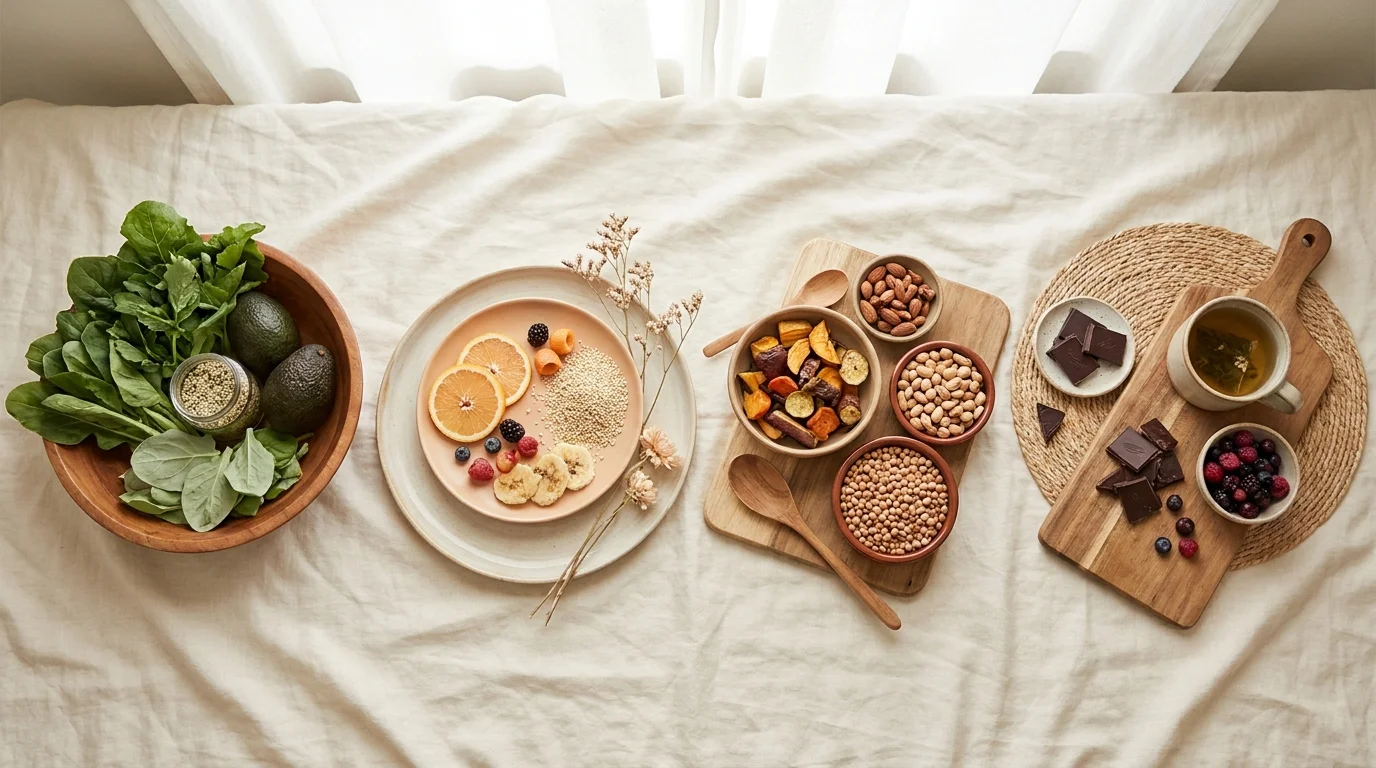
Menstrual Phase: Warm, Iron-Rich, Anti-Cramp Foods
- Bone broth, lentil soup, and warming stews with turmeric and ginger
- Dark leafy greens with vitamin C-rich foods to enhance iron absorption
- Dark chocolate (70 percent or above) for magnesium and antioxidants
- Avoid iced drinks, raw salads, and high-sugar foods that can worsen cramping and digestive discomfort
Follicular Phase: Fresh, Energising, Gut-Nourishing Foods
- Fermented foods like yoghurt, kefir, kimchi, and sauerkraut to support estrobolome health
- Colourful salads with extra virgin olive oil dressings
- Sprouted seeds, avocado, and eggs for nutrient density
Ovulatory Phase: Antioxidant-Rich, Liver-Supporting Foods
- Raw vegetables and cruciferous foods to support estrogen clearance
- Berries, pomegranate seeds, and citrus for antioxidant protection
- Zinc-rich foods like pumpkin seeds and grass-fed beef to support the LH surge
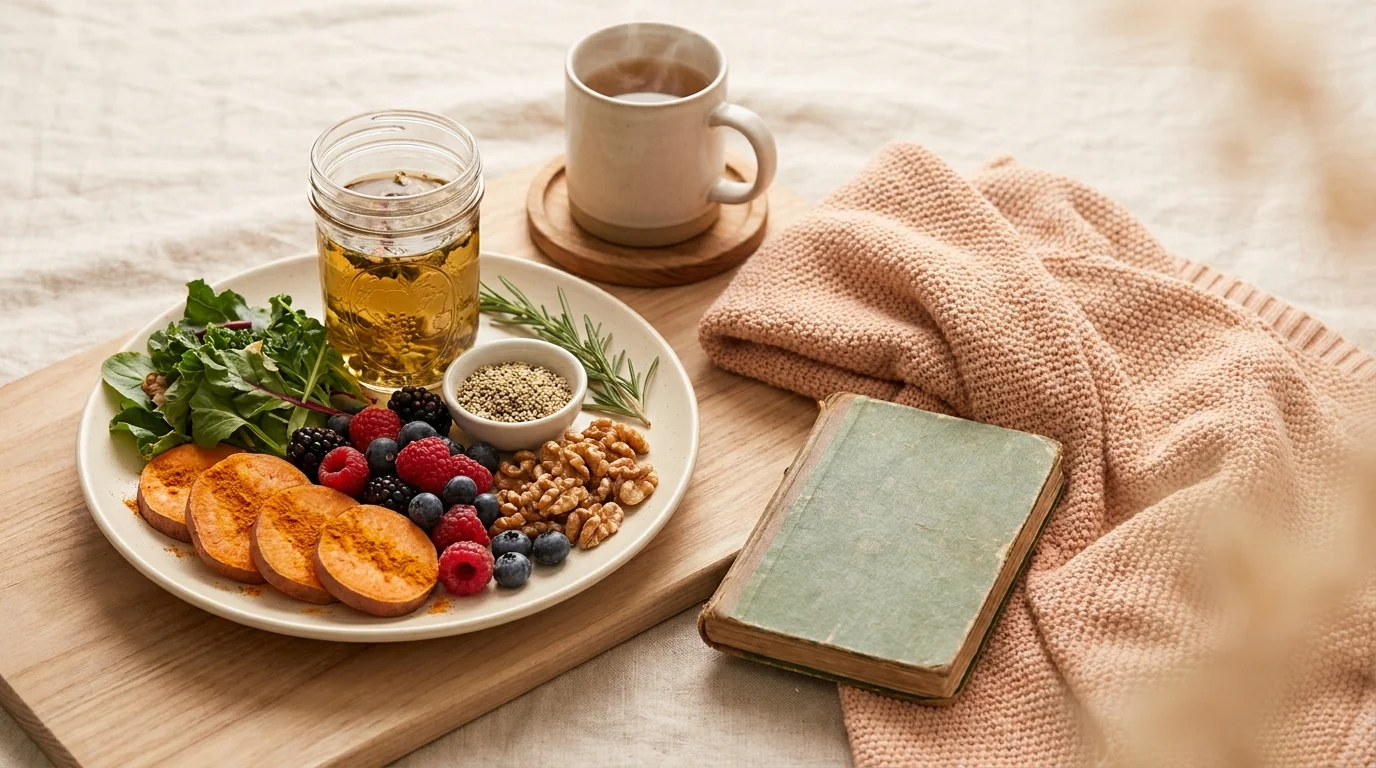
Luteal Phase: Blood Sugar-Balancing, Progesterone-Supporting Foods
- Complex carbohydrates like sweet potato, quinoa, and oats to stabilise blood sugar and support serotonin
- Fatty fish, walnuts, and flaxseeds to reduce prostaglandin production
- Magnesium-rich foods like dark chocolate, leafy greens, and legumes to ease tension and support sleep
- Minimise alcohol, caffeine, refined sugar, and salty processed foods
Key Statistics and Sources
- Up to 84 percent of women experience menstrual pain, with inflammation-driven prostaglandins identified as the primary cause. (NIH, PMC)
- Women with higher dietary omega-3 to omega-6 ratios report significantly lower rates of severe dysmenorrhea. (PubMed)
- Adherence to a Mediterranean-style diet is associated with lower circulating estrogen and reduced PMS symptom severity. (Harvard T.H. Chan School of Public Health)
- Curcumin supplementation significantly reduced PMS symptoms in a double-blind placebo-controlled trial. (PubMed)
- A diet high in ultra-processed foods increases C-reactive protein (CRP), a key inflammatory marker, by up to 82 percent. (NIH, PMC)
- Gut microbiome composition directly influences circulating estrogen levels via the estrobolome, meaning gut-disrupting diets can drive estrogen dominance. (NIH, PMC)
The Bottom Line
Anti-inflammatory eating for hormonal health is not a one-size-fits-all prescription. It is a flexible, cyclically informed framework that recognises your body's changing needs across four distinct phases. The goal is not perfection; it is consistency and awareness. Shifting toward more whole foods, omega-3s, polyphenols, and gut-nourishing choices, while reducing refined oils, sugar, and ultra-processed foods, creates a biochemical environment where your hormones can signal clearly, your uterus can shed without excessive pain, and your mood can stay more stable across the month. Start with one phase, track how you feel, and build from there. Your cycle will tell you what is working.