You have probably heard that eating colorful fruits and vegetables is good for you. But the reason goes deeper than general antioxidant advice, especially when it comes to your hormones. The compounds responsible for much of that benefit are polyphenols, a large family of plant-based molecules found in berries, tea, dark chocolate, olive oil, and hundreds of other everyday foods.
For women, polyphenols are particularly interesting because several of them interact directly with estrogen receptors, support the liver enzymes that clear spent hormones, and dampen the chronic low-grade inflammation that quietly disrupts ovulation and progesterone production. Understanding how they work, and when to prioritize them across your cycle, gives you a genuinely practical nutrition lever to pull.
What Are Polyphenols?
Polyphenols are a broad class of phytochemicals with a shared chemical structure: multiple phenol rings. There are more than 8,000 identified types, but for hormonal health the most relevant subgroups are:
- Flavonoids (quercetin, kaempferol, anthocyanins, catechins, isoflavones)
- Lignans (found in flaxseed, sesame, and wholegrains)
- Stilbenes (resveratrol in red grapes and berries)
- Phenolic acids (chlorogenic acid in coffee, ferulic acid in wholegrains)
Plants make polyphenols partly as a defense against UV radiation, pathogens, and herbivores. When we eat them, our gut bacteria metabolize many into smaller, highly bioactive compounds that travel in the bloodstream and reach hormone-sensitive tissues.
"Polyphenols do not act like blunt nutritional hammers. They modulate signaling pathways with surprising specificity, which is why the same compound can have different effects depending on your hormonal background."
- Dr. Aedin Cassidy, PhD, Professor of Nutrition, Queen's University Belfast
Polyphenols and Estrogen: A Nuanced Relationship
Some polyphenols, most notably the isoflavones found in soy (genistein and daidzein) and lignans found in flaxseed, are also classified as phytoestrogens. They have a chemical structure similar enough to estradiol that they can bind weakly to estrogen receptors (ER-alpha and ER-beta), though their binding affinity is roughly 100 to 10,000 times weaker than the body's own estrogen.
This weak binding can be helpful rather than harmful in most contexts. When estrogen levels are high, phytoestrogens may compete with stronger endogenous estrogen for receptor sites, moderating its effect. When estrogen levels are low (as in perimenopause or the follicular phase), they can provide mild estrogenic activity. This context-dependent behavior is sometimes called a selective estrogen receptor modulation effect.
A large prospective study published by researchers at Harvard's T.H. Chan School of Public Health found that higher dietary isoflavone intake was associated with more regular cycles and lower risk of anovulation in premenopausal women, suggesting that moderate soy consumption does not disrupt healthy cycles and may support them. You can explore that context at the Harvard Nutrition Source.
Beyond estrogen receptor binding, polyphenols influence hormonal health through several other routes:
- CYP1B1 inhibition: Certain flavonoids slow the enzyme that converts estrogen into the more aggressive 4-hydroxy metabolite, nudging metabolism toward safer 2-hydroxy pathways.
- SHBG modulation: Some polyphenols increase sex hormone-binding globulin, which can reduce the amount of free, unbound testosterone circulating in conditions like PCOS.
- Aromatase activity: Quercetin and apigenin have been shown to mildly inhibit aromatase, the enzyme that converts androgens into estrogen, which may be relevant in estrogen-dominant conditions.
Polyphenols and Inflammation: Why Your Luteal Phase Cares
Inflammation is not simply a problem to switch off. A carefully timed inflammatory response is essential for ovulation itself, as the follicle rupture that releases an egg is an acute inflammatory event. The issue arises when systemic, chronic inflammation is present throughout the cycle, raising prostaglandin levels and contributing to more painful periods, worsened PMS, and suppressed progesterone.
Polyphenols are among the most studied natural anti-inflammatory agents we have. They inhibit NF-kB signaling (a master switch for inflammatory gene expression), reduce COX-2 enzyme activity (the same pathway targeted by ibuprofen), and lower circulating interleukin-6 and TNF-alpha levels.
A systematic review published on PubMed (PMID: 28208095) concluded that dietary polyphenols significantly reduced markers of systemic inflammation in clinical trials, with curcumin, resveratrol, and quercetin producing the most consistent results.
For your cycle specifically, this anti-inflammatory action is most relevant in the late luteal phase. In the days before your period, prostaglandins rise sharply to trigger the uterine contractions that shed the endometrial lining. When inflammation is already elevated, those prostaglandins can be produced in excess, leading to severe cramping and worsened mood symptoms. A consistently polyphenol-rich diet may help keep that baseline inflammation lower throughout the month.
"What women eat habitually across the entire month matters far more than any single supplement taken in the final few days before menstruation. Polyphenol intake is a good example: the benefit is cumulative and preventive, not acute."
- Dr. Sherry Ross, MD, OB-GYN, Providence Saint John's Health Center
Polyphenols and the Estrobolome
Your gut microbiome contains a specialized community of bacteria, collectively called the estrobolome, that produce an enzyme called beta-glucuronidase. This enzyme deconjugates estrogen metabolites in the intestine, allowing them to be reabsorbed into circulation rather than excreted. When the estrobolome is imbalanced, beta-glucuronidase activity can be too high, leading to estrogen recirculation that contributes to estrogen dominance symptoms.
Polyphenols are potent prebiotics. They are largely resistant to digestion in the small intestine and arrive intact in the colon, where they selectively feed beneficial bacteria including Lactobacillus and Bifidobacterium species. Research from the National Institutes of Health (PMC6566984) confirms that polyphenol-rich diets are associated with higher microbial diversity and lower inflammatory cytokine production, both of which support a healthier estrobolome and more balanced estrogen metabolism.
Phase-by-Phase: Prioritizing Polyphenols Across Your Cycle
Menstrual Phase (Days 1-5)
Inflammation and prostaglandins are at their peak. Focus on anti-inflammatory polyphenols: tart cherries, blueberries, ginger (gingerols and shogaols are phenolic compounds), turmeric with black pepper, and green tea. These help modulate COX-2 activity and may ease cramping intensity.
Follicular Phase (Days 6-13)
Estrogen is rising and the body is primed to build. Quercetin-rich foods (onions, capers, apples) support liver detoxification pathways that clear estrogen metabolites efficiently, preventing an excess buildup as levels rise. Catechins from green tea also support CYP450 enzyme activity in the liver.
Ovulatory Phase (Days 14-16)
The LH surge triggers ovulation via a brief inflammatory cascade. You do not want to aggressively suppress inflammation at this exact moment. Focus on moderate, food-form polyphenols rather than high-dose supplements. Resveratrol from red grapes, pomegranate polyphenols, and dark chocolate are good choices that provide antioxidant protection without dramatically inhibiting the ovulatory process.
Luteal Phase (Days 17-28)
Progesterone rises and then falls sharply. This phase is where chronic inflammation can cause the most disruption to mood and symptoms. Prioritize lignans (flaxseed, sesame), quercetin, and curcumin to support progesterone receptor sensitivity and blunt late-luteal prostaglandin excess. Soy isoflavones may also provide mild support as estrogen drops in the second half of this phase.
Best Food Sources of Hormonal-Health Polyphenols
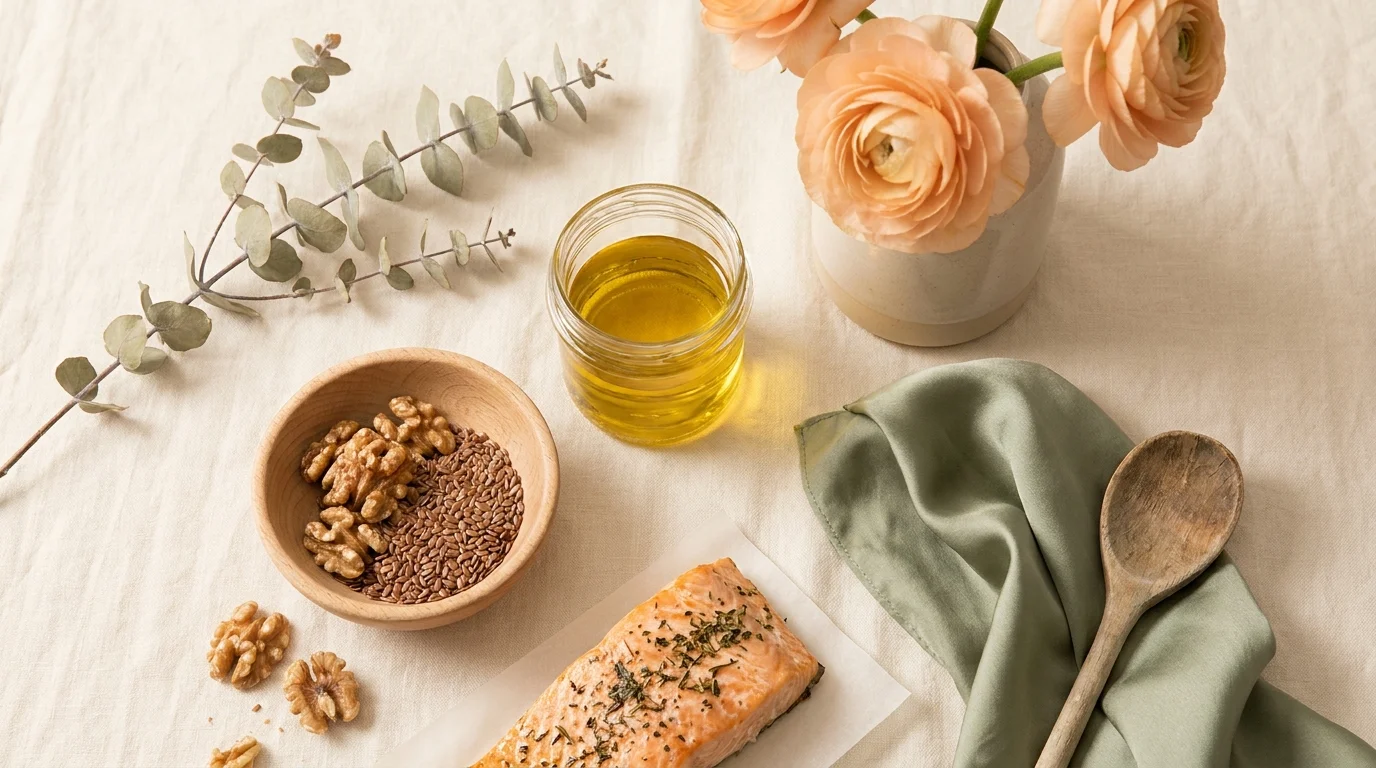
- Flaxseed - highest lignan content of any food; 1-2 tablespoons ground daily is a practical target
- Berries - blueberries, raspberries, and strawberries are rich in anthocyanins and ellagic acid
- Green tea - EGCG (epigallocatechin gallate) is one of the most studied polyphenols for hormone metabolism
- Extra virgin olive oil - oleuropein and hydroxytyrosol support liver function and reduce oxidative stress on hormone-producing cells
- Dark chocolate (70%+) - flavanols support endothelial function and have mild anti-inflammatory effects
- Pomegranate - ellagitannins are converted by gut bacteria into urolithin A, which has shown estrogen-modulating properties
- Red onions and capers - among the highest quercetin sources available
- Walnuts - provide ellagic acid and are also a good source of ALA omega-3s, compounding anti-inflammatory benefit
- Organic fermented soy - miso, tempeh, and natto provide isoflavones alongside beneficial bacteria
Should You Supplement?
Polyphenol supplements, particularly concentrated quercetin, resveratrol, and curcumin, are widely available. They can be useful in therapeutic contexts, but there are important caveats. Bioavailability of isolated polyphenols varies enormously and is often lower than from whole food sources. High-dose resveratrol supplements (above 1 gram daily) have shown mixed effects in some trials, and very high quercetin doses may interact with certain medications.
For most women, a food-first approach is both safer and more effective. Aim to eat at least 5-7 different plant-based polyphenol sources daily. The synergy between compounds in whole foods often produces greater benefit than any single isolated extract.
Key Statistics and Sources
- Women with the highest quartile of flavonoid intake had a 20% lower risk of anovulatory infertility compared to those with the lowest intake. Source: PubMed 17416779
- Dietary isoflavone intake of 40-60mg per day is associated with meaningful reductions in vasomotor symptoms in perimenopausal women. Source: NIH PMC3074428
- Curcumin supplementation reduced serum TNF-alpha by 33% and IL-6 by 25% in a randomized controlled trial. Source: PubMed 28208095
- Polyphenol-rich diets are associated with a 16% higher gut microbiome diversity score, which correlates with healthier estrogen metabolism. Source: NIH PMC6566984
- Ground flaxseed (10g daily for 3 months) significantly increased the 2:16 hydroxyestrone ratio, indicating improved estrogen detoxification. Source: PubMed 15096581
- EGCG from green tea reduces aromatase activity by up to 30% in vitro, suggesting a role in managing estrogen excess. Source: PubMed 16622435