Building a perimenopause friendly meal plan for 40s women is one of the most powerful things you can do for your hormonal health right now. In your 40s, oestrogen and progesterone begin their gradual, unpredictable decline, and the food on your plate directly influences how smoothly that transition goes. Hot flashes, disrupted sleep, brain fog, and weight changes are not inevitable, as the right perimenopause diet plan can significantly reduce their intensity. If you are new to this hormonal chapter, start with The Complete Guide to Perimenopause for a full picture of what is happening in your body and why.
This guide is designed to be practical, not prescriptive. You will find a 40s women eating guide built around the nutrients your body needs most, a sample meal framework, and science-backed strategies you can slot into real life, not just an idealised wellness bubble.
What Does Perimenopause Do to Your Nutritional Needs?
Perimenopause increases your need for protein, calcium, magnesium, and fibre while reducing your tolerance for blood sugar spikes and alcohol. Falling oestrogen alters insulin sensitivity, bone turnover, and gut motility, meaning that food choices which felt neutral in your 30s can now trigger symptoms, weight gain, or energy crashes in your 40s.
Oestrogen has receptors throughout the gut, bones, and brain. As levels fluctuate, your digestive rhythm shifts, your muscle mass becomes harder to preserve, and your sleep architecture changes. Nutrition that worked before may need recalibrating. Research published by the National Institutes of Health confirms that menopausal transition is associated with increased visceral fat accumulation independent of total calorie intake, which highlights that food quality and composition matter more than simple calorie counting at this life stage.
Perimenopause nutrition is not about eating less. It is about eating smarter, with more intention around protein distribution, anti-inflammatory fats, and fibre timing. For a deeper look at how gut health shifts during this transition, read our article on perimenopause and gut health changes.
How Does Blood Sugar Stability Affect Perimenopause Symptoms?
Blood sugar instability is one of the most underrated drivers of perimenopause symptoms. When blood glucose spikes and crashes, it amplifies hot flashes, disrupts sleep, worsens brain fog, and increases cortisol, creating a hormonal cascade that makes the transition feel far more turbulent than it needs to.
In perimenopause, oestrogen's buffering effect on insulin sensitivity diminishes. This means carbohydrate-heavy meals, skipped meals, or high-sugar snacks hit harder and trigger stronger glucose swings. A practical fix is to build every meal around a protein and fat anchor before adding carbohydrates, a strategy sometimes called "protein first" eating.
"Stabilising blood sugar is the single most impactful dietary lever perimenopausal women can pull. It touches sleep, mood, weight, and hot flash frequency simultaneously."
Dr. Sara Gottfried, MD, Integrative Gynaecologist and Clinical Researcher, Harvard Medical School
Practical blood sugar strategies for your perimenopause diet plan include: eating within 90 minutes of waking, including at least 25-30g of protein at breakfast, pairing any sweet food with fat or protein, and avoiding a long gap between lunch and dinner. Our article on perimenopause brain fog explores how blood sugar directly affects cognitive clarity during this transition.
The Core Building Blocks of a Perimenopause Friendly Meal Plan for 40s Women
Rather than prescribing a rigid weekly schedule, think of your perimenopause diet plan as a set of non-negotiable nutritional pillars that anchor every day:
1. Protein: 1.2-1.6g Per Kilogram of Body Weight Daily
Muscle mass naturally declines after 35, and oestrogen loss accelerates this process. Adequate protein preserves lean tissue, supports satiety, and stabilises blood sugar. Prioritise eggs, Greek yoghurt, legumes, oily fish, chicken, tofu, and cottage cheese. Distribute protein across all three meals rather than concentrating it at dinner.
2. Phytoestrogens: Natural Oestrogen Support
Foods containing phytoestrogens, including edamame, tempeh, flaxseed, chickpeas, and lentils, can weakly mimic oestrogen at receptor sites, potentially softening the impact of falling levels. A Harvard T.H. Chan School of Public Health analysis found that whole soy foods are associated with modest reductions in hot flash frequency and improved cardiovascular markers in menopausal women.
3. Calcium and Vitamin D: Bone Protection Starts Now
Bone loss accelerates sharply in the first years of perimenopause. Aim for 1,000-1,200mg of calcium daily from food sources: sardines with bones, dairy or fortified alternatives, broccoli, kale, and almonds. Pair calcium-rich meals with vitamin D-rich foods such as oily fish, egg yolks, and fortified foods to optimise absorption.
4. Omega-3 Fatty Acids: Anti-Inflammatory and Mood-Protective
Oily fish (salmon, mackerel, sardines), walnuts, chia seeds, and flaxseed provide EPA and DHA, which reduce systemic inflammation, support brain health, and may ease low mood associated with hormonal fluctuation. Aim for two to three portions of oily fish per week.
5. Fibre: Gut, Oestrogen, and Weight Regulation
Fibre feeds the gut microbiome, which influences how oestrogen is metabolised and cleared. Aim for 25-30g daily from vegetables, legumes, wholegrains, fruit, and seeds. Insoluble fibre from vegetables and wholegrains supports bowel regularity, which slows during perimenopause for many women.
A Sample Perimenopause Friendly Meal Plan for 40s Women
This is a flexible framework, not a rigid prescription. Adjust portions to your hunger and activity level.
Breakfast Ideas
- Three-egg scramble with smoked salmon, spinach, and a slice of sourdough topped with avocado
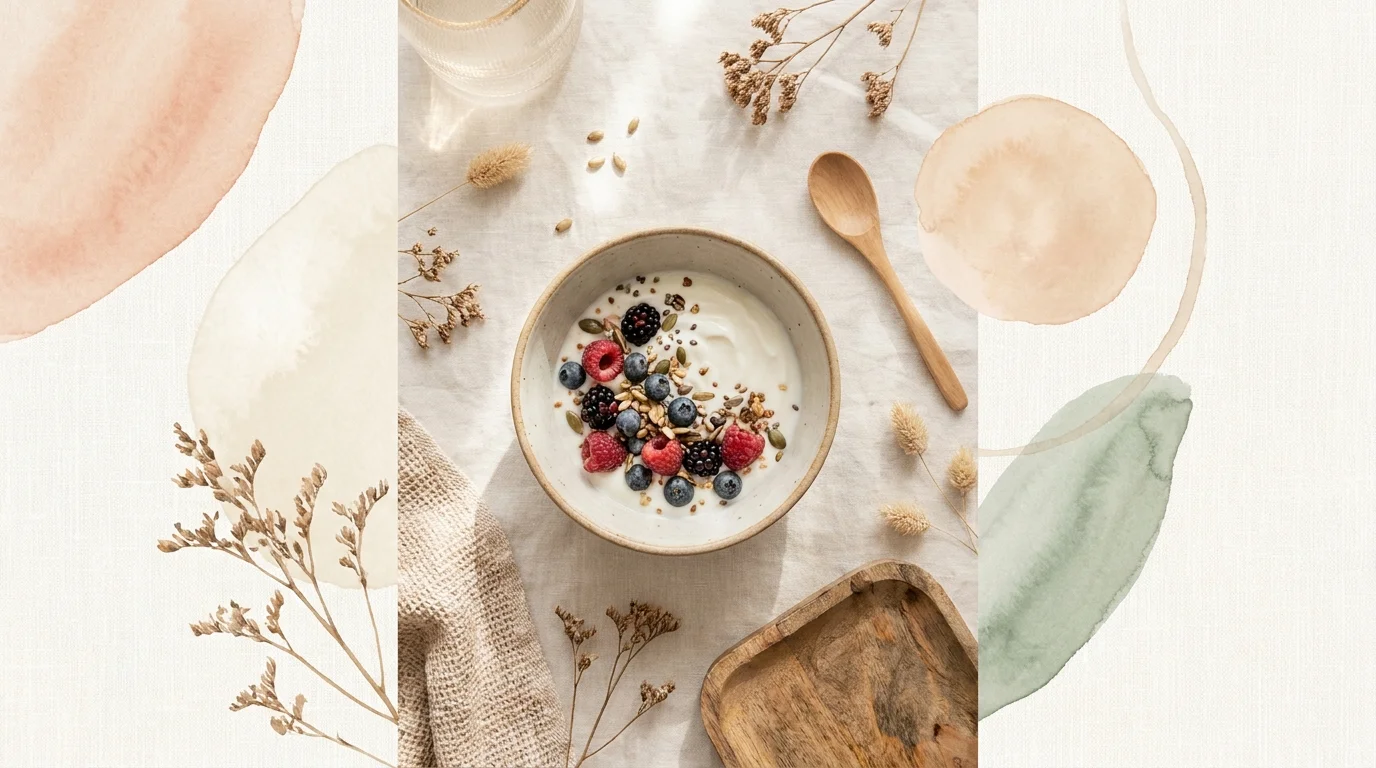
- Full-fat Greek yoghurt with ground flaxseed, mixed berries, and a handful of walnuts
- Overnight oats made with soy milk, chia seeds, almond butter, and sliced banana
Lunch Ideas
- Large salad with tinned sardines, chickpeas, roasted red peppers, cucumber, and tahini dressing
- Lentil and roasted vegetable soup with a small wholegrain roll and hummus
- Tempeh stir-fry with broccoli, edamame, brown rice, and tamari-ginger sauce
Dinner Ideas
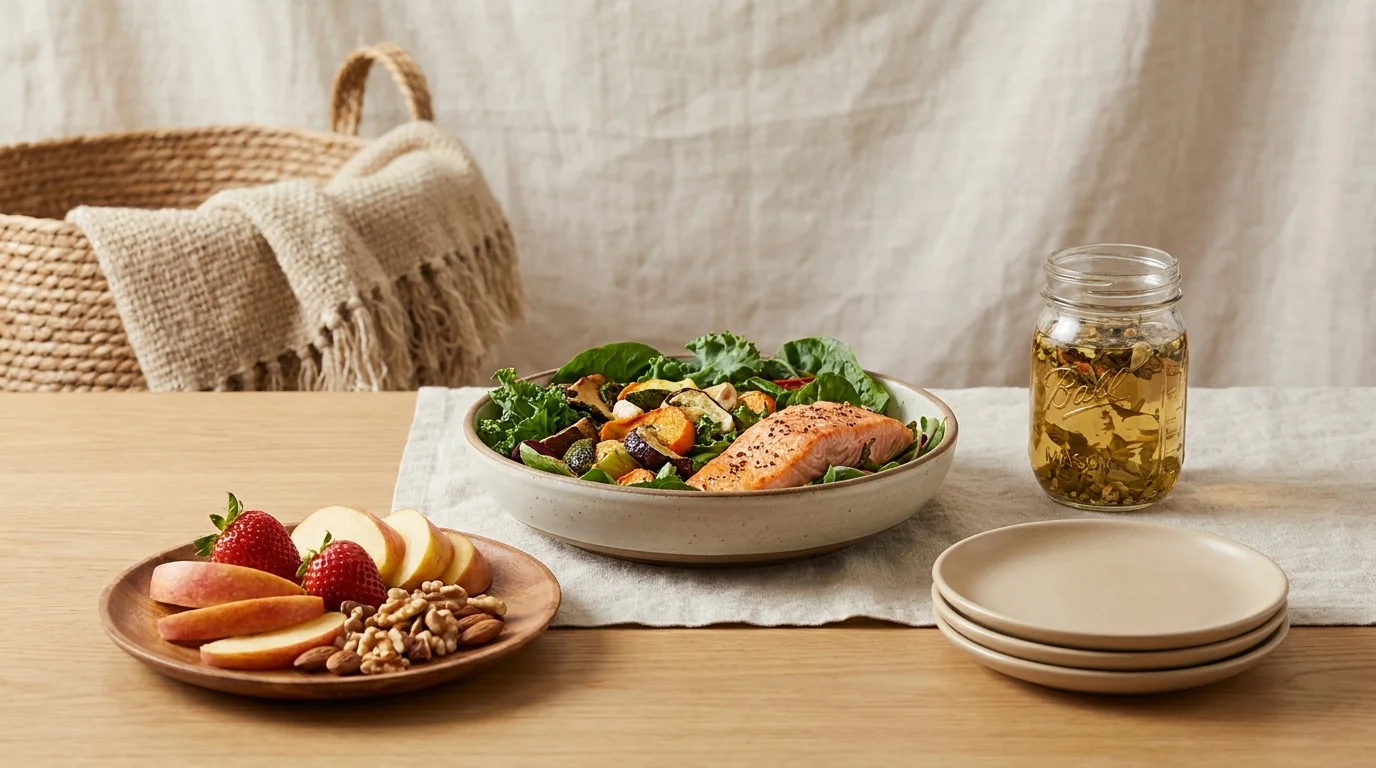
- Baked salmon with roasted sweet potato, steamed kale, and a lemon-tahini drizzle
- Chicken and chickpea tray bake with courgette, cherry tomatoes, and olives
- Tofu and vegetable curry with turmeric, ginger, and brown rice or quinoa
Snack Ideas (If Needed)
- A small handful of almonds and a couple of squares of dark chocolate
- Cottage cheese with sliced cucumber and a pinch of smoked paprika
- Apple slices with almond butter
Which Foods Should You Limit in a Perimenopause Diet Plan?
Perimenopausal women benefit from limiting ultra-processed foods, refined sugars, excessive caffeine, and alcohol. These items amplify hot flashes, worsen sleep, increase cortisol, and accelerate bone loss, all of which compound the hormonal disruption already occurring naturally during this transition.
Alcohol deserves particular attention. Research from the National Institute on Alcohol Abuse and Alcoholism shows that women metabolise alcohol differently to men and that alcohol increases oestrogen and cortisol while disrupting sleep architecture, all of which intensify perimenopause symptoms. Even moderate drinking can lower the threshold for hot flashes and disrupt the progesterone-related deep sleep many women are already losing in their 40s.
Refined sugar and white carbohydrates trigger rapid glucose spikes that stress the adrenal glands and feed systemic inflammation. Swapping white rice for quinoa or cauliflower rice, choosing sourdough over soft white bread, and reducing sweet snack frequency are low-effort shifts that compound meaningfully over time.
"Perimenopausal women often notice that foods they tolerated for decades suddenly feel inflammatory. This is not in their heads. Declining oestrogen changes gut permeability, inflammatory signalling, and metabolic rate, making dietary quality acutely more relevant."
Dr. Aviva Romm, MD, Integrative Physician and Author, Yale School of Medicine
How Does Meal Timing Matter in the 40s Women Eating Guide?
Meal timing significantly affects cortisol patterns, blood sugar stability, and sleep quality during perimenopause. Eating breakfast within 90 minutes of waking supports the cortisol awakening response, while eating a light, protein-rich dinner at least two to three hours before bed improves sleep onset and reduces night sweat frequency.
Many women in perimenopause experiment with intermittent fasting, but aggressive fasting windows can raise cortisol and increase muscle breakdown in women whose oestrogen is already declining. A gentler 12-hour overnight fast, for example finishing dinner by 8pm and eating breakfast by 8am, gives your gut adequate rest without stressing the HPA axis.
Front-loading calories slightly earlier in the day, meaning a more substantial breakfast and lunch with a lighter dinner, aligns with natural circadian insulin sensitivity patterns and supports better sleep, which is itself one of the most powerful hormonal regulators available to you.
Perimenopause Nutrition: Supplements Worth Considering
Food first is always the priority, but certain gaps are common and difficult to fill through diet alone during perimenopause:
- Magnesium glycinate: Supports sleep quality, muscle relaxation, and mood regulation. Many women are deficient without realising it.
- Vitamin D3 with K2: Critical for bone health, immune function, and mood. Most 40s women in northern climates are insufficient.
- Omega-3 (EPA and DHA): Useful if oily fish intake is below two portions per week.
- Collagen peptides: May support skin elasticity and joint health as oestrogen-driven collagen production declines.
Always discuss supplementation with your healthcare provider, particularly if you are taking any hormonal or cardiovascular medications.
Key Statistics and Sources
- Women lose up to 20% of bone density in the first 5-7 years after menopause; calcium and vitamin D intake in perimenopause is protective. NIH Osteoporosis Resource
- Visceral fat increases by an average of 49% during menopausal transition, independent of total calorie intake. NIH, 2019
- Soy isoflavone intake of 54mg/day was associated with a 20.6% reduction in hot flash frequency in one clinical review. Harvard T.H. Chan School of Public Health
- Women who consume 25g or more of fibre daily have lower oestrogen excess and improved menopausal symptom profiles. NIH, 2017
- Protein intake above 1.2g/kg/day is associated with preserved muscle mass and reduced abdominal adiposity in perimenopausal women. NIH, 2016
- Alcohol increases breast cancer risk in perimenopausal women and amplifies hot flash severity. NIAAA