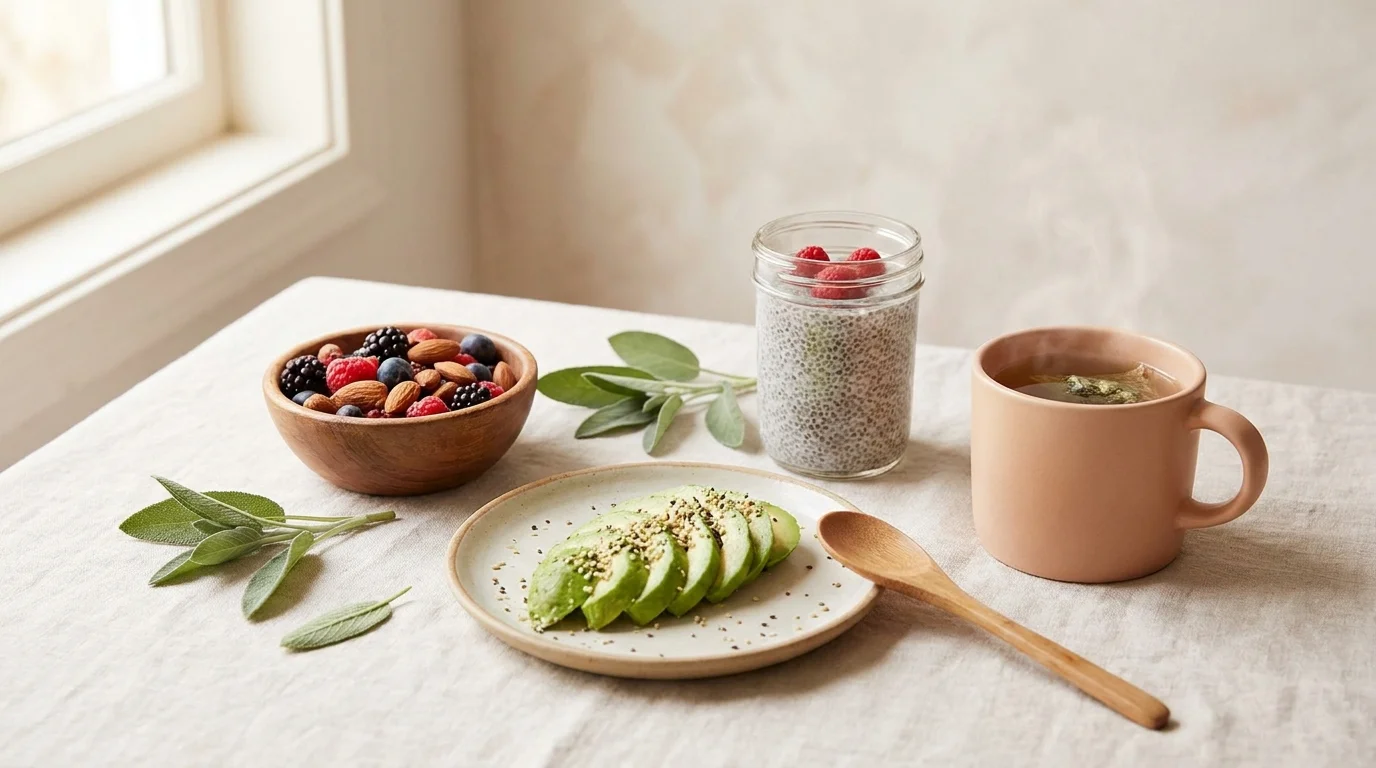
Finding the right PCOS friendly breakfast ideas for blood sugar is one of the most impactful changes you can make for your hormone health. For women with polycystic ovary syndrome, the first meal of the day sets your insulin tone for the entire morning. A breakfast that spikes blood sugar quickly can trigger a cascade of androgen production, worsen cravings, and leave you exhausted by 10am. This guide walks you through what to eat, why it matters, and exactly how to build low GI breakfast PCOS meals that actually taste good.
If you are new to understanding how PCOS affects your hormones from the ground up, start with The Complete Guide to PCOS before diving into the specifics here. Once you have that foundation, breakfast choices begin to make a lot more sense.
Why Does Blood Sugar Matter So Much for PCOS?
Blood sugar stability is central to PCOS management because up to 70% of women with PCOS have some degree of insulin resistance. When blood sugar spikes after eating, the pancreas releases extra insulin, which signals the ovaries to produce more androgens like testosterone. This hormonal chain reaction worsens nearly every PCOS symptom, from acne to irregular cycles.
Insulin resistance does not just affect women who are overweight. Women with lean PCOS are just as likely to experience dysregulated insulin responses. The goal with a PCOS breakfast is not just to avoid a sugar crash, it is to prevent the androgen surge that follows high insulin in the first place.
Research published by the National Institute of Child Health and Human Development confirms that insulin resistance plays a central role in PCOS pathophysiology, driving excess androgen production even in the absence of obesity.
"What a woman eats for breakfast is not just a nutrition decision for PCOS, it is a hormonal decision. Starting the day with refined carbohydrates alone is essentially triggering an androgen storm before 9am."
Dr. Felice Gersh MD, Integrative Gynecologist, Integrative Medical Group of Irvine
What Makes a Breakfast Low GI for PCOS?
A low GI breakfast for PCOS combines protein, healthy fat, and fibre in a way that slows glucose absorption into the bloodstream. This trifecta prevents sharp insulin spikes, supports satiety hormones like leptin and GLP-1, and creates a stable hormonal environment for the hours ahead. Processed carbohydrates eaten alone are the opposite of this.
The glycaemic index on its own is not the whole story. A food with a moderate GI eaten alongside protein and fat will have a very different effect on blood sugar than eating it solo. This is why the best breakfast for PCOS is always built around a combination of macronutrients rather than just swapping white bread for rye.
Key principles for low GI breakfast PCOS options include:
- At least 20-30g of protein to slow gastric emptying and blunt glucose spikes
- Healthy fats such as avocado, nuts, eggs, or olive oil to further delay absorption
- Fibre from whole food sources including vegetables, seeds, and legumes
- Minimal added sugar and no refined carbohydrates eaten in isolation
For more on how blood sugar and your cycle interact beyond breakfast, the article on Blood Sugar and PCOS: Your Cycle Guide covers the full picture phase by phase.
What Are the Best PCOS Friendly Breakfast Ideas for Blood Sugar?
The best PCOS friendly breakfast ideas for blood sugar focus on whole, minimally processed foods that combine protein, fat, and fibre. Eggs with vegetables, Greek yoghurt with seeds and berries, smoked salmon with avocado, and savory oats with legumes are consistently strong choices backed by research on insulin sensitivity and androgen reduction.
1. Egg-Based Breakfasts
Eggs are arguably the gold standard PCOS breakfast. They provide complete protein, choline for liver health, and healthy fat, all in one package. A two-egg scramble with spinach, cherry tomatoes, and half an avocado delivers around 20g of protein with virtually zero glycaemic impact.
Options to try:
- Scrambled eggs with smoked salmon and cucumber
- Veggie-packed frittata made ahead in batches
- Soft-boiled eggs with a side of sauteed greens and whole grain toast with almond butter
2. Greek Yoghurt Bowls
Full-fat Greek yoghurt provides 15-20g of protein per cup alongside probiotics that support gut health and oestrogen clearance. Pair it with ground flaxseed (which supports oestrogen metabolism), a small handful of low-GI berries like blueberries or raspberries, and a tablespoon of chia seeds for fibre. Avoid yoghurt with added fruit compotes or flavourings, which often carry 15-25g of added sugar per serving.
3. Savory Oat Bowls
Oats have a medium GI and become a genuinely strong PCOS breakfast when made with protein and fat rather than sugar. Use rolled or steel-cut oats, cook them in water or unsweetened almond milk, and top with a poached egg, sliced avocado, and a sprinkle of hemp seeds. This approach keeps blood sugar far more stable than the classic oats-with-honey version.
4. Nut Butter and Seed Combinations
A slice of sourdough or sprouted grain bread topped with almond butter, sliced banana (use green, less-ripe banana for lower GI), and chia seeds is a quick, portable option. The resistant starch in slightly unripe banana slows glucose absorption considerably compared to ripe banana.
5. Smoked Salmon and Avocado Plates
This combination is rich in omega-3 fatty acids, which have been shown to reduce inflammation and improve insulin sensitivity in women with PCOS. Serve on a bed of rocket with a squeeze of lemon and a couple of rye crispbreads on the side for a breakfast that genuinely supports hormonal balance.
6. Protein Smoothies Built the Right Way
Many smoothies marketed for PCOS are fruit-heavy sugar bombs. A blood sugar-friendly PCOS smoothie starts with unsweetened protein (pea, hemp, or whey protein), adds a handful of spinach or kale, uses frozen berries rather than tropical fruit, and includes a tablespoon of nut butter or half an avocado for fat. Skipping the banana and fruit juice base is the single most effective swap.
"Protein at breakfast is non-negotiable for my patients with PCOS. Even when they are not hungry in the morning, starting with 25-30 grams of protein changes their energy, their cravings, and their insulin response for the entire day."
Dr. Lara Briden ND, Naturopathic Doctor and Author, Period Repair Manual
How Does Protein at Breakfast Specifically Help PCOS Symptoms?
Eating adequate protein at breakfast reduces the post-meal glucose spike, increases satiety-signalling hormones, and lowers levels of ghrelin, the hunger hormone, for several hours. For PCOS specifically, this means less insulin release, reduced androgen stimulation, and fewer mid-morning cravings that lead to carbohydrate-heavy snacking later in the day.
A study published in Clinical Science found that a high-protein, high-fat breakfast significantly reduced testosterone levels and improved insulin sensitivity in women with PCOS over a 12-week period compared to a standard breakfast distribution. Participants eating more of their daily calories earlier in the day saw the greatest hormonal improvements.
This research supports a practical rule: front-load your nutrition. Eat your largest, most protein-rich meal in the morning and keep evening meals lighter and lower in carbohydrates.
What PCOS Breakfast Mistakes Are Worth Avoiding?
The most common PCOS breakfast mistakes involve eating refined carbohydrates alone, skipping breakfast entirely during a blood sugar-sensitive phase, choosing low-fat dairy that has had fat replaced with sugar, and relying on fruit-only smoothies. Each of these patterns contributes to blood sugar instability and can worsen insulin resistance over time.
Specific habits to watch out for:
- Flavoured yoghurt: often contains 20-30g of sugar per serving, equivalent to a small dessert
- Granola: typically made with oats, honey, and dried fruit, creating a high-GI meal despite its health halo
- Orange juice: a glass of OJ has the same glucose impact as a can of fizzy drink without the fibre buffer
- Rice cakes with jam: almost pure fast-absorbing carbohydrate with minimal protein or fat
- Skipping breakfast: for many women with PCOS, going without food past 10am raises cortisol and worsens blood sugar regulation later in the day
For snacks that extend this blood sugar stability approach through the rest of the day, the article on PCOS Friendly Snacks for Blood Sugar pairs well with the breakfast strategies here.
How Does Meal Timing Affect PCOS and Blood Sugar?
Meal timing has a direct impact on insulin sensitivity in women with PCOS. Eating breakfast within 90 minutes of waking aligns food intake with the morning cortisol peak, which primes the body to use glucose efficiently. Delaying breakfast or skipping it increases cortisol-driven insulin resistance, making mid-day and evening blood sugar harder to regulate.
Research from the Endocrine Society supports eating a higher proportion of daily calories at breakfast, finding that women with PCOS who ate a large breakfast and smaller evening meal showed significantly lower testosterone and improved insulin sensitivity compared to those with the reverse pattern.
This does not mean intermittent fasting is completely off the table for PCOS, but it does mean that any fasting protocol needs to be approached carefully. The article on PCOS Friendly Intermittent Fasting Protocol goes deeper into how to structure eating windows without worsening insulin resistance.
A Simple PCOS Breakfast Week Template
- Monday: Two scrambled eggs, sauteed spinach, half avocado, one slice of sourdough
- Tuesday: Full-fat Greek yoghurt, chia seeds, flaxseed, raspberries, a small handful of walnuts
- Wednesday: Protein smoothie with pea protein, frozen berries, spinach, almond butter, unsweetened oat milk
- Thursday: Savory oats with a poached egg, avocado, hemp seeds, and a splash of olive oil
- Friday: Smoked salmon, cream cheese, rocket, rye crispbreads, sliced cucumber
- Saturday: Vegetable frittata made with eggs, feta, courgette, and red pepper
- Sunday: Overnight chia pudding made with unsweetened coconut milk, topped with fresh kiwi and sunflower seeds
Key Statistics and Sources
- Up to 70% of women with PCOS have insulin resistance, regardless of body weight. NICHD, 2023
- A high-protein breakfast reduced testosterone levels by up to 50% in women with PCOS in a 12-week clinical study. Clinical Science, 2016
- Women with PCOS eating a calorie-front-loaded diet showed significantly improved insulin sensitivity compared to those eating more at dinner. Endocrine Society, 2023
- Steel-cut oats have a GI of approximately 55 compared to instant oats at 83, making variety selection significant for blood sugar management. Harvard T.H. Chan School of Public Health
- Omega-3 fatty acids found in salmon and flaxseed have been shown to reduce fasting insulin in women with PCOS. Nutrients Journal, 2019
- PCOS affects approximately 1 in 10 women of reproductive age globally, making it the most common endocrine disorder in this group. World Health Organization