You have probably noticed that some weeks you want to talk about everything, and other weeks you would rather not talk at all. Some days you feel warmly connected to the people around you, and other days even a mild comment from a partner or colleague feels like a personal attack. If you have been blaming yourself for being inconsistent, moody, or hard to read, here is something worth knowing: your cycle is doing a lot of the heavy lifting behind the scenes.
The hormones that govern your menstrual cycle do not stay neatly inside your uterus. They ripple through your brain, your nervous system, your stress response, and your communication style. Understanding how this works does not mean making excuses for difficult behavior. It means making sense of yourself and relating to others with a lot more self-compassion and strategic intelligence.
The Hormonal Blueprint Behind How You Connect
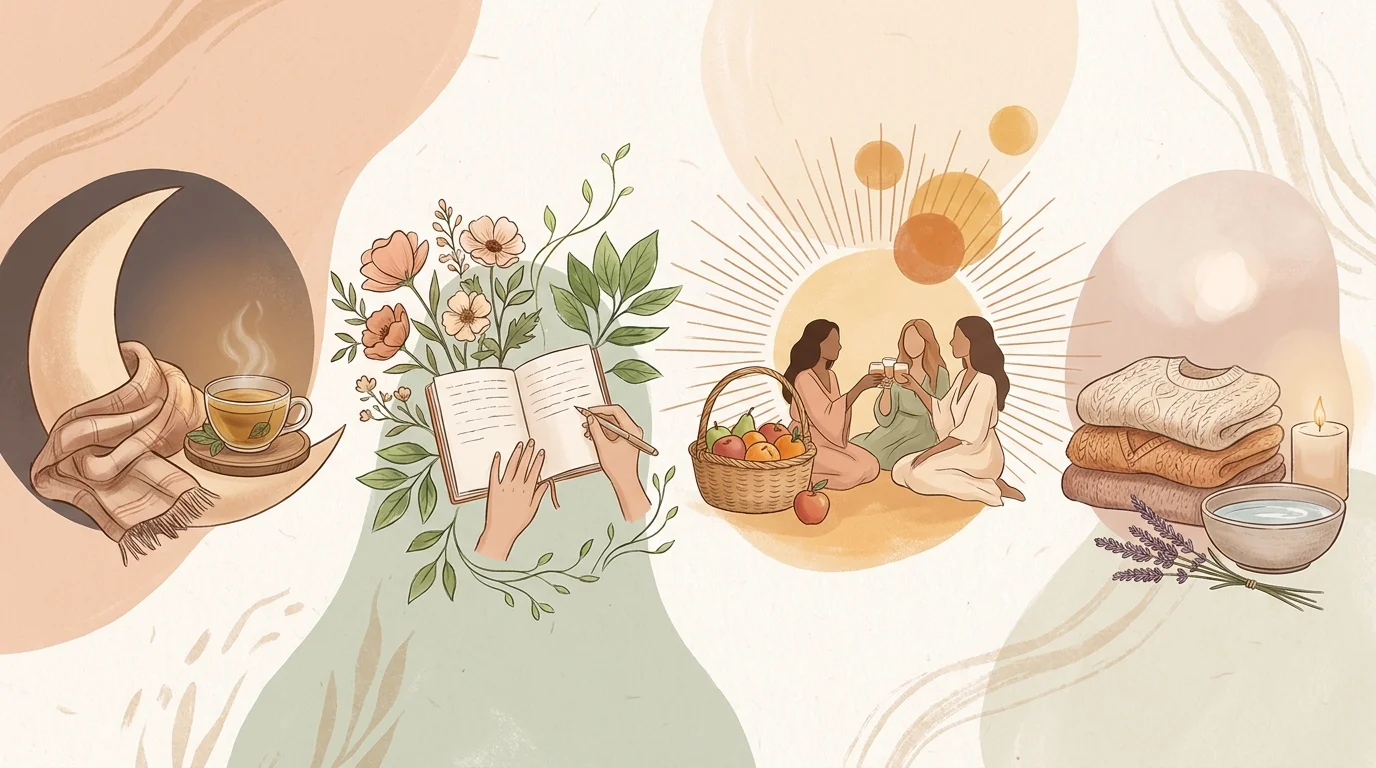
Your menstrual cycle is divided into four phases: menstrual, follicular, ovulatory, and luteal. Each phase is characterized by a distinct hormonal environment, and each of those environments creates a subtly different version of you when it comes to how you communicate, how much closeness you want, how much conflict you can tolerate, and what you need from the people around you.
The key players are estrogen, progesterone, testosterone, and to a lesser extent, luteinizing hormone (LH). Research published via the National Institutes of Health confirms that estrogen has a meaningful effect on social behavior, emotional processing, and even facial recognition, all of which directly shape how you experience your relationships day to day.
"Estrogen is profoundly neuroprotective and pro-social. It increases serotonin receptor sensitivity, boosts oxytocin activity, and improves the brain's ability to read emotional cues. Women are not imagining that they feel more connected to others at certain points in their cycle."
- Dr. Sarah McKay, PhD Neuroscience, Director, The Neuroscience Academy
Progesterone, which rises in the second half of the cycle, has a calming but also inward-pulling effect. It binds to GABA receptors in the brain, promoting relaxation but also social withdrawal and a preference for solitude or close, trusted relationships over broader social engagement. When progesterone drops sharply before menstruation, that shift can feel destabilizing, especially in relationships.
Phase One: Menstrual (Days 1-5, approximately)
What is happening hormonally
Estrogen and progesterone are at their lowest. The uterine lining is shedding. Your body is directing significant energy inward, and your brain often follows.
How this shows up in relationships
This is the phase where many people feel the most introverted, the most sensitive, and the least interested in social performance. Small talk can feel exhausting. Crowded social plans can feel genuinely overwhelming. You may crave one-on-one connection with people who feel safe, or you may want to be largely alone.
This is not antisocial behavior. It is a biologically guided pull toward rest and reflection. The menstrual phase is also a time when emotional clarity tends to arrive: you can often see relationship patterns more clearly, identify what has been bothering you, and know what you actually want, even if you do not have the energy to act on it yet.
What works well
- Honest, low-pressure conversations with close people rather than group socializing
- Letting partners or housemates know you need more quiet time without framing it as a problem
- Journaling about relationship insights rather than immediately acting on them
- Receiving care: letting people help you, make you tea, hold space without requiring you to perform wellness
Phase Two: Follicular (Days 6-13, approximately)
What is happening hormonally
Estrogen begins rising steadily as follicles in the ovaries develop. Testosterone also starts to climb. Energy returns, mood lifts, and the social appetite opens up again.
How this shows up in relationships
The follicular phase is widely described as the most socially expansive and optimistic phase of the cycle. You are more likely to want to meet new people, initiate plans, say yes to things, and find conversation effortless. Ideas flow more easily, which makes collaboration and creative connection particularly rewarding.
In romantic relationships, this phase often brings increased affection, playfulness, and desire for connection. Conflicts from earlier in the cycle may feel more solvable. You have more capacity to listen, to be curious about another person's perspective, and to engage with difficult topics without feeling overwhelmed.
"The follicular phase is a genuine window of neurological openness. Estrogen's effects on dopamine and serotonin pathways mean that the brain is more reward-driven, more curious, and more resilient to social stress during this time. For many women, this is when relationship repair and honest conversation feel most accessible."
- Dr. Louann Brizendine, MD, Clinical Professor of Psychiatry, University of California San Francisco, author of The Female Brain
What works well
- Scheduling difficult but important conversations you have been avoiding
- Saying yes to social invitations that felt too much in the luteal phase
- Planning dates, trips, or shared experiences with people you love
- Being intentional about not over-committing: the optimism of this phase can lead to a packed schedule that causes stress later
Phase Three: Ovulatory (Days 14-17, approximately)
What is happening hormonally
Estrogen peaks. LH surges, triggering ovulation. Testosterone is also at its highest point. This is the biological peak of reproductive function, and the brain and body respond accordingly.
How this shows up in relationships
The ovulatory phase is often described as the most magnetic and socially confident phase of the cycle. Studies from NIH-indexed research suggest that women's voices become subtly more attractive to others around ovulation, that facial symmetry appears to peak, and that verbal fluency and confidence in social settings tend to be highest during this window.
In practical terms: you are more likely to speak up in groups, hold eye contact comfortably, feel at ease leading conversations, and feel genuinely drawn to physical closeness. Libido tends to be highest around ovulation, which is the body's evolutionary design at work. But beyond physical intimacy, this phase also supports emotional intimacy: you are likely more expressive, warmer, and more attuned to others than at any other point in the cycle.
What works well
- Presentations, networking, or group social events where you want to feel confident
- Deepening intimacy with a partner, both physically and emotionally
- Reconnecting with friends you have not seen in a while
- Having the big, vulnerable conversation you have been building toward
Phase Four: Luteal (Days 18-28, approximately)
What is happening hormonally
Progesterone rises significantly after ovulation. Estrogen also rises briefly, then both hormones drop sharply in the days before menstruation if pregnancy has not occurred. This hormonal withdrawal is what drives PMS symptoms, and it also has a significant effect on social and relational experience.
How this shows up in relationships
The luteal phase has a wide range of expression depending on individual hormone sensitivity, lifestyle, stress levels, and nutritional status. In the early luteal phase, while progesterone is high and stable, many people feel calm, nesting-oriented, and content with close, quiet connection. Think cozy evenings in, meaningful one-on-one time, and a preference for depth over breadth in social engagement.
In the late luteal phase, as hormones drop, the picture can shift considerably. Research published through the U.S. Department of Health and Human Services Office on Women's Health notes that premenstrual syndrome (PMS) affects up to 90% of people who menstruate at some point in their lives, with emotional symptoms including irritability, anxiety, and social sensitivity being among the most commonly reported.
This heightened sensitivity is not imaginary and it is not a character flaw. The sharp drop in progesterone affects GABA receptors, reducing their calming effect. The drop in estrogen reduces serotonin availability. Together, these changes create a genuine neurological vulnerability to stress and perceived social threat. Minor conflicts can feel major. Perceived slights can land harder. The need for reassurance may increase.
What works well
- Communicating your needs clearly and early, before reaching overwhelm
- Flagging to close people that you are in a more sensitive window, without using it as a reason to avoid accountability
- Protecting your social energy: you do not have to attend every event
- Delaying high-stakes conversations if possible, or approaching them with extra grounding practices first
- Choosing nourishing, low-drama social experiences over loud or draining ones
Practical Strategies for Cycle-Aware Relating
Track before you react
One of the most powerful things you can do for your relationships is to start tracking your cycle alongside your emotional and relational experiences. When you can see that your conflict sensitivity tends to spike in the five days before your period, you gain the ability to create buffers: more sleep, fewer social obligations, more explicit communication with a partner about what you need.
Share your cycle with people close to you
This is not about oversharing or using your cycle as an excuse. It is about giving your close relationships more accurate information. When a partner or close friend understands that your quietness in week one is about rest rather than distance, or that your irritability in week four is physiologically grounded rather than personally directed, it can significantly reduce misunderstanding and conflict.
Batch relationship admin strategically
Scheduling difficult conversations, conflict resolution, or emotionally demanding discussions for your follicular or early ovulatory phase is not manipulation. It is intelligent self-awareness. You will be more articulate, more emotionally regulated, and more capable of productive dialogue when estrogen is supporting your brain.
Give yourself permission to need different things
Needing more solitude in week one and more connection in week two is not inconsistency. It is a natural rhythm. The goal is not to be the same person in every phase. It is to understand which version of yourself is present and what that version genuinely needs.
Key Statistics and Sources
- Up to 90% of people who menstruate report some PMS symptoms, including emotional and social sensitivity, according to the U.S. Office on Women's Health.
- Estrogen has been shown to increase oxytocin sensitivity, the brain's primary bonding hormone, according to NIH-indexed research on sex hormones and social behavior.
- Verbal fluency and social confidence have been observed to peak around ovulation in multiple studies, linked to estrogen's effect on dopamine pathways.
- Progesterone metabolites bind to GABA-A receptors, producing calming effects in early luteal phase but withdrawal effects as levels drop premenstrually, per research available through NIH.
- Emotional reactivity and perceived social threat sensitivity are measurably higher in the late luteal phase due to reduced serotonin availability driven by falling estrogen.
- Women who track their cycles report significantly greater self-understanding and relationship satisfaction, based on user data collected across digital health platforms.