If you've ever noticed that your appetite feels completely different depending on where you are in your cycle, you're not imagining it. One week you feel satisfied with regular meals and barely think about food between them. Two weeks later, you're raiding the kitchen at 10pm and wondering what's wrong with you. Nothing is wrong with you. Your metabolism is doing exactly what it's designed to do.
Your menstrual cycle isn't just a reproductive event. It's a full-body hormonal rhythm that influences your resting metabolic rate, your hunger and satiety signals, your food cravings, and how efficiently your body uses energy. Understanding these shifts doesn't just explain why you're hungrier before your period. It gives you a framework for eating in a way that actually works with your biology instead of against it.
Why Your Metabolism Isn't the Same Every Day
Most nutrition advice treats your metabolism as a fixed number: calories in, calories out, same equation every day. But for people with menstrual cycles, that model is incomplete. Your metabolic rate fluctuates across your cycle, driven by shifting levels of estrogen, progesterone, and the hormones that regulate hunger and fullness.
Research published by the National Institutes of Health has shown that resting metabolic rate (the number of calories your body burns at rest) increases during the luteal phase, the second half of your cycle that follows ovulation. The rise in progesterone during this phase is thought to be the primary driver, as progesterone has thermogenic effects on the body, meaning it raises core body temperature and increases energy expenditure.
In practical terms, your body burns more calories in the days before your period than it does in the first half of your cycle. Studies estimate this difference to be anywhere from 100 to 300 additional calories per day during the late luteal phase. That's a meaningful metabolic shift, and it goes a long way toward explaining why pre-menstrual hunger is so real and so persistent.
"The hormonal fluctuations across the menstrual cycle have a measurable impact on energy expenditure, appetite regulation, and substrate utilisation. These are not trivial changes. They are clinically relevant and should inform how we counsel women about nutrition."
- Dr. Kathleen Melanson, PhD, RD, Professor of Nutrition, University of Rhode Island
The Four Phases: What's Happening to Your Appetite
Menstrual Phase (Days 1-5): Low Hormones, Lower Appetite
During menstruation, both estrogen and progesterone are at their lowest. For many people, this translates to a natural decrease in appetite, particularly in the first couple of days. Your body is shedding the uterine lining and inflammatory prostaglandins are at work, which can suppress hunger signals and cause digestive changes including cramping, bloating, and sometimes nausea.
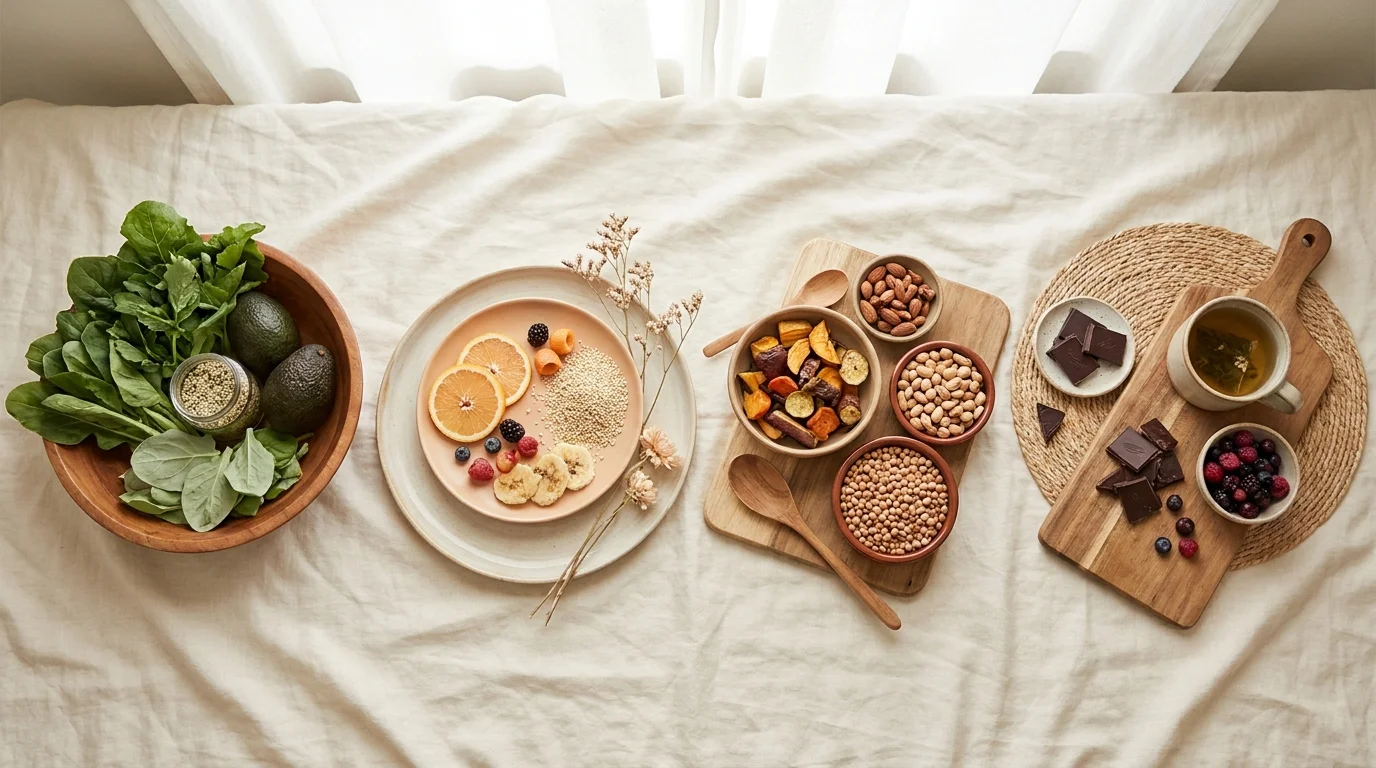
This is not the time to under-eat out of habit or restrict food because you feel bloated. Your body is doing significant work and needs adequate nutrition, particularly iron-rich foods to replenish what's lost through blood, and magnesium-rich foods to ease cramping and support mood. Think leafy greens, legumes, red meat if you eat it, dark chocolate, and warming, easily digestible meals.
Follicular Phase (Days 6-13): Rising Estrogen, Stable Appetite
As estrogen rises in the follicular phase, something interesting happens to your relationship with food. Estrogen has a natural appetite-suppressing effect. It enhances the sensitivity of receptors for leptin, your satiety hormone, which means you feel fuller more easily and are generally less preoccupied with food.
This is often reported as the phase where people feel their most energised and least hungry. Meals feel satisfying, cravings are manageable, and the urge to snack between meals is lower. Metabolically, your body is also preferring carbohydrates as a fuel source during this phase, making it a good time for higher-intensity workouts fuelled by complex carbs.
The follicular phase is a great window to experiment with new foods, try lighter meals, and build the nutrient stores your body will draw on in the second half of the cycle.
Ovulatory Phase (Days 14-16): A Brief Peak
Around ovulation, estrogen surges to its peak and a spike of luteinising hormone (LH) triggers the release of an egg. Appetite tends to remain relatively low during this phase, consistent with the appetite-suppressing effects of peak estrogen. Energy is typically high and mood is often at its most stable, making this a naturally productive and social time.
Some people notice a brief dip in energy or mild discomfort around ovulation, such as mittelschmerz (ovulation pain on one side of the lower abdomen). This is normal and usually short-lived. Hydration is especially important around ovulation as cervical fluid production increases and the body works harder.
Luteal Phase (Days 17-28): Progesterone Rise, Hunger Surge
This is the phase that most people notice most dramatically in their relationship with food. After ovulation, progesterone rises steeply and estrogen has a secondary, smaller rise before both drop sharply if pregnancy doesn't occur. This hormonal landscape creates a perfect storm for increased appetite and specific cravings.
Progesterone promotes fat storage and increases overall calorie needs. At the same time, serotonin levels tend to drop in the late luteal phase, driving cravings for carbohydrates and sugar (because carbs trigger serotonin release). Insulin sensitivity also decreases during this phase, meaning your cells are less responsive to insulin, which can cause blood sugar to swing more dramatically and intensify cravings further.
Research from the National Library of Medicine confirms that energy intake increases significantly in the luteal phase, with women consuming an average of 90 to 500 more calories per day compared to the follicular phase, depending on individual variation.
"Pre-menstrual food cravings, particularly for carbohydrates and sweets, are strongly linked to serotonin depletion and the body's attempt to self-regulate mood through food. This is a physiological drive, not a lack of willpower."
- Dr. Jacqueline Kloss, PhD, Sleep and Behavioural Health Researcher, Drexel University
The Hormones Behind Your Hunger
Two key hormones regulate hunger and fullness across your cycle, and they're both influenced by your reproductive hormones.
Leptin is your satiety hormone. It's produced by fat cells and signals to your brain that you've had enough to eat. Estrogen enhances leptin sensitivity, which is why you feel fuller more easily in the follicular phase. In the luteal phase, as estrogen fluctuates and progesterone dominates, leptin signalling becomes less efficient, making it harder to feel satisfied after meals.
Ghrelin is your hunger hormone. It rises before meals and falls after eating, but it's also influenced by stress, sleep deprivation, and hormonal shifts. Studies show ghrelin levels tend to be higher in the luteal phase, further amplifying pre-menstrual hunger. Poor sleep, which is already more common in the luteal phase due to progesterone-induced temperature changes, can raise ghrelin even further and create a compounding effect on appetite.
Understanding that your hunger is hormonally regulated across your cycle reframes the experience entirely. You're not broken, undisciplined, or addicted to sugar. Your body is responding to real biological signals that shift every single week.
Cravings Are Not Random: What Your Body Is Actually Asking For
Cravings are often dismissed as emotional eating or poor habits, but they frequently carry nutritional information. In the luteal phase especially, your body's increased demand for certain nutrients manifests as specific cravings.
- Chocolate cravings are often a signal for magnesium, which drops in the late luteal phase and is depleted further by stress. Dark chocolate is genuinely one of the best dietary sources of magnesium, so this craving makes biological sense.
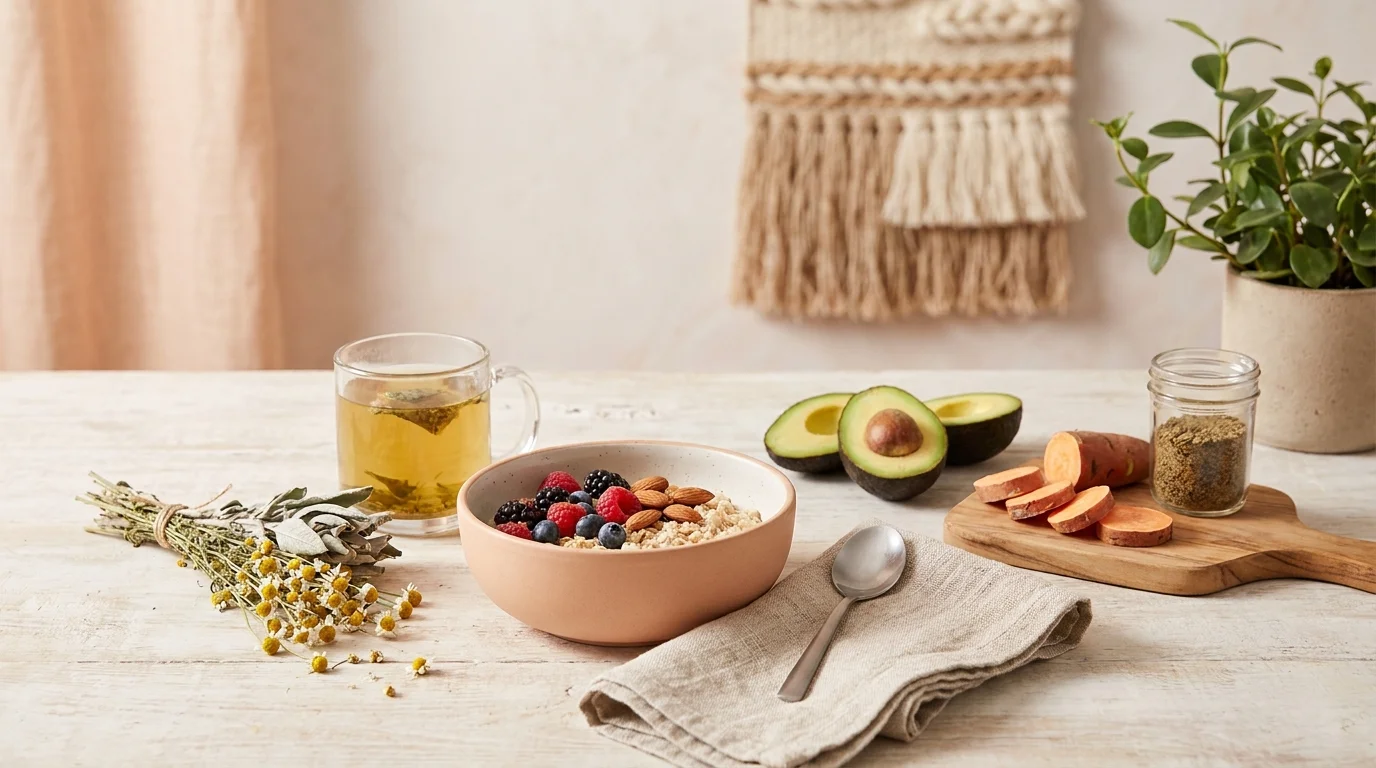
- Carbohydrate cravings are your brain seeking serotonin. Rather than suppressing them entirely, choosing complex carbohydrates like sweet potato, oats, brown rice, and legumes gives your brain what it's asking for without the blood sugar crash that refined carbs cause.
- Salt cravings can signal that aldosterone (a hormone that regulates fluid balance) is fluctuating, which is common in the late luteal phase. Electrolyte-rich foods and staying well hydrated can help.
- Red meat cravings around menstruation often indicate low iron. This is your body being extremely intuitive about what it needs to replenish.
How to Eat for Your Metabolic Phase
Cycle syncing your nutrition doesn't require a strict meal plan or complicated rules. It's more about understanding the context your body is in and making choices that support it.
Support Your Menstrual Phase
Focus on warming, anti-inflammatory foods. Prioritise iron (red meat, lentils, spinach, pumpkin seeds), vitamin C to enhance iron absorption (citrus, bell peppers, kiwi), and omega-3 fatty acids to reduce prostaglandin-driven inflammation (salmon, walnuts, flaxseed). Keep meals easy to digest and avoid overly cold or raw foods if your digestion feels sensitive.
Leverage Your Follicular Phase
This is your metabolic sweet spot. Your body is insulin sensitive and estrogen-fuelled. Lighter meals, fresh vegetables, fermented foods for gut health, and lean proteins support the building energy of this phase. This is a great time for more adventurous eating and trying new recipes.
Fuel Ovulation
Antioxidant-rich foods support egg quality and reduce oxidative stress around ovulation. Think colourful vegetables, berries, zinc-rich foods (pumpkin seeds, shellfish), and adequate vitamin E (avocado, nuts, sunflower seeds). Stay hydrated.
Nourish Your Luteal Phase
This is where nutritional support matters most. Increase complex carbohydrates to support serotonin and stabilise blood sugar. Add extra magnesium-rich foods (dark leafy greens, dark chocolate, almonds). Keep protein intake high to support progesterone production and satiety. B vitamins (found in eggs, whole grains, and legumes) support the liver in metabolising estrogen and help regulate mood. Research from the National Institutes of Health Office of Dietary Supplements highlights the role of B6 specifically in supporting hormonal balance and reducing PMS symptoms.
Eating every 3 to 4 hours in the luteal phase to maintain blood sugar stability can significantly reduce the intensity of cravings and mood swings. This is not the phase to skip meals or cut calories aggressively.
A Word on Restricting Food Around Your Period
One of the most common mistakes people make when they notice increased pre-menstrual hunger is to fight it with restriction. Cutting calories, skipping meals, or labelling luteal-phase appetite as "out of control" creates a cycle of deprivation and reactivity that makes cravings worse, not better.
Your body's increased caloric need in the luteal phase is real and legitimate. Honouring it with nourishing, satisfying food is not giving in. It is working with your biology. The goal is not to eat less. It is to eat well for where you are in your cycle.
Key Statistics and Sources
- Resting metabolic rate increases by an estimated 100 to 300 calories per day during the luteal phase. NIH, 2008
- Energy intake increases by an average of 90 to 500 calories per day in the luteal phase compared to the follicular phase. National Library of Medicine, 2013
- Estrogen enhances leptin receptor sensitivity, supporting greater satiety in the follicular phase. NIH
- Vitamin B6 has been shown to reduce PMS-related symptoms including mood changes and food cravings. NIH Office of Dietary Supplements
- Insulin sensitivity decreases in the luteal phase, contributing to blood sugar instability and carbohydrate cravings. National Library of Medicine
- Magnesium deficiency is associated with increased PMS severity including food cravings and mood disturbance. NIH Office of Dietary Supplements