You probably already reach for a warm mug when you feel off. Tired before your period, bloated mid-cycle, anxious in your luteal phase. Herbal infusions have been used for centuries to ease exactly these kinds of symptoms. But what most guides miss is that your hormones shift dramatically across your cycle, and the herbs that help you most in week one are not necessarily the same ones that support you in week three.
This is not about herbal medicine replacing real care. It is about understanding that certain plants have well-documented effects on inflammation, cortisol, progesterone pathways, and gut motility, and timing them thoughtfully can genuinely make a difference to how you feel day to day.
What Are Herbal Infusions and How Do They Differ From Tea?
Herbal infusions are made by steeping plant material, typically leaves, flowers, or roots, in hot water for longer than a standard tea. Where a teabag steeps for two to three minutes, a true infusion steeps for 10 to 20 minutes, releasing a higher concentration of active plant compounds including polyphenols, flavonoids, and volatile oils.
This distinction matters because the therapeutic effect of most herbs depends on the concentration of their active constituents. A lightly steeped chamomile bag delivers some apigenin (its calming flavonoid), but a 15-minute infusion delivers significantly more. If you are using herbal infusions to genuinely support your cycle, steep time is one of the most important variables.
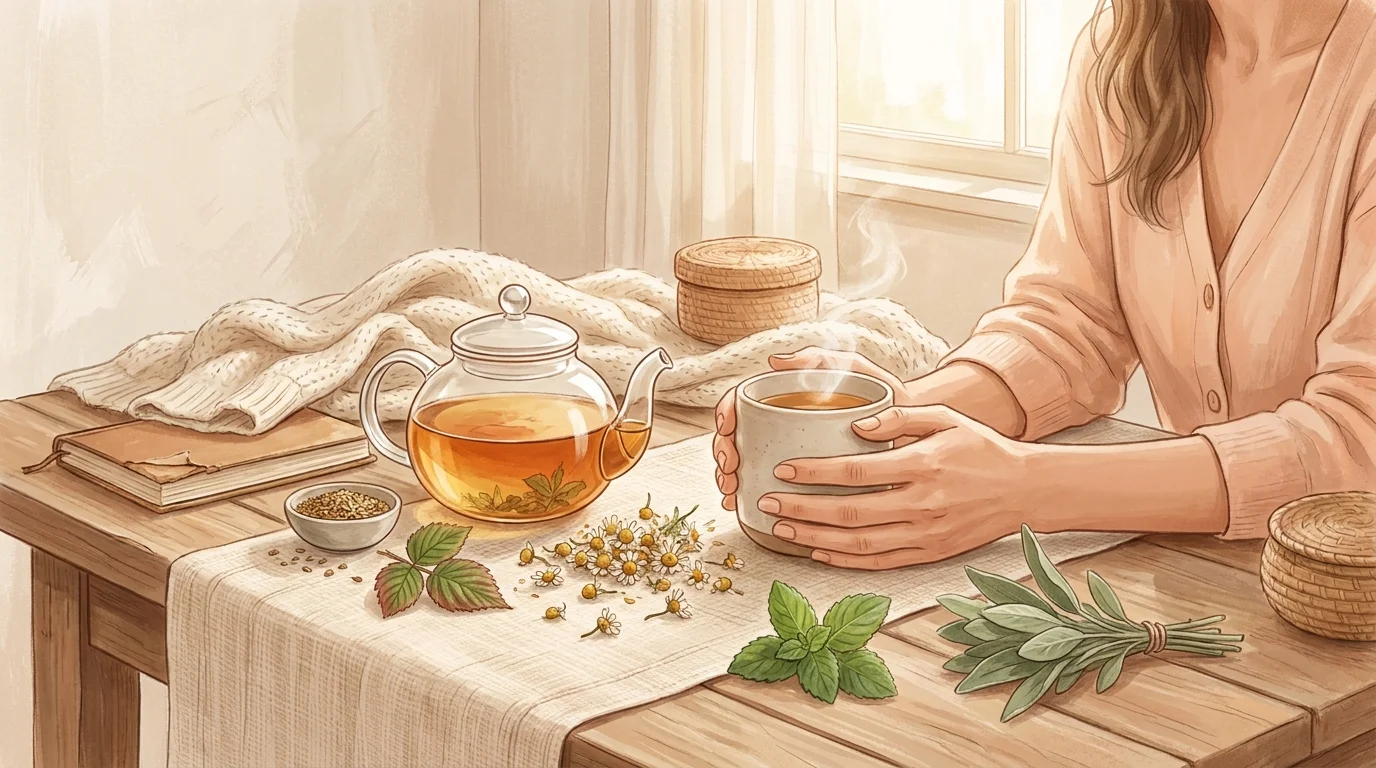
Common infusion herbs include chamomile, nettle, raspberry leaf, ginger, lemon balm, rose, peppermint, and ashwagandha root. Each has a distinct hormonal or physiological action that maps differently onto your four cycle phases.
How Does Your Cycle Affect What Your Body Needs from Plants?
Your hormonal environment changes completely across the four phases of your cycle. Estrogen rises in the follicular phase, peaks at ovulation, then drops as progesterone rises in the luteal phase, before both fall sharply at menstruation. Each hormonal environment creates different physiological states: inflammation levels, gut motility, stress sensitivity, and fluid retention all shift accordingly.
This means the same herb can have a different effect depending on where you are in your cycle. Raspberry leaf, for example, is a uterine tonic that is most commonly used in the late luteal and menstrual phases to ease cramping. Using it at ovulation is not harmful, but it is less targeted. Similarly, lemon balm's cortisol-lowering effects are most useful in the late luteal phase when anxiety and irritability typically peak.
"Phytotherapy is not one-size-fits-all. The hormonal context in which a plant compound is consumed shapes how the body responds to it. Timing herbal support to cycle phase is a logical and under-researched area with real clinical potential."
Dr. Aviva Romm, MD, Integrative Medicine Physician, Yale School of Medicine-trained herbalist and author of Hormone Intelligence
Which Herbal Infusions Best Support the Menstrual Phase?
During menstruation, estrogen and progesterone are at their lowest, prostaglandins drive uterine contractions and inflammation, and iron is being lost through blood flow. The most supportive infusions in this phase are anti-inflammatory, antispasmodic, and iron-rich: ginger, chamomile, and nettle are the strongest evidence-backed choices.
Ginger for Prostaglandin Reduction
Ginger contains gingerols and shogaols, compounds that inhibit prostaglandin and leukotriene synthesis, the same inflammatory mediators that drive period cramps. A randomised controlled trial published in the Journal of Alternative and Complementary Medicine found that 250mg of ginger powder four times daily was as effective as ibuprofen and mefenamic acid for reducing primary dysmenorrhoea. A strong ginger infusion, made from fresh sliced root steeped for 15 minutes, delivers a meaningful dose of these compounds without the digestive side effects of NSAIDs.
Chamomile for Muscle Relaxation
Chamomile contains apigenin, a flavonoid with antispasmodic properties that can help relax uterine smooth muscle. Its glycine content also has a mild nerve-relaxing effect. Sipping two to three cups of a strong chamomile infusion during the first two days of your period can reduce the intensity of cramping and improve sleep quality at a time when your body most needs rest.
Nettle for Iron and Mineralisation
Stinging nettle leaf is one of the most nutrient-dense herbs available. It is high in iron, calcium, magnesium, and vitamin K, all nutrients lost or depleted during menstruation. A 2016 review in Phytotherapy Research confirmed nettle's anti-inflammatory and mineral-rich profile. Drinking nettle infusion daily during menstruation is a practical way to begin replenishing what you lose before fatigue sets in.
Phase 1 Infusion Protocol: Menstrual
- Morning: Nettle infusion (steep 20 minutes) for mineral replenishment
- Afternoon: Ginger and turmeric infusion for prostaglandin support
- Evening: Chamomile infusion for relaxation and sleep
What Herbal Infusions Support the Follicular Phase?
As estrogen begins to rise in the follicular phase, energy returns, mood lifts, and the body is in a more anabolic, rebuilding state. Infusions in this phase can focus on liver support for estrogen metabolism, gut health, and gentle energy enhancement. Green tea, dandelion root, and rose petal infusions are particularly well-matched.
Rising estrogen needs to be metabolised and cleared efficiently by the liver. Dandelion root is a gentle bitter that stimulates bile production and supports hepatic detoxification pathways. A cup of roasted dandelion root infusion in the morning during the follicular phase gives the liver a mild daily stimulus that supports healthy estrogen clearance without taxing the system.
Rose petal infusion is worth mentioning here for its underrated hormonal effects. Rose contains geraniol and citronellol, compounds with mild estrogenic and anti-anxiety activity. It is also deeply hydrating as an infusion and supports the mucosal tissues of the digestive tract. Drinking rose infusion in the follicular phase aligns beautifully with estrogen's rising influence on the skin, vaginal tissue, and mood.
Which Infusions Are Best for the Ovulatory Phase?
The ovulatory phase is characterised by a surge in luteinising hormone (LH) and a peak in estrogen, followed by a brief rise in testosterone. It is often the phase where women feel most energetic, social, and confident. Infusions here can be lighter and more tonifying: hibiscus, peppermint, and green tea are excellent choices to match this outward energy without overstimulating.
Hibiscus is rich in anthocyanins and has well-documented effects on circulation and vascular tone. A 2010 study published by the American Heart Association found that hibiscus tea significantly reduced blood pressure in pre-hypertensive and mildly hypertensive adults. For women who notice increased heart rate or flushing around ovulation, hibiscus infusion is a genuinely useful tool. It is also naturally high in vitamin C, which supports iron absorption from plant sources if you are still rebuilding post-menstruation.
"The ovulatory window is when immune activity shifts and inflammation is at its lowest in the cycle. This is a good time to focus on circulatory support and antioxidant-rich plants rather than heavy adaptogens."
Dr. Lara Briden, ND, Naturopathic Doctor and author of Period Repair Manual, Christchurch Women's Hospital, New Zealand
What Are the Best Herbal Infusions for the Luteal Phase?
The luteal phase is governed by progesterone, which rises after ovulation to prepare the uterus for a potential pregnancy. This phase brings common challenges: anxiety, bloating, breast tenderness, sugar cravings, sleep disruption, and mood instability. Herbal infusions in this phase are best directed at supporting progesterone, calming the nervous system, and reducing inflammation.
Lemon Balm for Anxiety and Sleep
Lemon balm (Melissa officinalis) contains rosmarinic acid, which inhibits the enzyme that breaks down GABA, the brain's primary calming neurotransmitter. Lower GABA activity is one reason for the anxiety, restlessness, and poor sleep that many women experience in the late luteal phase. Drinking two cups of lemon balm infusion daily from days 21 through 28 of a typical cycle is one of the most evidence-backed herbal strategies for PMS-related anxiety.
Raspberry Leaf for Uterine Tone
Red raspberry leaf is perhaps the most cycle-specific herb available. It contains fragarine, a compound that tones uterine muscle, making contractions more efficient and less painful when menstruation begins. Drinking raspberry leaf infusion in the final week of the luteal phase can reduce both the severity and duration of cramping. It is best used as a preventative tool rather than started once bleeding has begun.
Ashwagandha Root Infusion for Cortisol
Ashwagandha is primarily known as an adaptogen, but it can also be prepared as a root infusion. Its withanolides help modulate the HPA axis, lowering cortisol and reducing the cortisol-progesterone competition that worsens PMS symptoms. The bitter, slightly earthy flavour works well combined with warm oat milk and a small amount of honey.
Phase 4 Infusion Protocol: Luteal
- Morning: Ashwagandha root infusion for cortisol modulation
- Afternoon: Raspberry leaf for uterine toning (days 21-28)
- Evening: Lemon balm and lavender for sleep and nervous system support
Are There Any Herbal Infusions You Should Avoid at Certain Cycle Phases?
Yes. A few commonly used herbs have either estrogenic activity or uterine-stimulating effects that make timing more important. Sage can suppress milk production and may reduce circulating estrogen if used in large quantities during the follicular phase. Licorice root has mild estrogenic activity that is more useful in the late luteal phase than at ovulation. And very high doses of ginger or cinnamon during the follicular phase may be too stimulating to the uterus in sensitive individuals.
It is also worth noting that herbs are not inert because they are natural. If you are on hormonal medications, thyroid medication, or anticoagulants, some herbal infusions (particularly lemon balm, ashwagandha, and high-dose ginger) can interact. Consulting a qualified herbalist or integrative doctor before establishing a daily protocol is always a sound step.
How Much Water Do Herbal Infusions Count Toward Daily Hydration?
Herbal infusions without caffeine (so excluding green tea or black tea) count fully toward your daily fluid intake. This is particularly relevant in the luteal phase when many women retain fluid and may feel they need less water, but actually need more to support kidney clearance of excess estrogen metabolites and prostaglandins.
Aiming for two to three cups of herbal infusion daily, on top of your regular water intake, gives you both the hydration and the phytochemical benefit. Using a larger mug (roughly 400ml) and steeping for longer means fewer cups deliver more therapeutic value.
Key Statistics and Sources
- Ginger was found to be as effective as ibuprofen for primary dysmenorrhoea in a randomised trial: NIH/PMC, 2014
- Nettle leaf contains up to 2.9mg iron per 100g dry weight alongside significant calcium and magnesium: Phytotherapy Research, 2016
- Hibiscus tea reduced systolic blood pressure by an average of 7.2 mmHg in clinical trials: American Heart Association, 2010
- Lemon balm extract reduced anxiety scores by 18% and insomnia by 42% in a human trial: Nutrients/PMC, 2011
- Chamomile's apigenin binds GABA-A receptors, explaining its antispasmodic and sedative activity: Molecular Medicine Reports, 2010
- Approximately 80% of menstruating women experience at least one PMS symptom that could be addressed through lifestyle and phytotherapy: Office on Women's Health, US DHHS