You are eating well all week, feeling steady and in control, and then, seemingly out of nowhere, you need chocolate. Not want. Need. If this sounds familiar, you are not alone, and more importantly, you are not lacking willpower. Your cravings are hormonal, cyclical, and entirely predictable once you know what to look for.
Understanding why your appetite and sweet tooth shift across your menstrual cycle is one of the most practical things you can do for your nutrition, your mood, and your relationship with food. This guide breaks down the science behind cycle-driven cravings and gives you real strategies for every phase.
The Hormonal Blueprint Behind Your Cravings
Your menstrual cycle is governed by four key hormones: estrogen, progesterone, luteinizing hormone (LH), and follicle-stimulating hormone (FSH). These hormones do not just manage reproduction. They interact directly with the systems that regulate hunger, blood sugar, energy use, and reward-seeking behaviour in the brain.
Two players are especially relevant when it comes to cravings: serotonin and insulin sensitivity.
Serotonin, the neurotransmitter most associated with mood stability and calm, is influenced by estrogen. When estrogen drops, serotonin can follow. Carbohydrates and sugar temporarily boost serotonin production, which is why the brain starts signalling a craving for sweet, starchy foods when estrogen is low. This is not a flaw in your design. It is your brain trying to self-regulate.
Insulin sensitivity also fluctuates with your cycle. Research published by the National Institutes of Health has found that insulin sensitivity is generally higher in the follicular phase and declines in the luteal phase, particularly in the days before menstruation. Lower insulin sensitivity means blood sugar is less stable, which means more energy dips, and more cravings for fast-acting fuel.
"Hormonal fluctuations across the menstrual cycle have significant effects on energy intake, macronutrient preference, and appetite regulation. These changes are driven by shifts in estrogen and progesterone and their downstream effects on neurotransmitter systems."
- Dr. Pamela Keel, PhD, Professor of Psychology, Florida State University
Phase by Phase: What Your Body Is Actually Asking For
Menstrual Phase (Days 1-5)
When your period begins, both estrogen and progesterone are at their lowest. Prostaglandins, the chemicals that trigger uterine contractions, are also peaking. Energy demands are high as your body works hard, and iron and magnesium are being depleted through blood loss.
Cravings during this phase tend to be for warming, comforting, and sweet foods. This is partly serotonin-driven and partly a genuine caloric need. Your body is doing significant work and may need slightly more fuel than usual.
Follicular Phase (Days 6-13)
As estrogen rises in the follicular phase, something shifts. Many women notice their appetite naturally decreases, their energy stabilises, and cravings quieten down. Estrogen has an appetite-suppressing effect and also improves insulin sensitivity, meaning blood sugar stays more even with less effort.
This is often the phase where healthy eating feels easy and intuitive. Your body is genuinely less hungry, more energised, and more metabolically efficient.
Cravings in this phase, if present, are usually mild and respond well to light, fresh foods: smoothies, salads, lean proteins, and lighter complex carbohydrates.
Ovulatory Phase (Days 14-16)
The ovulatory phase is brief but biochemically intense. LH surges, estrogen peaks, and testosterone rises slightly. Most women notice elevated mood, confidence, and energy around ovulation, and appetite tends to remain relatively low or stable.
Some women do report a brief dip in energy or mild sweet cravings immediately after ovulation as estrogen begins to fall. This is normal and short-lived. Prioritising protein and healthy fats during this window can ease the transition into the luteal phase.
Luteal Phase (Days 17-28)
This is where most craving conversations begin and end. The luteal phase, particularly the late luteal phase in the 7-10 days before your period, is when sugar and carbohydrate cravings peak for most women.
Here is what is happening hormonally:
- Progesterone rises sharply after ovulation and then falls in the days before menstruation
- Estrogen also drops in the late luteal phase, pulling serotonin down with it
- Basal metabolic rate increases slightly, meaning you genuinely need more calories
- Insulin sensitivity declines, making blood sugar harder to regulate
- Magnesium levels drop, and low magnesium is directly linked to chocolate cravings
A study published in the Physiology and Behaviour journal via PubMed confirmed that women consume significantly more calories in the luteal phase compared to the follicular phase, with the increase concentrated in carbohydrates and fats. This is not emotional eating. It is biology.
"The late luteal phase is characterised by a real increase in resting metabolic rate and a decline in serotonergic tone, both of which contribute to increased appetite and specific cravings for carbohydrate-rich foods. Restricting food during this window often backfires and worsens PMS symptoms."
- Dr. Katharina Dalton, MD, Pioneering researcher in PMS and progesterone therapy
The Blood Sugar Loop That Makes Everything Worse
One of the biggest drivers of intense or out-of-control cravings is not a lack of willpower. It is a blood sugar rollercoaster that the luteal phase sets you up for.
When insulin sensitivity is lower, eating refined carbohydrates or sugar causes a sharper glucose spike followed by a faster crash. That crash triggers another craving. The cycle repeats. By mid-afternoon on day 24, you are raiding every cupboard in the house.
The solution is not to eat less sugar. It is to stabilise the pattern. Key strategies include:
- Always pair carbohydrates with protein or fat to slow glucose absorption
- Eat every 3-4 hours rather than skipping meals, which worsens afternoon crashes
- Prioritise breakfast within an hour of waking, as cortisol is already elevated in the luteal phase and a delayed meal amplifies the stress response
- Reduce ultra-processed foods, which spike and crash blood sugar faster than whole food alternatives
Research from the Harvard T.H. Chan School of Public Health supports the value of low-glycaemic eating patterns for sustained blood sugar stability, which is especially relevant in the days before your period.
Why Chocolate Specifically?
Chocolate cravings before a period are so common they have almost become a cultural shorthand for PMS. But there is real biochemistry here.
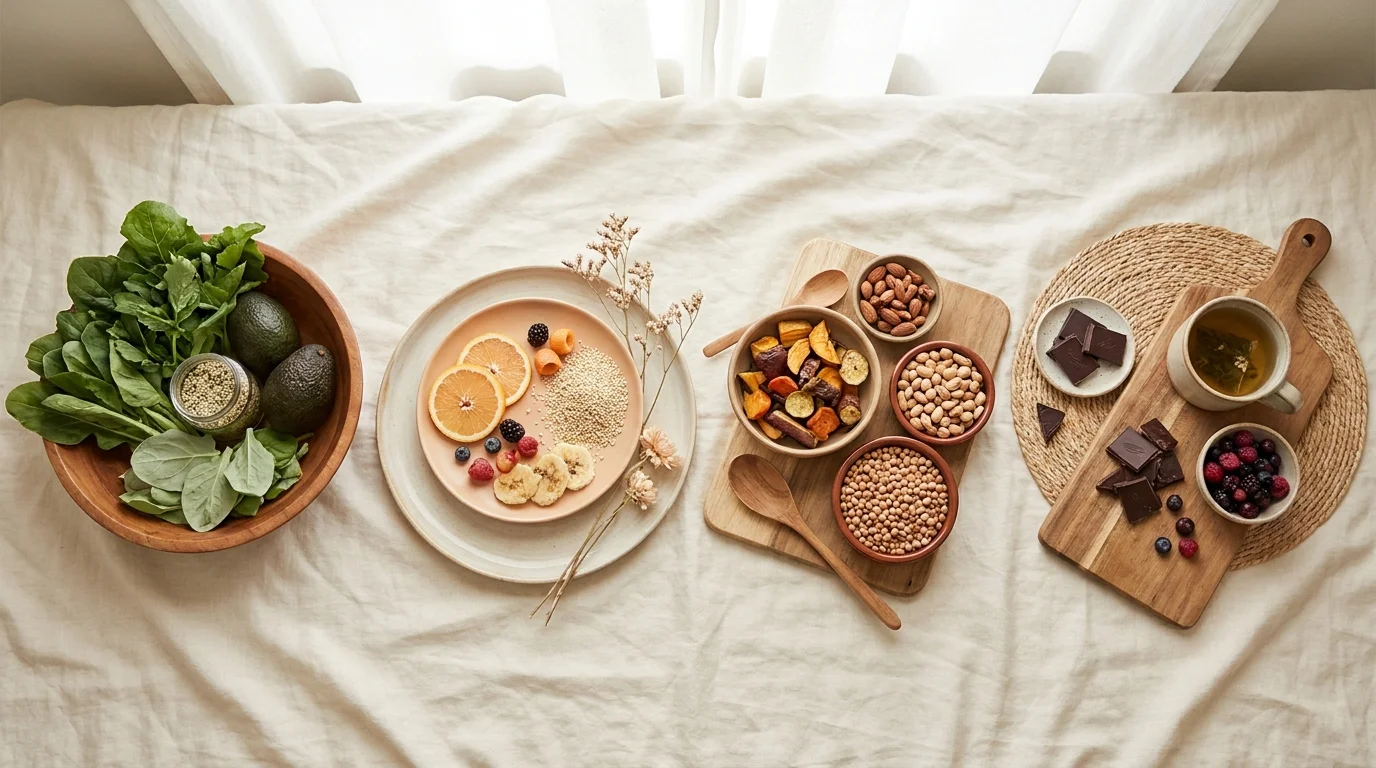
Magnesium levels decline in the luteal phase, and dark chocolate is genuinely one of the richest dietary sources of magnesium. Your body may be seeking it for a reason. Chocolate also contains small amounts of tryptophan, which the brain uses to make serotonin, as well as theobromine, a mild stimulant that provides a subtle mood lift.
The craving for chocolate is not purely emotional. It is partly a nutritional signal. The nuance is in how you respond to it. A square or two of good quality dark chocolate (70% cacao or above) delivers magnesium, antioxidants, and genuine pleasure. A full bar of milk chocolate delivers mostly sugar and a glucose crash 45 minutes later.
Practical Strategies for Each Craving Trigger
For serotonin-driven sweet cravings (late luteal phase)
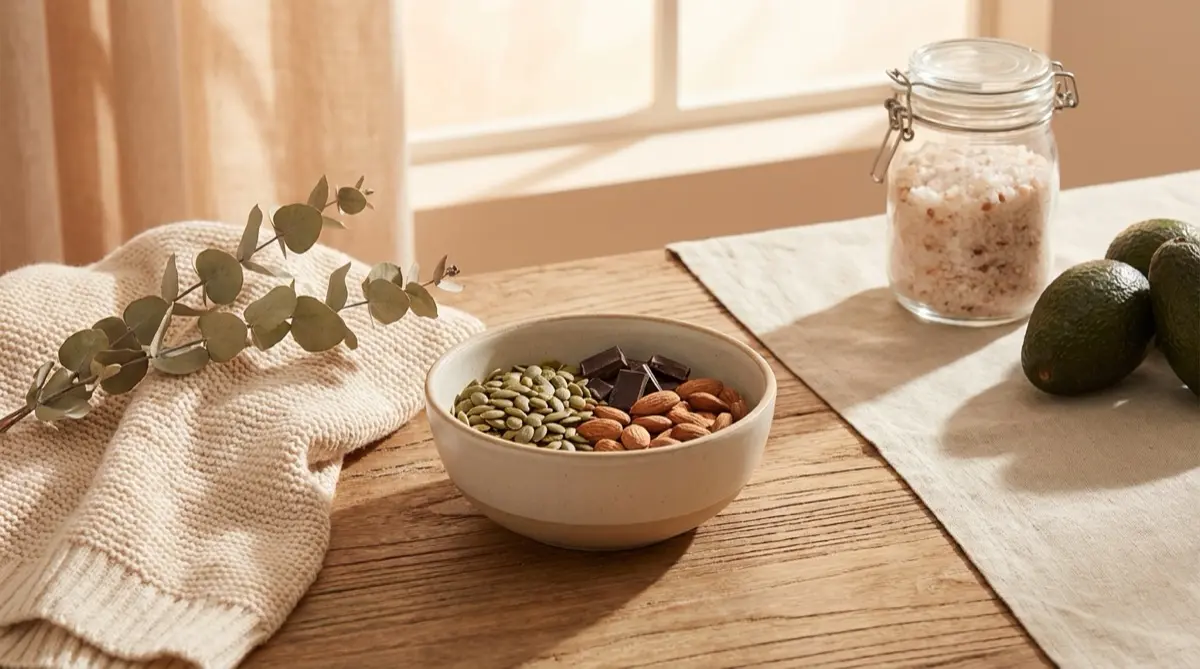
Focus on foods that support serotonin production through tryptophan: eggs, turkey, oats, bananas, pumpkin seeds, and dark chocolate. Pair these with a complex carbohydrate to help tryptophan cross the blood-brain barrier.
For energy-crash cravings (mid-afternoon dips)
This is almost always a blood sugar issue. Rebuild your meals around a protein anchor. Aim for at least 20-30g of protein at lunch, and add a protein-fat snack in the afternoon window if you are in the luteal phase.
For comfort-food cravings (menstrual phase)
Do not fight comfort. Redirect it toward nourishing versions of what you want. Warm, slightly sweet, and rich foods can absolutely be nutrient-dense. A mug of warm oat milk with cinnamon, a bowl of warming lentil soup, or a piece of sourdough with almond butter all hit the same emotional notes without destabilising blood sugar.
For salt and savoury cravings (often progesterone-related)
Progesterone increases water retention and can disrupt electrolyte balance, leading to cravings for salty foods. Rather than reaching for crisps or processed snacks, try adding a pinch of high-quality sea salt to your water or eating mineral-rich foods like olives, seaweed snacks, or broth-based soups.
When Cravings Signal Something More
Occasional, cycle-linked cravings are normal. But if your cravings are severe, feel compulsive, or are accompanied by significant mood shifts, exhaustion, or feelings of being out of control around food, this may signal a deeper imbalance worth exploring with a healthcare provider.
Conditions linked to intensified cravings include PMDD (Premenstrual Dysphoric Disorder), insulin resistance, thyroid dysfunction, and low progesterone or estrogen dominance. Tracking your cravings alongside your cycle is the first step in identifying any patterns that go beyond typical hormonal fluctuation.
Key Statistics and Sources
- Women consume an average of 500 more calories per day in the late luteal phase compared to the follicular phase. (PubMed, Physiology and Behaviour)
- Insulin sensitivity decreases by up to 26% in the luteal phase compared to the follicular phase. (NIH, PubMed)
- Up to 85% of women report at least one PMS symptom, with food cravings among the most commonly reported. (Office on Women's Health, U.S. Dept. of Health)
- Magnesium supplementation has been shown to reduce PMS-related food cravings and mood symptoms. (PubMed, Journal of Women's Health)
- Estrogen modulates serotonin receptor expression, linking hormonal fluctuations directly to mood and appetite changes. (NIH, Frontiers in Neuroendocrinology)
- Low-glycaemic diets are associated with reduced appetite fluctuation and improved mood stability in women. (Harvard T.H. Chan School of Public Health)