You roll out your quads after a tough workout and everything feels fine. Two weeks later, you try the exact same routine and nearly cry. Same foam roller. Same muscles. Same pressure. Completely different experience.
Sound familiar? This is not a coincidence, and it is not weakness. Your tolerance for pressure, your muscle tension levels, and your ability to recover from myofascial release all shift across your menstrual cycle. Once you understand why, you can stop dreading foam rolling in certain phases and start using it strategically in others.
What Is Foam Rolling and How Does It Work?
Foam rolling is a form of self-myofascial release (SMR) that applies sustained pressure to soft tissue to reduce muscle tension, improve blood flow, and break up adhesions in the fascia. Research suggests it works by stimulating mechanoreceptors in the tissue, influencing the nervous system's muscle tone regulation as much as the tissue itself.
The fascia is a continuous web of connective tissue that surrounds every muscle, bone, nerve, and organ in the body. When it becomes restricted, through training, stress, dehydration, or postural habits, movement quality drops and discomfort increases. Foam rolling targets these restrictions.
A 2015 review published in the International Journal of Sports Physical Therapy found that SMR significantly improved range of motion without impairing muscle performance, making it a useful tool both before and after exercise. But what that review did not address is how hormonal fluctuations change how your body receives and responds to that pressure.
How Do Hormones Affect Muscle Tension and Fascia?
Estrogen and progesterone directly influence connective tissue laxity, pain sensitivity, and inflammatory responses in muscle. Estrogen tends to increase tissue hydration and collagen synthesis, while progesterone promotes relaxation but can also increase fluid retention. Both hormones affect how tight or receptive your muscles and fascia feel on any given day.
Research published in the Journal of Orthopaedic Research demonstrated that estrogen receptors are present in fibroblasts, the cells responsible for producing collagen in connective tissue. This means estrogen actively influences how your fascia behaves throughout the cycle, not just at the extremes.
Pain sensitivity is also cycle-dependent. Studies consistently show that pain thresholds fluctuate with hormonal changes, with many women reporting the lowest pain tolerance in the late luteal phase before menstruation, when both estrogen and progesterone drop sharply. This drop in threshold is the physiological reason the same foam roller pressure that felt manageable mid-cycle can feel brutal in the days before your period.
"The evidence is clear that ovarian hormones modulate nociception, the body's pain sensing system. Clinicians and coaches working with female athletes need to account for cycle phase when assessing tolerance, recovery, and soft tissue treatment."
Dr. Kathryn Ackerman, MD, MPH, Director, Female Athlete Program, Boston Children's Hospital / Harvard Medical School
How Does the Menstrual Phase Change Your Foam Rolling Response?
During menstruation, estrogen and progesterone are at their lowest. Prostaglandins, the inflammatory compounds that trigger uterine contractions, are elevated. Muscle tension in the hips, lower back, and inner thighs is often higher, and pain sensitivity is increased. Foam rolling can help but needs to be gentler and more deliberate than in other phases.
Many women experience referred muscle tension during menstruation, particularly in the hip flexors, piriformis, and lower back. This is partly due to the uterus contracting and partly due to the prostaglandin-driven inflammatory environment affecting surrounding soft tissue. Light foam rolling in these areas can help ease referred discomfort and encourage blood flow.
What to adjust: reduce pressure, slow your rolling speed, and spend more time in static holds on tender spots rather than fast rolling. If a spot feels acutely painful rather than productively uncomfortable, back off. Your nervous system is already in a more sensitised state and deep aggressive pressure will create more tension, not less.
Best areas this phase: inner thighs, glutes, lower back (use a softer roller or ball), hip flexors.
Avoid or minimise: deep spinal rolling, aggressive IT band work.
Does the Follicular Phase Make Foam Rolling More Effective?
Yes. As estrogen rises through the follicular phase, tissue hydration improves, pain thresholds increase, and the nervous system moves into a more parasympathetic-friendly state after menstruation. This makes the follicular phase one of the most productive phases for deeper myofascial work and pre-training mobility preparation.
Rising estrogen has a mild analgesic effect, meaning your body becomes progressively more tolerant of pressure and discomfort from around days 5 to 13 of a typical cycle. Fascia is also better hydrated during this phase, which makes rolling more comfortable and tissue more responsive to sustained pressure.
This is the phase to invest in deeper, more comprehensive sessions. If you have stubborn areas of restriction that you have been avoiding because they were too sensitive in the luteal phase, the follicular window is when they will respond best. Pre-workout rolling is especially effective here because the combination of elevated energy and responsive tissue means mobility gains translate directly into better movement quality during training.
Best areas this phase: thoracic spine, IT band, calves, lats, hip flexors, chest and shoulders.
Session style: 10-15 minutes pre-training for activation, or dedicated 20-minute sessions for mobility work.
What Happens to Myofascial Tissue During Ovulation?
Around ovulation, estrogen peaks and a brief surge of testosterone occurs. Tissue is at its most pliable and pain tolerance is highest. Foam rolling during this phase is extremely well tolerated, but the sharp rise in connective tissue laxity driven by the pre-ovulatory estrogen peak means joints are also at their most mobile, and potentially least stable. This is worth noting in terms of post-rolling exercise selection.
The collagen-loosening effect of peak estrogen is well documented in sports medicine research. A study in the American Journal of Sports Medicine found that ACL injury risk is significantly higher around ovulation due to increased ligament laxity driven by estrogen. The same mechanism that makes your fascia feel beautifully responsive to rolling also makes your joints less stable.
This does not mean avoid rolling at ovulation; quite the opposite. But it does mean that after a deep foam rolling session around ovulation, be mindful of high-impact or high-instability movements. Your tissue is open and ready to receive work, but your joints need active stabilisation rather than passive reliance on ligament tension.
"Women are not small men. Their connective tissue, their pain processing, and their recovery timelines follow hormonal rhythms that change week by week. The smart approach is to work with those rhythms rather than against them."
Dr. Stacy Sims, PhD, Exercise Physiologist and Nutrition Scientist, Author of "Roar"
How Should You Adapt Foam Rolling in the Luteal Phase?
The luteal phase brings rising progesterone, followed by a late-phase drop in both estrogen and progesterone. Muscle soreness lingers longer, tissue can feel heavier due to fluid retention, and pain sensitivity increases as you approach menstruation. Foam rolling remains beneficial but should shift toward recovery and nervous system regulation rather than deep mobility work.
In the early luteal phase, days 15 to 22 in a 28-day cycle, progesterone is climbing and the body is in a mild inflammatory state post-ovulation. Muscles may feel tighter or more fatigued than expected, and delayed onset muscle soreness can be more pronounced. Foam rolling with moderate pressure is ideal here, focusing on post-workout recovery rather than pre-workout preparation.
In the late luteal phase, days 23 to 28 roughly, everything becomes more sensitive. Progesterone drops, estrogen drops, and the body is preparing for menstruation. This is when foam rolling sessions should be gentler, slower, and more intentional. Think of it less as a performance tool and more as a nervous system reset.
Slow rolling over large muscle groups, especially the upper back, hips, and hamstrings, activates the parasympathetic nervous system and can meaningfully reduce the physical manifestation of PMS tension. Pairing foam rolling with slow, controlled breathing in this phase amplifies the calming effect.
Early luteal: moderate pressure, recovery focus, 10-15 minutes post-workout.
Late luteal: gentle pressure, slow pace, nervous system regulation focus, can be done in the evening as a wind-down tool.
Does Foam Rolling Help With PMS Muscle Tension?
Yes. Pre-menstrual muscle tension, particularly in the lower back, hips, and neck, is driven by prostaglandins, progesterone withdrawal, and fluid retention. Gentle foam rolling stimulates circulation, reduces fascial restriction, and activates the parasympathetic nervous system, all of which can reduce the physical discomfort associated with PMS.
Prostaglandins do not only affect the uterus. They circulate throughout the body and can contribute to increased sensitivity and tension in skeletal muscle, particularly in the pelvic girdle region. Foam rolling the hip flexors, glutes, and inner thighs in the days before menstruation helps counter this by encouraging local blood flow and reducing fascial compression around the pelvis.
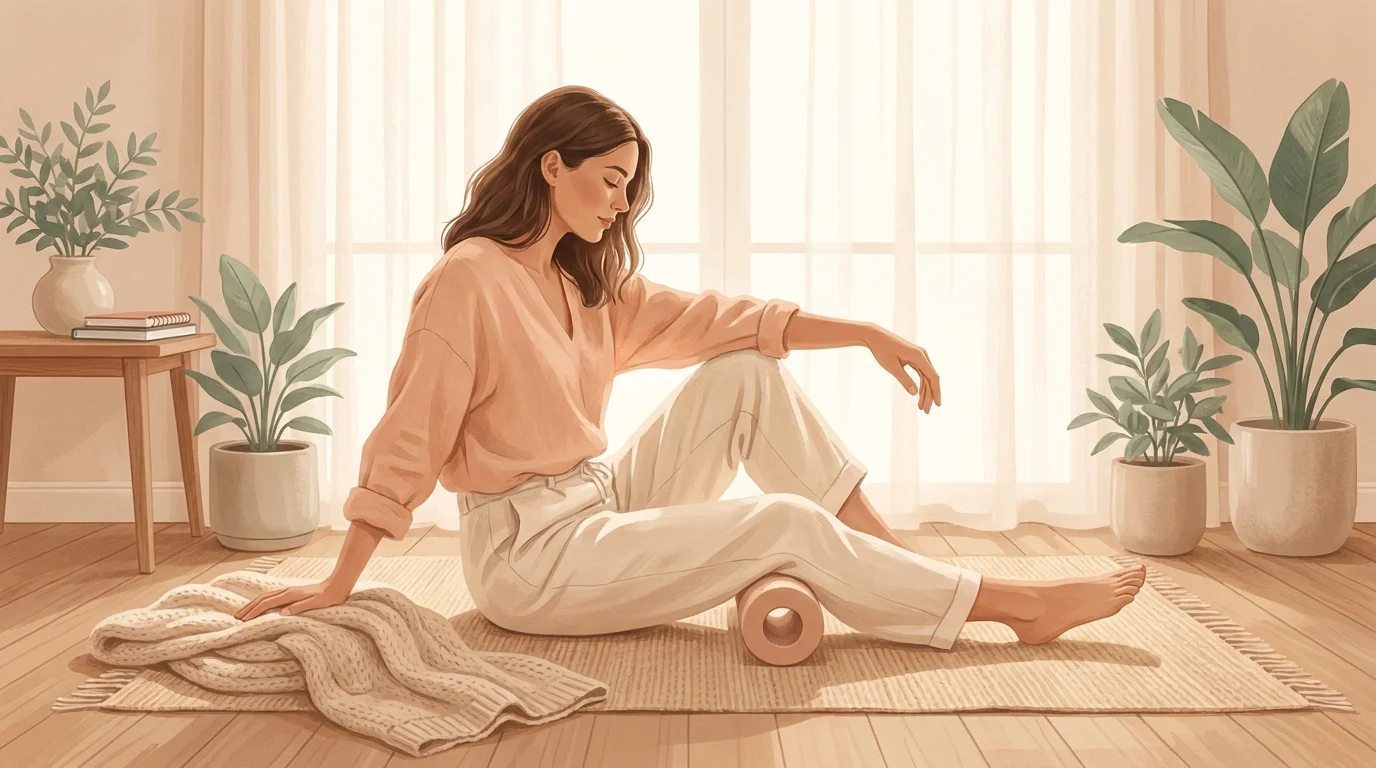
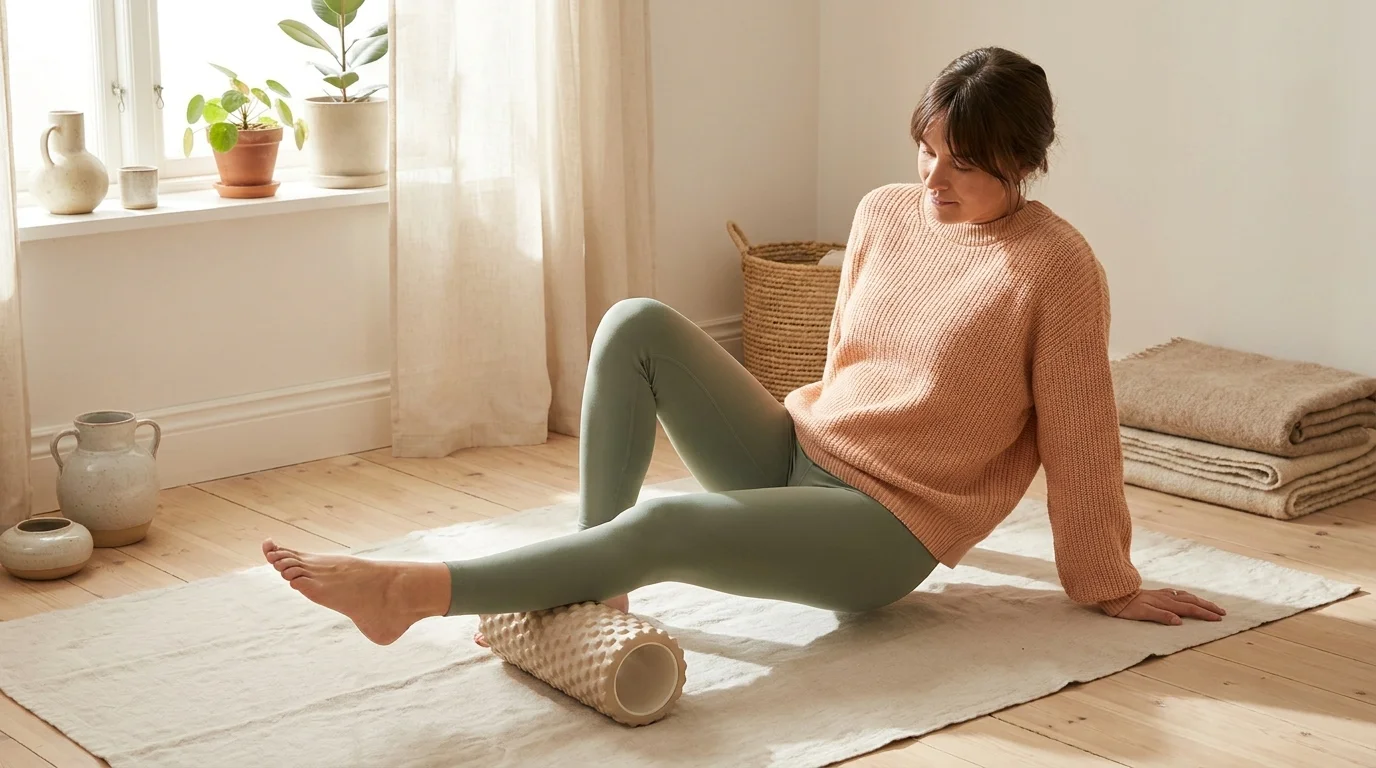
A softer roller or a textured ball is often better in the late luteal and menstrual phases than a firm high-density roller, which can feel overwhelming to an already sensitised nervous system. If you only own one type of roller, simply reduce the weight you put through it by supporting yourself more with your hands or the opposite leg.
- Menstrual (days 1-5): Gentle, slow, pelvis and hip focus. Use light pressure. Treat as therapeutic, not performance-based.
- Follicular (days 6-13): Full-body sessions welcome. Deeper pressure well tolerated. Excellent pre-workout mobility tool.
- Ovulatory (days 14-17): High tolerance, pliable tissue. Deep work responds well. Note joint laxity and support stability after rolling.
- Early luteal (days 18-23): Recovery focus. Moderate pressure. Post-workout is ideal timing.
- Late luteal (days 24-28): Parasympathetic tool. Slow and gentle. Evening sessions to ease PMS tension.
What Type of Foam Roller Is Best for Each Phase?
Roller firmness and texture should be matched to your current hormonal sensitivity. A smooth, medium-density roller is the most versatile across all phases. A high-density or ridged roller is best reserved for follicular and ovulatory phases when pain tolerance is higher. A soft roller or small massage ball works well for menstrual and late luteal phases when sensitivity is elevated.
Vibrating foam rollers deserve a mention here. The vibration component works by activating the Golgi tendon organ, which signals the muscle to release tension more rapidly. Some research suggests vibration rolling produces greater range-of-motion improvements with less discomfort than static pressure. For those who find conventional rolling painful in the premenstrual phase, a vibrating roller can be an effective middle ground.
Foam rollers also vary by length. A longer roller works well for full-back rolling and thoracic spine work. Smaller, shorter rollers and balls, such as lacrosse balls or peanut-shaped rollers, are better for targeted work on the glutes, hip flexors, and shoulders, areas that benefit from more precise pressure, especially during the menstrual phase.
How Long Should a Foam Rolling Session Be by Phase?
The evidence generally supports holding each point for 30 to 90 seconds to achieve meaningful fascial change. Full session length can range from 5 minutes to 25 minutes depending on your cycle phase, energy, and goals. Shorter, gentler sessions in the menstrual and late luteal phases; longer, more thorough sessions in the follicular and ovulatory phases.
A 2019 systematic review in the Journal of Sport Rehabilitation confirmed that foam rolling sessions of as little as 5 minutes can produce meaningful short-term increases in range of motion. Longer is not always better. In sensitive phases, a focused 5-10 minute session on the hips and lower back will likely produce better outcomes than a 30-minute deep dive that activates the sympathetic nervous system through pain.
- Foam rolling for 2 sets of 60 seconds increased range of motion by up to 10 degrees in a 2015 review. IJSPT, 2015
- Estrogen receptors found in fascial fibroblasts confirm direct hormonal modulation of connective tissue. Journal of Orthopaedic Research, 2012
- ACL injury risk increases by up to 2-4 times around ovulation due to peak estrogen laxity effects. American Journal of Sports Medicine, 2019
- Pain thresholds in women vary significantly across the menstrual cycle, with the lowest thresholds occurring pre-menstrually. NIDA Pain Research, 2011
- Even 5-minute foam rolling sessions produce meaningful short-term range-of-motion improvements. Journal of Sport Rehabilitation, 2019
- Vibration-assisted rolling has been shown to reduce perceived discomfort while maintaining efficacy. MDPI Applied Sciences, 2020