Most wellness advice treats the evening routine as a fixed formula: dim the lights, put your phone down, sip chamomile tea, and repeat every single night. But if you have a menstrual cycle, your body is not operating on a fixed formula. Your hormones shift dramatically across four distinct phases, and those shifts change everything from how easily you fall asleep to how much stimulation your nervous system can handle after 8 pm.
Getting your evening routine in sync with your cycle is not about doing more. It is about doing the right things at the right time, so that the hours between dinner and sleep actually restore you rather than quietly drain you. Here is how to make that shift, phase by phase.
Why Hormones Shape Your Evenings
Your menstrual cycle is driven by four key hormones: estrogen, progesterone, luteinising hormone (LH), and follicle-stimulating hormone (FSH). Each of these interacts with your brain, your body temperature, your nervous system, and your stress response in ways that are directly relevant to how you wind down at night.
Progesterone, for example, has a well-documented sedative effect. It is metabolised into a compound called allopregnanolone, which acts on GABA receptors in the brain, the same receptors targeted by anti-anxiety medications. Research published through the National Institutes of Health confirms that allopregnanolone plays a meaningful role in sleep architecture and anxiety regulation, which is why the luteal phase, when progesterone is highest, can feel calmer or more heavy in the evenings.
Estrogen, on the other hand, is more stimulating. It boosts serotonin and dopamine activity, which is energising and mood-lifting, but can also make it harder to fully switch off. The Office on Women's Health notes that fluctuating estrogen and progesterone levels across the cycle affect mood, energy, and sleep patterns, which is why a Tuesday in your follicular phase can feel very different from a Tuesday in your late luteal phase, even if your day looked identical on paper.
"Women's sleep is profoundly influenced by reproductive hormones. We often treat insomnia or poor sleep as a standalone problem, but in many cases it is the cycle doing the talking."
- Dr. Shelby Harris, PsyD, Clinical Sleep Specialist and Director of Sleep Health, Sleepopolis
Understanding this is the first step. The second step is using it.
Menstrual Phase: Slow, Quiet, Restorative (Days 1-5)
When your period begins, estrogen and progesterone have both dropped to their lowest levels. This hormonal withdrawal is what triggers the uterine lining to shed, and it can also leave you feeling flat, tender, or emotionally raw in the evenings.
This is not a phase for stimulating evening activities. Your nervous system is genuinely more sensitive right now, and your body is doing significant work. Evening routines during menstruation should prioritise warmth, stillness, and minimal demands.
What to try:
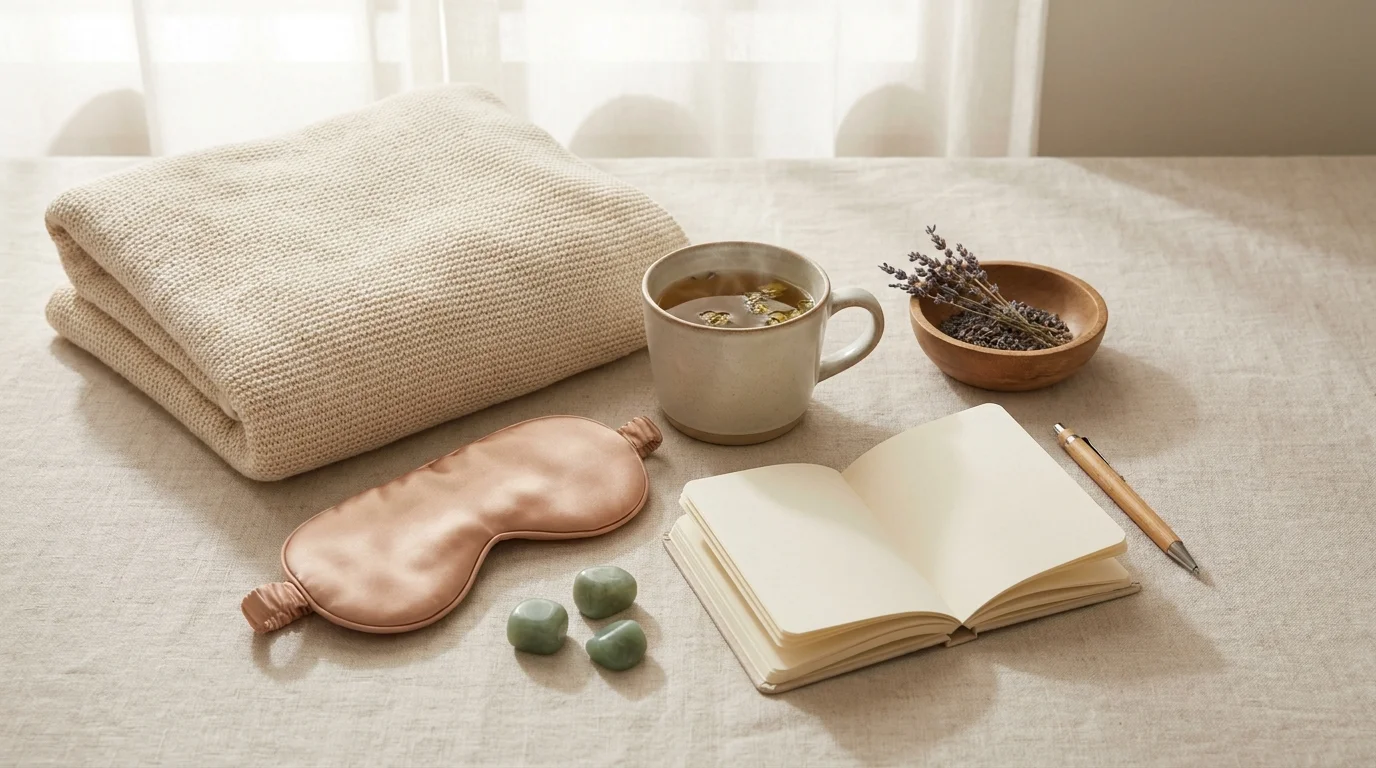
- Heat therapy: A hot water bottle or heated blanket over the lower abdomen can ease cramping and signal to your nervous system that it is safe to relax. The warmth also supports pelvic blood flow, which may reduce the intensity of cramps.
- Gentle body scanning or yoga nidra: Lying-down practices that require no muscular effort are ideal. These activate the parasympathetic nervous system without asking anything physical of your body.
- Dim lighting earlier: Light sensitivity can be heightened during menstruation. Switching to warm, low lighting from around 7 pm can help melatonin production begin on time.
- Journalling without agenda: Rather than goal-setting or reflection, try free writing for five minutes. Let whatever comes up, come up. This phase is associated with inner clarity and it often surfaces in quiet moments.
Avoid: Intense screen time, stressful conversations, late-night snacking on high-sugar foods that can spike blood sugar and worsen cramps, and any form of intense planning or task-completion pressure.
Follicular Phase: Energised, Curious, Socially Open (Days 6-13)
As estrogen begins its steady rise in the follicular phase, you will likely notice that evenings feel more alive. You may want to make plans, stay up later, or feel genuinely engaged with ideas and people. This is not a lack of self-discipline. It is biology working as it should.
The follicular phase is a good time to use your evenings more actively, with one important caveat: do not use this surge of energy to push yourself into exhaustion. The goal is still to wind down before sleep, just with a longer and more stimulating runway.
What to try:
- Creative projects in the early evening: If you have been wanting to start something new, plan something, or engage in a hobby that excites you, this is the window. Your brain's dopamine response is well-supported by estrogen right now.
- Social connection: Dinners with friends, video calls, or collaborative activities tend to feel genuinely enjoyable in the follicular phase rather than like obligations.
- Light stretching or dance: Evening movement in this phase can be more dynamic than in menstruation. Even 15 to 20 minutes of free-form movement can help process the day's cortisol before bed.
- Reading or learning: Your memory encoding is sharper in this phase. Reading something you want to retain, whether fiction or non-fiction, will land more effectively than in the luteal phase.
Avoid: Letting the social and energetic pull keep you awake significantly past your usual sleep window. Estrogen's stimulating effects make it tempting, but consistent sleep timing is one of the strongest foundations for hormonal health overall.
Ovulatory Phase: Peak Energy, Social, Expressive (Days 14-16)
The ovulatory phase is brief, typically spanning just two to three days around mid-cycle, but it is hormonally significant. LH surges to trigger ovulation, estrogen peaks, and testosterone also rises, contributing to heightened confidence, expressiveness, and desire for connection.
Evenings during ovulation often feel naturally social and warm. This is a phase where you may feel most like yourself in company, most physically confident, and most willing to be spontaneous.
"Ovulation is not just a fertility event. It is a neurological and psychological peak that influences social behaviour, verbal fluency, and even risk tolerance. Recognising this helps women understand why they feel so different mid-cycle compared to the week before their period."
- Dr. Sarah Hill, PhD, Evolutionary Psychologist and Professor, Texas Christian University
What to try:
- Meaningful conversations: If there is something important you want to discuss with a partner, family member, or colleague, ovulation-phase evenings are when you are likely to communicate most fluidly and persuasively.
- Date nights or intimate connection: This is the phase of highest libido for most people with cycles, and prioritising connection, romantic or otherwise, tends to feel rewarding rather than effortful.
- Evening exercise: If you enjoy working out after work, this phase supports it well. Your pain tolerance is higher and your physical performance tends to peak around ovulation.
- Wind-down with intention: Because evenings can feel so stimulating and social, building in a deliberate 30-minute transition before sleep is especially important here. A brief body scan, breathing practice, or even a cool shower can help your nervous system shift gears.
Luteal Phase: Introspective, Sensitive, Needs Containment (Days 17-28)
The luteal phase is the longest phase of the cycle and the most variable in how it feels. In the early luteal phase, progesterone is rising and many people experience a pleasant, grounded calm. In the late luteal phase, particularly the final five to seven days before menstruation, both estrogen and progesterone begin to fall, and this is when PMS symptoms, heightened emotional sensitivity, and sleep disruption can emerge.
Research from the National Heart, Lung, and Blood Institute identifies the late luteal phase as the window when women are most likely to report insomnia, poor sleep quality, and night waking, largely due to the drop in progesterone's GABA-modulating effects and the resulting rise in core body temperature.
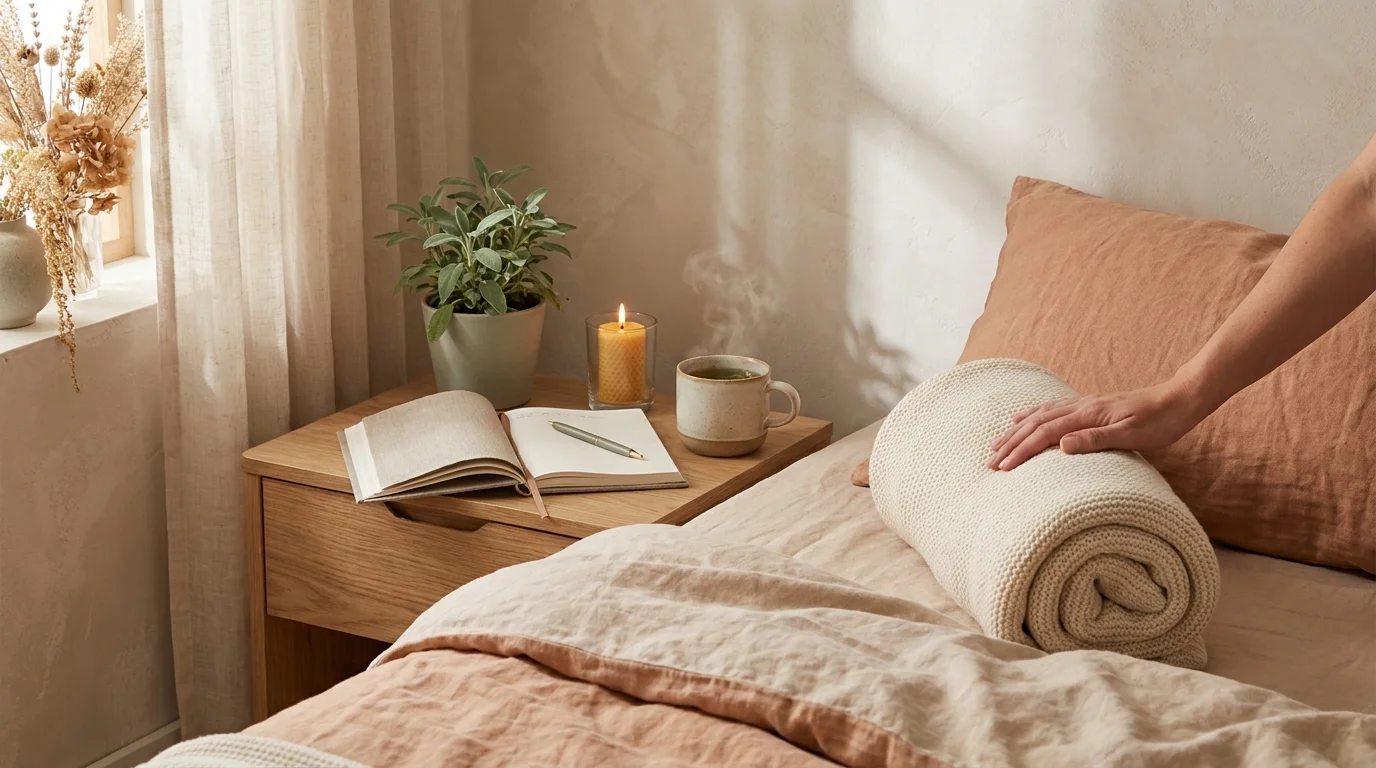
Evening routines in the luteal phase need to be gentle, consistent, and low-stimulation. Routine itself becomes more important here because your nervous system is less resilient to disruption.
What to try:
- Hard stops on screens: Blue light suppresses melatonin production, and in the late luteal phase when sleep is already more fragile, this matters more. Aim to put screens away by 9 pm, or use blue-light-blocking glasses if that is not realistic.
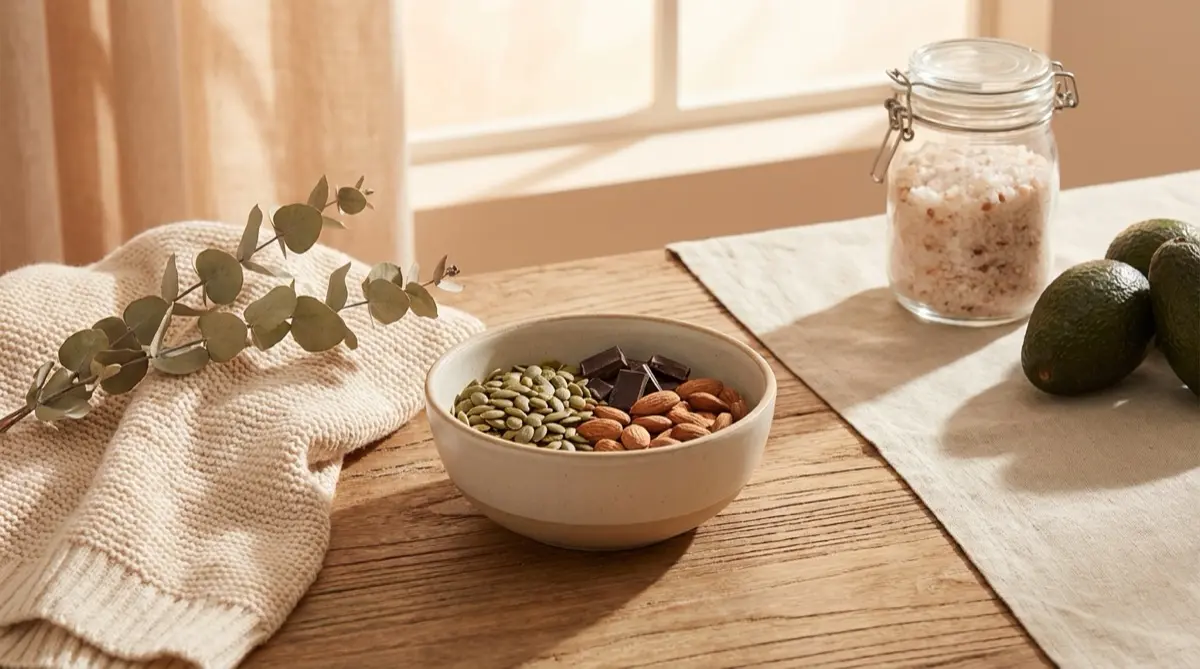
- Magnesium-rich evening snacks: Magnesium glycinate or magnesium-rich foods like dark chocolate, pumpkin seeds, and leafy greens can support the GABA pathways that progesterone usually helps regulate. Many people find this genuinely helpful for late-luteal sleep quality.
- Epsom salt baths: Warm (not hot) baths can lower core body temperature after you step out, supporting sleep onset. They also provide a source of transdermal magnesium absorption, and the ritual itself signals rest to your nervous system.
- Reduce evening commitments: The luteal phase is not the time to schedule demanding evening social events or late-night work sprints. Saying no to things that overstimulate you is genuinely protective of your health in this phase.
- Consistent sleep and wake times: Circadian rhythm stability becomes particularly important when progesterone is fluctuating. Going to bed and waking up at the same time every day, even weekends, helps your body maintain what hormonal support it can.
Avoid: Alcohol in the evenings, which disrupts sleep architecture significantly and worsens PMS symptoms; high-intensity late-night exercise; emotionally activating content like intense TV dramas or social media scrolling; and skipping meals, which can cause blood sugar drops that trigger night waking.
Building Your Cycle-Synced Evening Toolkit
You do not need to overhaul your entire life to cycle sync your evenings. The most effective approach is to have a core routine that stays consistent, with phase-specific adjustments layered in. Think of it as a base layer and a seasonal layer.
Your base layer might include: a consistent sleep time, no screens for at least 30 minutes before bed, a brief breathing practice, and a light snack if needed. These habits support your circadian rhythm and nervous system regardless of cycle phase.
Your seasonal layer is where the cycle syncing happens. In the follicular phase, you add more creative or social activity in the early evening. In the ovulatory phase, you prioritise connection and build in a clear wind-down transition. In the luteal phase, you strip things back, add magnesium, and protect your sleep window fiercely. In menstruation, you go even quieter, add warmth, and give yourself full permission to do less.
Over time, this kind of attuned self-care builds something beyond individual habits. It builds a relationship with your body that is built on genuine understanding rather than willpower. And that, for most people, is where sustainable wellness actually lives.
Key Statistics and Sources
- Up to 70% of women report sleep disturbances in the late luteal (pre-menstrual) phase of their cycle. NHLBI, Women and Sleep
- Allopregnanolone, a progesterone metabolite, acts on GABA-A receptors and has measurable anxiolytic and sleep-promoting effects. NIH, PMC6761896
- Core body temperature rises by approximately 0.3 to 0.5 degrees Celsius after ovulation due to progesterone, which can disrupt sleep onset in the luteal phase. NIH, Endotext: Menstrual Cycle
- Melatonin production is sensitive to light exposure, and women show greater melatonin suppression from evening light during certain cycle phases. Sleep Foundation, Menstrual Cycle and Sleep
- Magnesium supplementation has been shown to improve sleep quality and reduce PMS symptoms including anxiety and insomnia. NIH Office of Dietary Supplements, Magnesium
- Estrogen supports serotonin synthesis and receptor sensitivity, contributing to mood elevation and increased social motivation in the follicular and ovulatory phases. Office on Women's Health