Calcium Is Not Just About Bones
When most people think about calcium, they picture strong bones and a glass of milk. But calcium does far more than keep your skeleton intact. It plays a surprisingly central role in how you feel across your cycle, influencing muscle contractions, nerve signalling, mood regulation, and the hormonal shifts that define each phase of your month. If you have ever noticed that your PMS symptoms ease when your diet improves, calcium may be one of the reasons why.
For women of reproductive age, calcium is one of the most studied nutrients in relation to premenstrual syndrome, ovulation, and overall hormonal balance. Yet many women are still not getting enough, and even fewer know that their need for calcium actually fluctuates across the cycle. This guide covers what the research really says, how to eat and supplement smartly, and what to expect phase by phase.
How Calcium and Hormones Talk to Each Other
Estrogen and progesterone do not just regulate your cycle. They also regulate how your body absorbs and uses calcium. Estrogen in particular increases the efficiency of calcium absorption in the gut, which is one reason bone density tends to decline after menopause when estrogen drops. But during your reproductive years, this dynamic relationship means that calcium status shifts throughout the month.
Around ovulation, estrogen peaks and calcium absorption is at its highest. In the luteal phase that follows, progesterone rises and estrogen dips, and some research suggests that calcium levels in the blood can fall slightly. This drop appears to trigger a cascade of effects including changes in serotonin, mood disruption, muscle tension, and increased sensitivity to pain, all of which map closely onto classic PMS symptoms.
"Calcium deficiency may mimic or worsen many PMS symptoms because the mineral is directly involved in the neurotransmitter pathways that regulate mood and pain perception."
Dr. Susan Thys-Jacobs, MD, Endocrinologist, Columbia University Medical Center
This is not just theoretical. A landmark randomised controlled trial published in the American Journal of Obstetrics and Gynecology found that women who supplemented with 1,200 mg of calcium carbonate daily experienced a 48% reduction in overall PMS symptoms compared to placebo. That is a substantial effect from a mineral most of us consider purely structural.
Phase-by-Phase: What Calcium Means for Your Cycle
Menstrual Phase (Days 1-5)
During menstruation, prostaglandins trigger the uterine contractions that expel the lining. Calcium is essential to muscle contraction mechanics, and adequate levels help regulate the intensity of these contractions. When calcium is low, cramping can be more severe. This is partly why magnesium and calcium work as a team during this phase: magnesium relaxes muscle tissue while calcium coordinates its function. Prioritising calcium-rich foods during your period can ease the severity of cramps for some women.
Follicular Phase (Days 6-13)
As estrogen rises in the lead-up to ovulation, your gut absorbs calcium more efficiently. This is a naturally good time to build your stores. Bone remodelling is also more active in this phase, with bone formation slightly outpacing resorption. Eating well during this window, including calcium-rich foods alongside vitamin D and magnesium, supports the foundation for the rest of your cycle.
Ovulatory Phase (Around Day 14)
Peak estrogen at ovulation means peak calcium absorption. Some women notice they feel energised, mentally sharp, and physically strong around this time. Part of that may be explained by optimal mineral status. Calcium supports healthy nerve signalling and muscle performance, so this is often when athletic output feels easiest.
Luteal Phase (Days 15-28)
This is where calcium becomes most relevant for most women. As progesterone rises and estrogen falls, calcium absorption decreases and blood calcium levels may dip. This shift is thought to affect serotonin synthesis, increase sensitivity to pain, and contribute to the mood changes, fluid retention, and food cravings associated with PMS. Research from the NIH Office of Dietary Supplements confirms that low dietary calcium is consistently associated with more severe premenstrual symptoms.
Increasing calcium intake during the second half of your cycle, particularly in the week before your period, is one of the most evidence-backed nutritional strategies for PMS relief.
How Much Calcium Do You Actually Need?
The recommended daily intake for adult women aged 19-50 is 1,000 mg per day, rising to 1,200 mg for women over 50. Most women fall short of this. The average dietary intake in the UK and US hovers around 700-800 mg, leaving a meaningful gap that can affect hormonal wellbeing over time.
It is worth knowing that your body cannot absorb large amounts of calcium at once. It processes roughly 500 mg per sitting efficiently, so spreading your intake across meals gives you much better absorption than taking one large dose.
"When we look at the clinical data, adequate calcium intake alongside vitamin D is one of the simplest, most cost-effective interventions for reducing PMS symptom burden. It is often overlooked because it is not glamorous."
Dr. Andrea Rapkin, MD, Professor of Obstetrics and Gynecology, UCLA David Geffen School of Medicine
The Best Food Sources of Calcium
Dairy is often the first thing people think of, but there are plenty of calcium-rich options for those who are dairy-free, lactose intolerant, or simply want variety.
Top Dietary Sources of Calcium
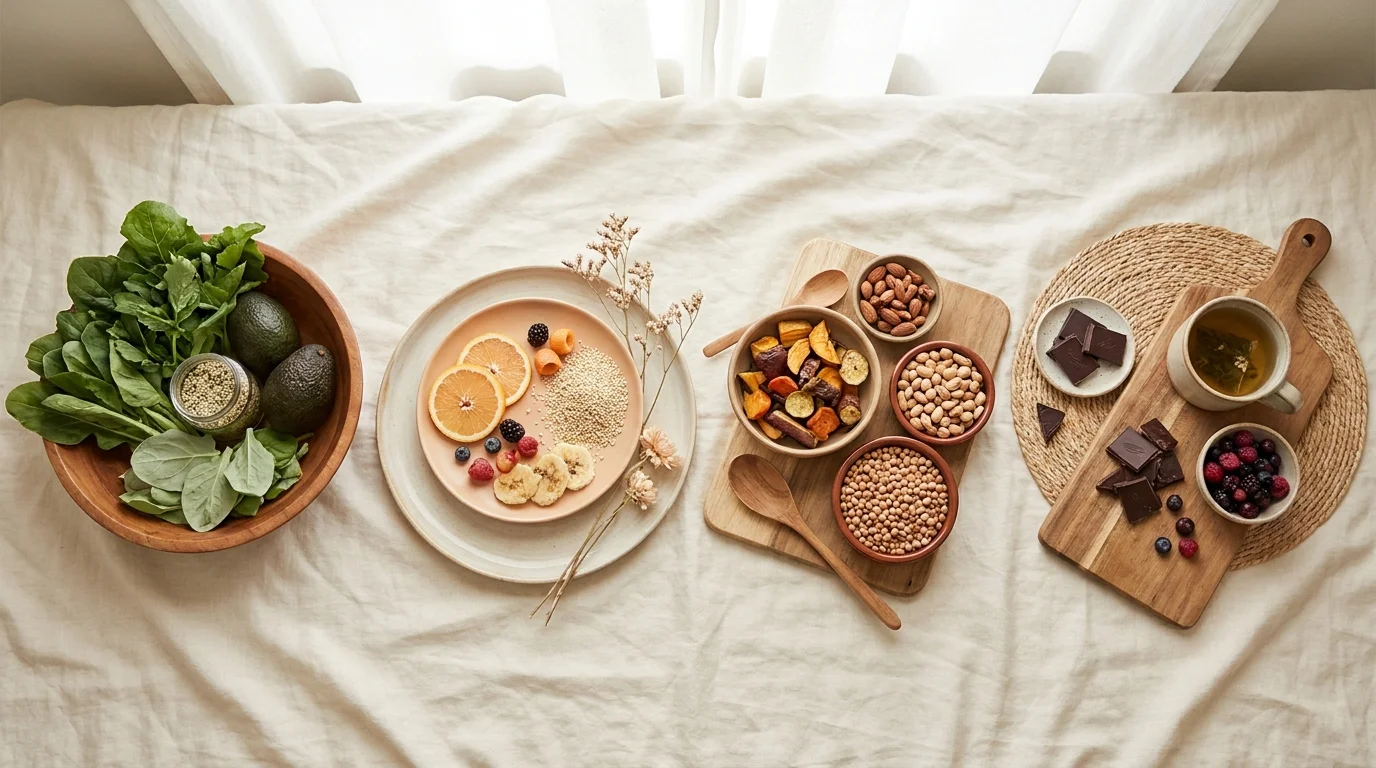
- Dairy: Yogurt (plain, full-fat), milk, hard cheeses like cheddar and parmesan
- Fortified plant milks: Oat, almond, and soy milk (check for calcium carbonate fortification)
- Fish with bones: Canned sardines and salmon are excellent and often underrated sources
- Leafy greens: Kale, bok choy, and broccoli provide well-absorbed calcium (note: spinach contains oxalates that reduce absorption)
- Legumes: White beans, edamame, and chickpeas offer moderate amounts
- Tofu set with calcium sulphate: One of the richest plant-based sources available
- Seeds: Chia seeds and sesame seeds (tahini) are surprisingly high in calcium
Calcium and Vitamin D: Why You Cannot Have One Without the Other
Calcium does not work in isolation. Vitamin D is essential for calcium absorption in the gut, and without adequate vitamin D, even a calcium-rich diet may not translate into good calcium status. Research from the National Institutes of Health shows that vitamin D insufficiency significantly impairs calcium absorption and is independently associated with more severe PMS and menstrual irregularity.
This is a particularly important pairing for women who spend limited time outdoors, live in northern latitudes, have darker skin, or follow plant-based diets. If you are working to improve your calcium status, checking and optimising your vitamin D levels at the same time will make your efforts considerably more effective.
Should You Supplement?
Food first is always the preferred approach. But if your diet consistently falls short or you experience significant PMS symptoms, calcium supplementation has solid evidence behind it. Here is what to consider:
Forms of Calcium
Calcium carbonate is the most common and affordable form. It is best taken with food as it requires stomach acid for absorption. This is the form used in most of the clinical PMS trials.
Calcium citrate is more easily absorbed and can be taken with or without food, making it a better option for those with lower stomach acid or digestive sensitivities.
Dosage and Timing
Most studies showing PMS benefits used doses of 1,000 to 1,200 mg per day. If you are eating 600-700 mg through food, a supplement of 300-500 mg is usually sufficient to bridge the gap. Split your doses across two meals for best absorption. Avoid taking calcium at the same time as iron supplements, as the two minerals compete for absorption.
Some women find it helpful to be more deliberate about calcium intake in the luteal phase specifically, front-loading slightly more in the two weeks before their period when blood calcium tends to dip.
What Can Deplete Your Calcium?
Several common habits and dietary patterns can reduce calcium absorption or increase how much you excrete:
- High caffeine intake increases urinary calcium excretion, which is one more reason to moderate coffee in the luteal phase when calcium levels already tend to drop
- High sodium intake also increases calcium losses through urine, so salty diets can quietly undermine your calcium status
- Phytates and oxalates in foods like spinach and raw bran can reduce calcium absorption from those specific sources (though not from other foods eaten at the same meal)
- Low vitamin D directly impairs gut absorption as described above
- Proton pump inhibitors and antacids taken long-term reduce stomach acid and therefore reduce calcium carbonate absorption
Calcium and PMS: The Serotonin Connection
One of the most compelling mechanisms linking calcium to premenstrual symptoms involves serotonin. Calcium plays a direct role in the synthesis and release of serotonin in the brain. When calcium levels drop in the luteal phase, serotonin activity can decrease alongside it, contributing to the low mood, irritability, and emotional sensitivity many women experience in the week before their period.
This mechanism may also explain why calcium supplementation tends to improve mood-related PMS symptoms as well as physical ones. It is not just about cramps. Women in clinical trials report improvements in depression, anxiety, mood swings, and food cravings, all of which are at least partly serotonin-mediated.
Key Statistics and Sources
- Women supplementing with 1,200 mg calcium daily reported a 48% reduction in PMS symptoms vs. placebo. Thys-Jacobs et al., 1998
- The recommended daily calcium intake for women aged 19-50 is 1,000 mg, rising to 1,200 mg after 50. NIH Office of Dietary Supplements
- Average dietary calcium intake in US women falls 200-300 mg below recommendations. NIH, 2014
- Vitamin D deficiency reduces intestinal calcium absorption by up to 65%, significantly worsening calcium status. NIH Vitamin D Fact Sheet
- Calcium absorption efficiency peaks around ovulation when estrogen is highest, and dips in the late luteal phase. Heaney et al., 2000
- Calcium carbonate and calcium citrate are both effective, but citrate is preferred for those with low stomach acid or digestive issues. NIH Office of Dietary Supplements